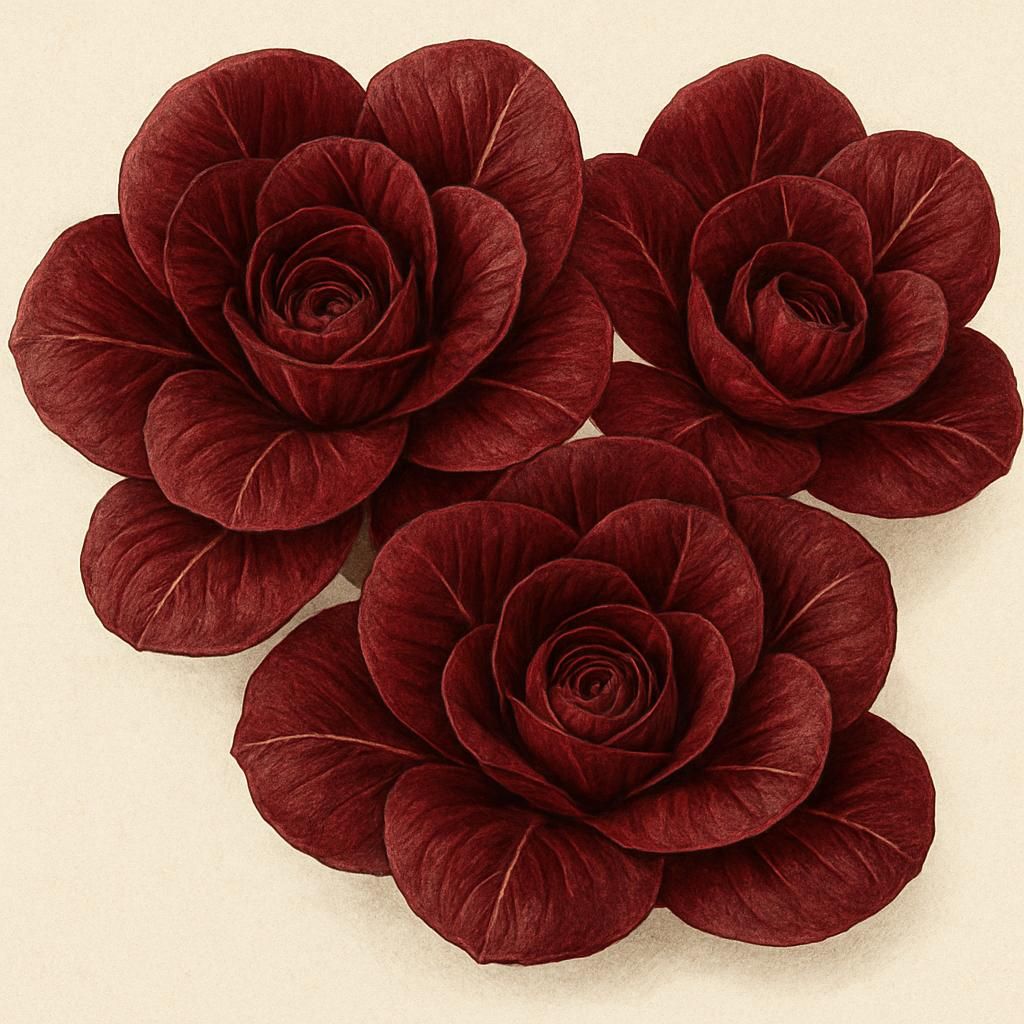
Introduction to Radicchio (Grumolo)
Radicchio, particularly the Grumolo type, is an esteemed variety within the chicory family. Celebrated for its red-purple leaves and distinctly bitter flavor, Radicchio Grumolo brings a gourmet touch to salads and other culinary dishes. This variety stands out for its ability to form compact rosettes in partial shade, providing an attractive aesthetic addition to the home garden.
Botanical Profile of Radicchio (Grumolo)
The botanical name for Radicchio (Grumolo) is Cichorium intybus var. foliosum. It belongs to the Asteraceae family, which also includes lettuce and other leafy greens. Radicchio is a biennial plant primarily cultivated as an annual for its leaves. Grumolo, in particular, is noted for its rosette growth form, where the leaves unfurl concentrically.
Soil, pH, and Climate Requirements for Radicchio (Grumolo)
Radicchio Grumolo thrives under specific soil and climate conditions, which can significantly impact its growth and flavor profile.
| Condition | Ideal Range |
|---|---|
| Soil Type | Well-drained, Loamy |
| Soil pH | 6.0 - 7.0 |
| Climate | Cool, Temperate |
| Temperature | 10°C - 18°C |
| Sun Exposure | Full Sun, Partial Shade |
Step-by-Step Planting & Propagation
- Seed Selection and Preparation: Choose high-quality Grumolo seeds from reputable suppliers to ensure disease resistance and reliable growth.
- Soil Preparation: Amend the soil with organic matter. Ensure good drainage to prevent root rot.
- Planting Time: Sow seeds directly outdoors in early spring or late summer. Grumolo prefers cooler temperatures, so timing is essential to avoid hot weather.
- Spacing: Plant seeds about 6 inches apart, thinning to 12 inches as they grow to allow for full rosette development.
- Watering after Sowing: Provide consistent moisture without waterlogging the soil to encourage germination.
Care & Maintenance Regimes for Radicchio (Grumolo)
Maintaining Radicchio involves specific practices to ensure lush growth and robust taste.
| Task | Frequency | Details |
|---|---|---|
| Watering | Weekly | Keep soil moist, not soggy |
| Fertilization | Every 4-6 weeks | Use a balanced fertilizer |
| Pruning | As needed | Remove damaged leaves |
Pests, Diseases & Organic Management
Radicchio Grumolo is susceptible to various pests like Spider Mites and diseases. Effective management includes:
- Natural Predators: Encourage beneficial insects such as ladybugs.
- Neem Oil: Apply organic neem oil to combat spider mites and aphids.
- Crop Rotation: Implement crop rotation to prevent pest cycles.
Harvesting, Curing & Optimal Storage
Radicchio is ready to harvest when the heads are firm and compact. Grumolo can be harvested by cutting the entire rosette. Post-harvest, it should be refrigerated to maintain crispness and prevent wilting. Consume within two weeks for optimal flavor.
Companion Planting for Radicchio (Grumolo)
Companion planting can benefit Radicchio by repelling pests and improving soil health. Suitable companions include Leeks, Carrots, and Garlic. These combinations can enhance growth while naturally deterring pests.
For more agricultural insights, explore our guide on The Economics of Basil: A Brutal Breakdown.
For more professional farming insights, check out Cropping Diseases Under the Microscope: 9 Organic Fixes for Small Farm Resilience.