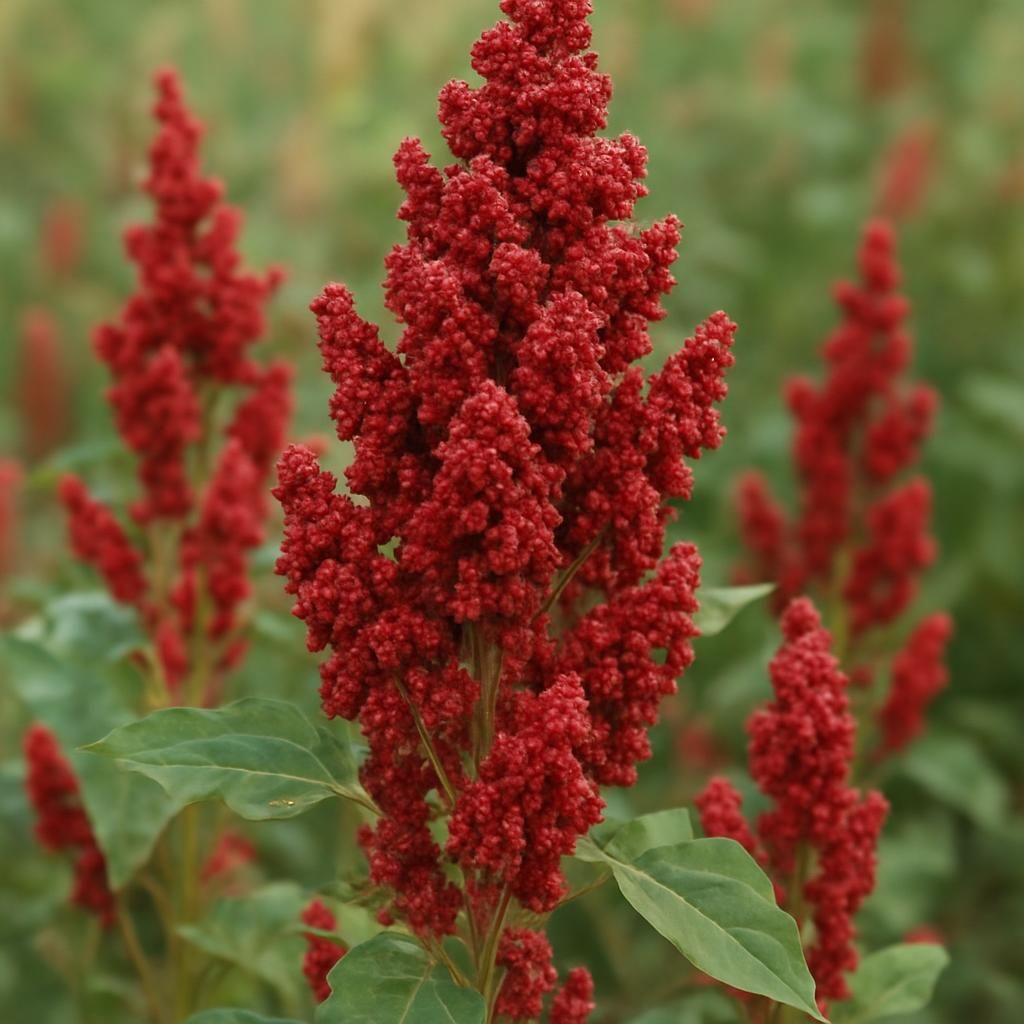
Introduction to Quinoa (Red Pasankalla)
Quinoa (Chenopodium quinoa) is a flowering plant native to the Andean region of South America. Among the various quinoa varieties, Red Pasankalla stands out due to its striking color, nutritional value, and unique flavor. Known for its adaptation to challenging climates, this variety thrives in high elevations and is becoming increasingly popular among health-conscious consumers and farmers looking for sustainable crop options.
Botanical Profile of Quinoa (Red Pasankalla)
Red Pasankalla Quinoa is a member of the Amaranthaceae family. It features broad, goose-foot like leaves and produces small, edible seeds that are nutritionally dense. This variety is known for its red color, which is due to the presence of betacyanin pigments. Quinoa is a pseudo-cereal, which means it is used like a grain but does not belong to the true grass family. The plant can grow up to 2 meters tall, displaying vibrant red seed heads when mature.
Soil, pH, and Climate Requirements for Quinoa (Red Pasankalla)
Quinoa (Red Pasankalla) is renowned for its adaptability to various soil types and climates. However, for optimal growth, specific conditions should be met.
| Condition | Ideal Range |
|---|---|
| Soil Type | Well-drained, sandy-loam soils |
| Soil pH | 6.0 to 8.5 |
| Temperature | 15°C to 25°C (59°F to 77°F) |
| Rainfall | 300 mm to 1000 mm annually |
Given its adaptability, Red Pasankalla Quinoa can tolerate marginal soils and grows well in alkaline conditions, making it a viable crop in areas where other crops may struggle.
Step-by-Step Planting & Propagation
- Site Selection: Choose a well-lit area with good drainage. Avoid areas prone to waterlogging as quinoa is sensitive to excess moisture.
- Soil Preparation: Work the soil to a fine tilth. Incorporate organic matter to improve fertility and soil structure.
- Sowing: Sow seeds directly into the soil after the danger of frost has passed. Plant seeds 1-2 cm deep, with a spacing of 25-30 cm between plants to allow for adequate growth.
- Germination: Seeds typically germinate within 4-7 days, depending on soil temperature.
- Thinning: Once seedlings reach 10-15 cm, thin them to maintain a 25 cm gap between plants.
Care & Maintenance regimes for Quinoa (Red Pasankalla)
Quinoa requires minimal care once established, but certain practices ensure a healthy crop.
| Regime | Frequency/Details |
|---|---|
| Watering | Moderate, reduce during flowering |
| Fertilizer | Organic options once at planting |
| Pruning | Not required |
Red Pasankalla Quinoa is relatively drought-tolerant. Over-watering can lead to fungal diseases or poor seed quality.
Pests, Diseases & Organic Management
Common pests include Aphids and Spider Mites. Regular inspections and organic neem oil spray can help manage these issues. Among diseases, downy mildew is prevalent. Crop rotation and adequate spacing reduce the risk. For in-depth pest management strategies, see 7 Summer Pest Traps That Sabotage Small Farm Harvests.
Harvesting, Curing & Optimal Storage
Harvest quinoa when the leaves have fallen, and the seeds are dry and hard. Cut the seed heads, leaving 30-45 cm of the stalk, and dry them in a well-ventilated space to prevent mold. Clean and store seeds in a dry, cool area, ensuring moisture levels are below 12% to maintain seed viability and quality.
Companion Planting for Quinoa (Red Pasankalla)
Quinoa benefits from being planted alongside Nasturtium and Thyme which help deter insect pests. Avoid planting near tomatoes and potatoes as they can share pests and diseases. For more on strategic planting, consult Summer Companion Planting: 10 Organic Pairings to Boost Small Farm Resilience.
Utilizing this guide will assist in growing Red Pasankalla Quinoa efficiently, providing a nutrient-rich and sustainable crop choice.