Introduction to Purslane (Golden)
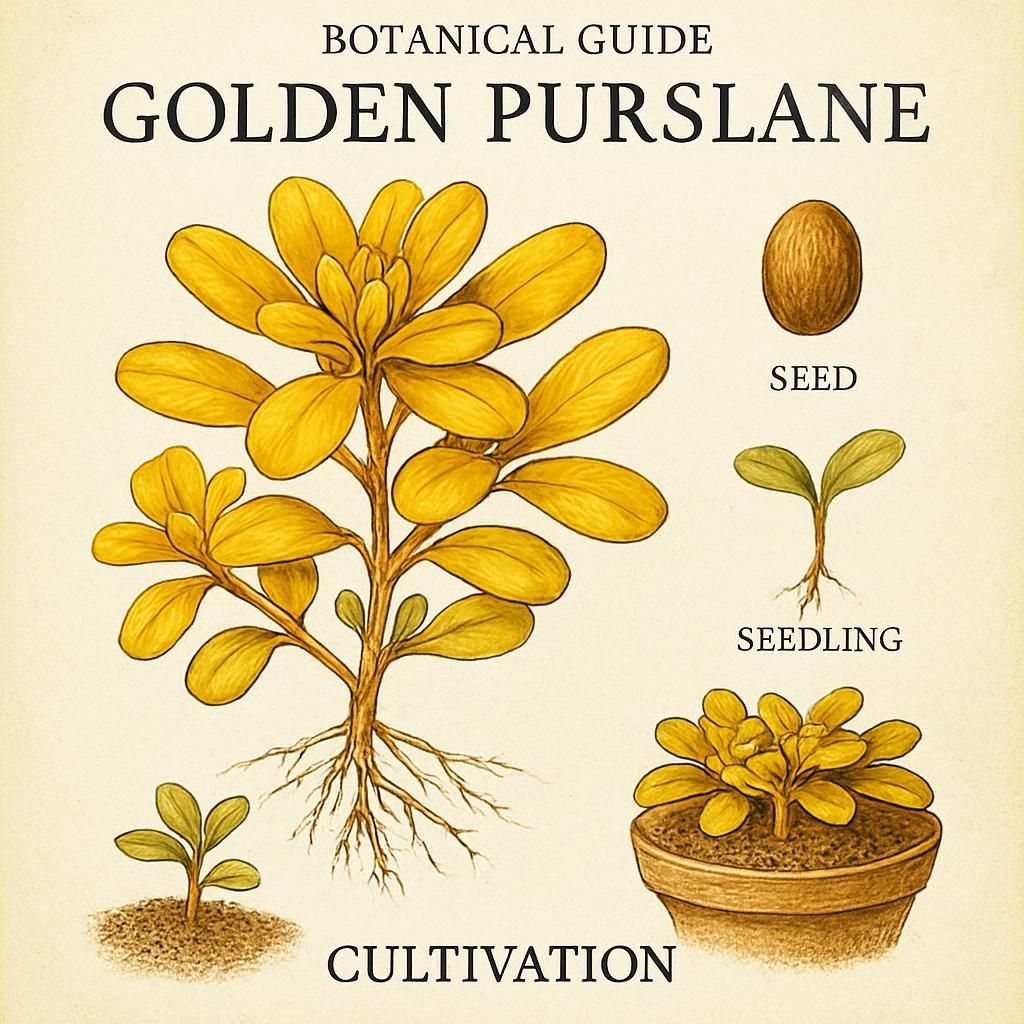
Golden Purslane (Portulaca oleracea var. sativa) is a variety of purslane appreciated for its vibrant golden foliage and unique flavor. Known for its high nutritional value, including omega-3 fatty acids, vitamins A, C, and several minerals, Golden Purslane is not only a nutritious addition to your meals but also an attractive component of your garden. It thrives in warm climates, making it an ideal crop for regions with long summers.
Botanical Profile of Purslane (Golden)
Golden Purslane, a member of the Portulacaceae family, is a succulent annual plant. Unlike its wild relatives, it boasts thicker, juicier leaves with a striking golden hue. This variety is valued for its aesthetic appeal and edible qualities, including a delightful crunch and lemony flavor.
Soil, pH, and Climate Requirements for Purslane (Golden)
Golden Purslane is a resilient plant, adapting to various growing conditions. However, optimal growth is achieved under specific conditions as outlined below:
| Factor | Ideal Condition |
|---|---|
| Soil Type | Well-draining, sandy-loam |
| Soil pH | 6.5 to 7.5 |
| Temperature Range | 70°F to 100°F (21°C to 38°C) |
| Sunlight Requirement | Full sun |
| Water Requirements | Moderate, drought-tolerant once established |
Step-by-Step Planting & Propagation
Seed Starting: Golden Purslane seeds should be sown directly in the garden once all danger of frost has passed, as they thrive in warm temperatures. Lightly cover the seeds with soil and maintain moisture until germination, which takes about 7 to 14 days.
Transplanting: While direct sowing is preferred, Golden Purslane can also be started indoors 2-4 weeks before the last frost and transplanted. Harden off seedlings before transplanting them outside.
Spacing: Maintain a spacing of 10 to 12 inches (25 to 30 cm) between plants to ensure ample room for growth.
Care & Maintenance Regimes for Purslane (Golden)
Caring for Golden Purslane is relatively simple, making it an excellent choice for beginners and experienced gardeners alike.
| Activity | Schedule |
|---|---|
| Watering | Weekly during dry periods |
| Fertilizing | Monthly with a balanced fertilizer |
| Pruning | Remove flowers to focus on leaf growth |
Watering: Golden Purslane is drought-tolerant but benefits from regular watering, especially during prolonged dry spells.
Fertilizing: Fertilize with a balanced, all-purpose fertilizer once a month to promote lush leaf growth.
Pruning: Regularly pinch off flower buds to encourage leaf production, as flowering can reduce leaf yield.
Pests, Diseases & Organic Management
Purslane, being a hardy crop, faces few pest and disease issues. However, it can fall prey to Spider Mites and occasional Aphids. Control with neem oil for organic management.
Murphy’s Purslane, though resistant to many diseases, may encounter leaf rot in overly damp conditions. Ensure well-draining soil to prevent this.
To learn about other organic management methods, refer to 7 Summer Pest Traps That Sabotage Small Farm Harvests.
Harvesting, Curing & Optimal Storage
Golden Purslane can be continuously harvested. Begin harvesting when plants reach 3-4 inches (7-10 cm) tall. Cut leaves as needed, ensuring not to uproot the plant, allowing for regrowth.
To store, wash and pat dry leaves before loosely wrapping in a damp paper towel within a plastic bag. It will stay fresh in the refrigerator for up to a week.
Companion Planting for Purslane (Golden)
Golden Purslane pairs well with many plants, enhancing garden biodiversity. Consider planting alongside Tomato and Cucumber to suppress weeds and improve soil quality. Explore the benefits of companion planting in Summer Companion Planting: 10 Organic Pairings to Boost Small Farm Resilience.