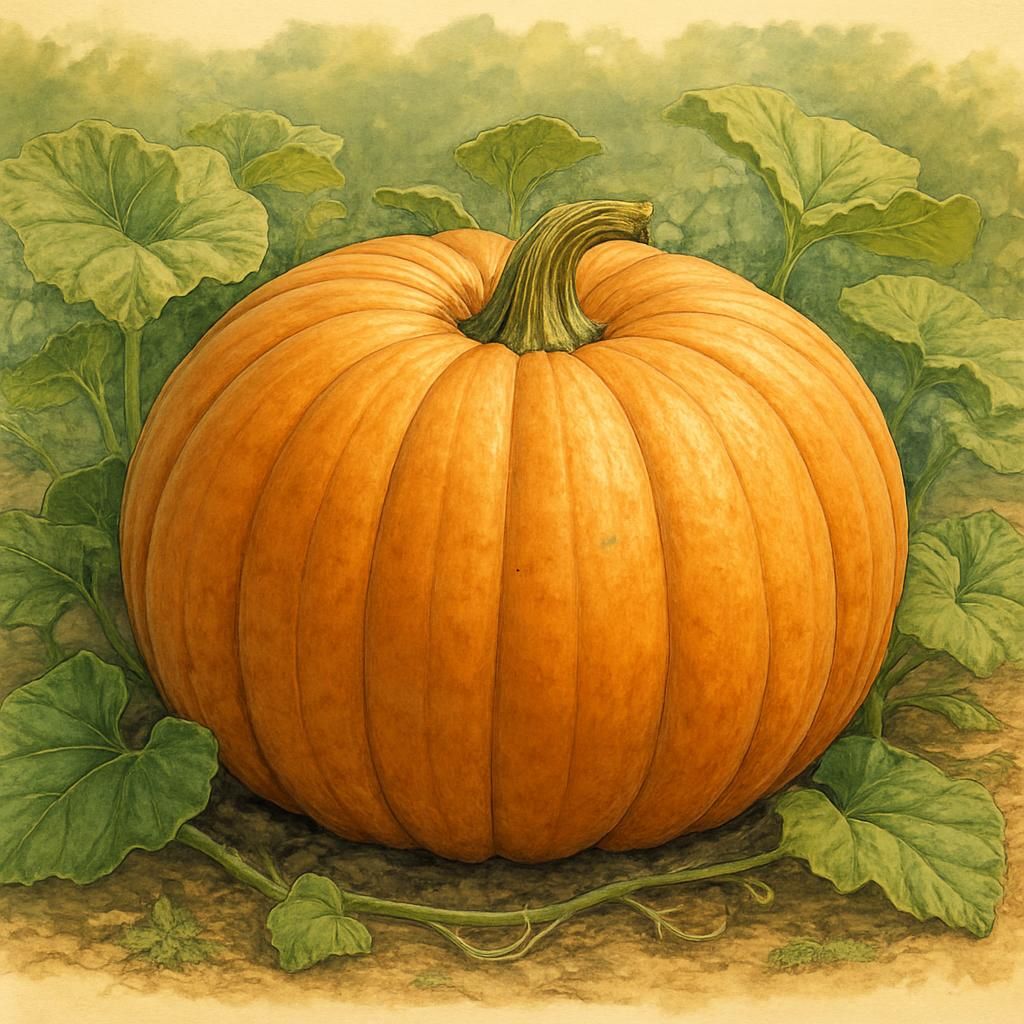
Introduction to Pumpkin (Atlantic Giant)
The Atlantic Giant Pumpkin, a variety of Pumpkin, is renowned for its remarkable size. Developed by Howard Dill in Nova Scotia, this pumpkin is often grown competitively, with some specimens reaching well over a thousand pounds. Due to their immense size potential, they require significant attention and care in order to achieve their potential.
Botanical Profile of Pumpkin (Atlantic Giant)
Belonging to the Cucurbitaceae family, Cucurbita maxima is characterized by large, lobed leaves and sprawling vines. The flowers are monoecious, meaning both male and female flowers grow on the same plant, facilitating pollination. The fruit itself is large and orange, often requiring additional support due to its weight.
Soil, pH, and Climate Requirements for Pumpkin (Atlantic Giant)
Atlantic Giant Pumpkins thrive in warm climates and rich, well-drained soils. To maximize the growth potential, specific soil conditions must be met as detailed in the table below:
| Parameter | Ideal Conditions |
|---|---|
| Soil Type | Loamy, well-drained |
| pH Level | 6.0 to 6.8 |
| Temperature | 70-90°F (21-32°C) |
| Sunlight | Full sun, 8-10 hours daily |
Step-by-Step Planting & Propagation
- Site Selection: Choose a location that receives full sun throughout the day.
- Soil Preparation: Amend soil with organic matter such as well-aged manure or compost to enrich nutrient content.
- Seed Planting: Start seeds indoors 3-4 weeks before the last frost date or sow directly into prepared beds once soil temperature has reached at least 70°F (21°C).
- Transplanting: Transplant seedlings after the last frost into mounds spaced 10-20 feet apart to accommodate the large vines.
- Irrigation: Water thoroughly after planting and keep moisture consistent.
Care & Maintenance Regimes for Pumpkin (Atlantic Giant)
Proper care involves regular monitoring and adjustment to the environment, as shown in the maintenance schedule below:
| Activity | Frequency/Timing |
|---|---|
| Watering | 3-5 times per week; deeply per session |
| Fertilization | Bi-weekly with a balanced fertilizer |
| Pruning | Remove less vigorous vines to focus energy on key pumpkins |
Pests, Diseases & Organic Management
- Pests: Vulnerable to Cucumber Beetles, Spider Mites, and Squash Bugs.
- Diseases: Prone to Powdery Mildew, bacterial wilt, and various viral infections.
- Management: Implement integrated pest management strategies to keep these threats under control, such as introducing beneficial insects or utilizing row covers to protect young plants.
Harvesting, Curing & Optimal Storage
- Harvesting: Harvest when the skin is hard and fully colored, typically in late September to October.
- Curing: Allow pumpkins to stand in a sunny location for 7-10 days to harden skin.
- Storage: Store in a cool, dry place away from direct sunlight; ideal storage temperature is 50-60°F (10-15°C).
Companion Planting for Pumpkin (Atlantic Giant)
Good companion plants include Sweet Corn, as they can provide shade and support for the sprawling vines. Avoid planting near potatoes due to potential incompatibility and competition for nutrients.
Be guided by these practices and recommendations as you cultivate this extraordinary pumpkin variety, always aiming for the finest conditions to grow a record-breaking Atlantic Giant Pumpkin. For more information on holistic farming strategies, consider reading A Season of Strategic Planning for Small Farm Success.