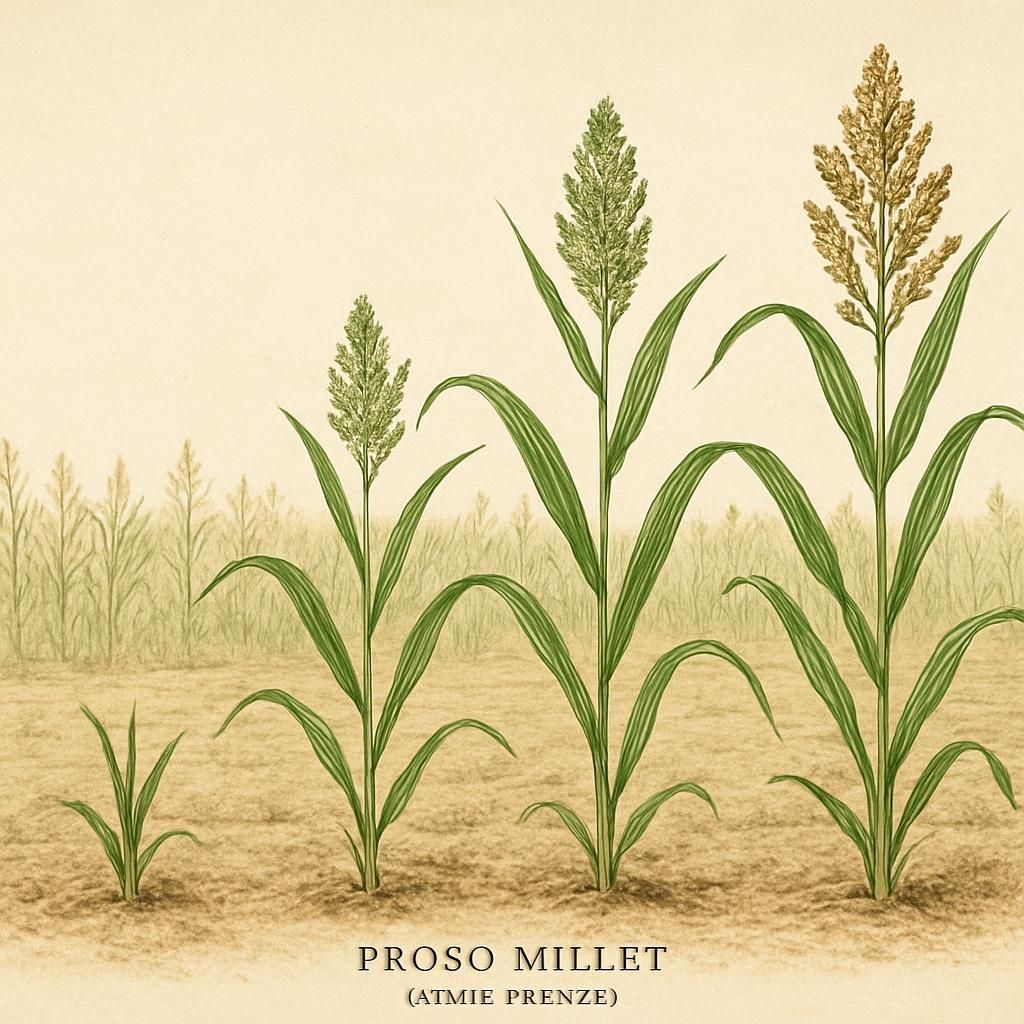
Introduction to Proso Millet (White French)
Proso Millet (White French), scientifically known as Panicum miliaceum, is a versatile and drought-resistant cereal grain. It is primarily grown for its seeds, which serve as a staple food source in many regions and offer nutritional benefits, including high protein, minerals, and B vitamins. Additionally, it is used as bird seed and livestock feed, making it an economically valuable crop.
Botanical Profile of Proso Millet (White French)
Proso Millet is an annual grass that grows to an average height of about 100 cm. It features slender stems, which bear flat, broad leaves and a distinctive panicled inflorescence. The seeds are small, round, and vary in color from white to yellow and red. Its short growing season and adaptability to various conditions make it an attractive crop for many farmers.
Soil, pH, and Climate Requirements for Proso Millet (White French)
The ideal conditions for cultivating Proso Millet (White French) involve specific soil, pH, and climatic requirements as outlined below:
| Condition | Ideal Range |
|---|---|
| Soil Type | Well-drained sandy or loamy soil |
| Soil pH | 5.5 - 7.0 |
| Temperature Range | 20°C - 30°C |
| Rainfall | 300 - 400 mm (during the growing season) |
Step-by-Step Planting & Propagation
- Seed Selection: Choose certified disease-free seeds to ensure healthy growth.
- Soil Preparation: Plough the land well and ensure it is free of weeds. Loosen the top 6 inches of soil.
- Sowing: Plant seeds about 1-2 cm deep with a spacing of 25 to 30 cm between rows during warm temperatures.
- Germination: Under ideal conditions, germination occurs within 5-7 days.
- Thinning and Weeding: Thin seedlings to optimal spacing and control weeds through manual or mechanical methods.
Care & Maintenance Regimes for Proso Millet (White French)
Maintaining Proso Millet involves understanding its basic care requirements as detailed in the table below:
| Maintenance Aspect | Recommended Schedule |
|---|---|
| Watering | Requires minimal watering; maintain moisture during establishment |
| Fertilizing | Apply a balanced NPK fertilizer at the time of sowing |
| Pruning | Not required |
Proso Millet is typically low maintenance due to its drought tolerance. However, ensure regular monitoring to address potential issues like nutrient deficiencies or pest attacks.
Pests, Diseases & Organic Management
Proso Millet is generally hardy against pests and diseases but can occasionally be affected by:
- Spider Mites: Control with neem oil or insecticidal soap.
- Fungal Infections: Use organic fungicides and maintain proper field sanitation.
For in-depth pest management, refer to Crop Diseases Under the Microscope: 9 Organic Fixes for Small Farm Resilience.
Harvesting, Curing & Optimal Storage
The crop is ready for harvest approximately 70-100 days after planting when the grains mature and the heads turn brown. Harvest by cutting the plants and allowing them to dry in the field.
Curing involves drying the grains to a moisture level of about 12-14% to prevent spoilage. Store in a cool, dry place in airtight containers to avoid infestation by storage pests.
Companion Planting for Proso Millet (White French)
Proso Millet benefits from companion planting with crops like Cowpea and Soybeans that enhance soil fertility through nitrogen fixation. Avoid planting near Tomato, which may attract similar pests.
Explore more on companion planting through the blog post Summer Companion Planting: 10 Organic Pairings to Boost Small Farm Resilience.