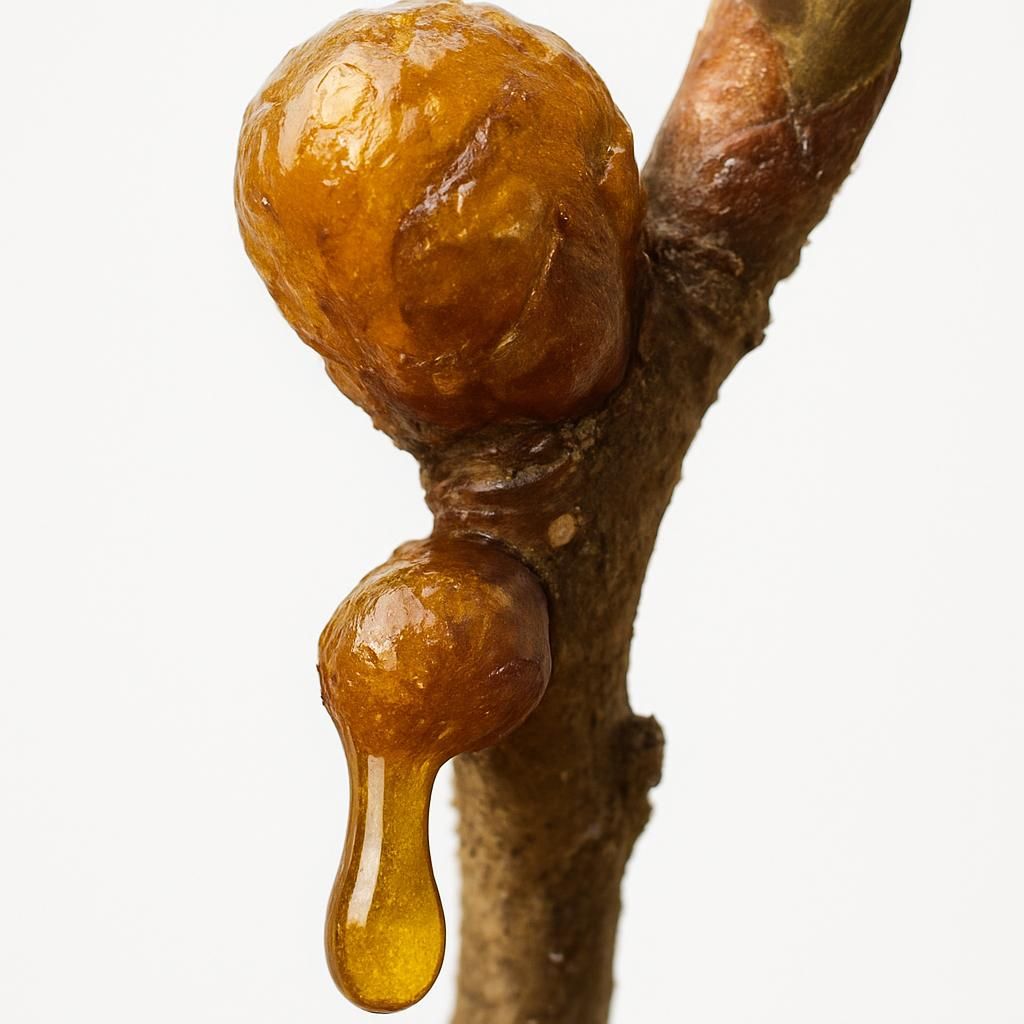
Introduction to Propolis Resin
Propolis Resin is a valuable plant-derived exudate collected by honeybees from the buds and bark of specific trees and shrubs. In agricultural contexts, it serves as a natural antimicrobial and antifungal agent. Farmers and beekeepers cultivate resin-producing plants to supply raw material for propolis collection, creating a sustainable cycle between crops and pollinators.
Professional growers focus on species that yield high volumes of resin with consistent chemical profiles. The resin is valued for its flavonoid content and ability to inhibit pathogens, making it useful in organic farming inputs and natural health products.
Botanical Profile of Propolis Resin
Propolis Resin originates from plant species in the families Fabaceae, Asteraceae, and Myrtaceae. The resin is a sticky, aromatic secretion produced by young buds, bark, and leaves to protect against insects and microbes. Key source plants include poplar species (Populus spp.), birch (Betula spp.), and certain eucalyptus varieties.
The chemical composition varies by botanical origin but typically includes 50-60% resins, 30% waxes, 10% essential oils, and 5% pollen. This profile gives propolis its distinctive antimicrobial and preservative properties valued in both agriculture and apiculture.
Soil, pH, and Climate Requirements for Propolis Resin
Successful resin production depends on precise environmental conditions that favor resin gland development and exudate flow. Most resin-producing species thrive in well-drained loamy soils with moderate fertility.
| Parameter | Ideal Range | Notes |
|---|---|---|
| Soil Type | Sandy loam to loam | Excellent drainage prevents root diseases |
| Soil pH | 6.0 - 7.5 | Slightly acidic to neutral optimizes uptake |
| Temperature | 15°C - 28°C daytime | Avoid prolonged frost below -5°C |
| Annual Rainfall | 600 - 1200 mm | Supplemental irrigation in dry periods |
| Sunlight | Full sun (6+ hours) | Maximizes resin production |
| Elevation | 0 - 1500 m | Higher elevations may slow growth |
Step-by-Step Planting & Propagation
Propagation begins with selecting healthy mother plants known for high resin yield. Cuttings of 15-20 cm from semi-hardwood stems are taken in late spring. Dip the basal end in a rooting hormone containing 0.3% IBA and plant in sterile perlite-vermiculite mix.
Maintain 70-80% humidity under mist propagation for 4-6 weeks until roots form. Transplant rooted cuttings into 15 cm pots with a 2:1:1 mix of loam, compost, and perlite. Harden off seedlings for two weeks before field planting at 2 m × 2 m spacing.
Direct seeding is possible in mild climates using stratified seed sown 1 cm deep in early spring. Germination occurs in 14-21 days at 20°C soil temperature.
Care & Maintenance regimes for Propolis Resin
Consistent care ensures continuous resin production and plant vigor. Monitor soil moisture, nutrient balance, and canopy structure throughout the growing season.
| Month | Water Schedule | Fertilizer Schedule | Pruning Schedule |
|---|---|---|---|
| March-April | Deep watering every 7-10 days | Apply 5-5-5 organic NPK at 50 g/plant | Remove dead wood and shape canopy |
| May-July | Increase to every 5-7 days | Side-dress with compost tea bi-weekly | Light tip pruning to encourage branching |
| August | Reduce to every 10-12 days | Apply potassium-rich fertilizer | Remove crossing branches |
| September | Maintain moderate moisture | Apply micronutrient foliar spray | No pruning; allow hardening off |
Mulch with 5-7 cm of organic material to retain moisture and suppress weeds. Avoid nitrogen excess, which reduces resin quality.
Pests, Diseases & Organic Management
Common pests include Aphids, Spider mites, and scale insects. Monitor weekly and release beneficial insects such as lady beetles and lacewings at first sign of infestation.
Fungal threats such as Powdery mildew and Botrytis can be managed with neem oil sprays and improved airflow. Maintain plant spacing and remove infected material promptly.
Root health is protected by avoiding waterlogging and incorporating beneficial mycorrhizae at planting. Regular soil testing helps prevent nutrient imbalances that weaken plant defenses.
Harvesting, Curing & Optimal Storage
Resin is harvested when buds are swollen but before full leaf expansion, typically in late spring. Scrape exudate gently with a stainless steel tool, collecting 50-100 g per mature plant annually.
Cure fresh resin by spreading in thin layers on food-grade trays at 25°C with 40% humidity for 48 hours. This reduces moisture content to below 10%.
Store cured resin in airtight glass containers at 15-20°C away from direct light. Properly cured material retains potency for up to 24 months.
Companion Planting for Propolis Resin
Pair resin-producing plants with nitrogen-fixing species such as Clover and Thyme to improve soil fertility. These companions also attract beneficial insects that reduce pest pressure.
Avoid planting near heavy feeders like Corn that compete for nutrients. Marigold and Nasturtium provide additional pest deterrence while enhancing biodiversity.
Strategic companion planting increases overall farm resilience and supports pollinator health essential for resin plant reproduction.