Introduction to Pine wilt
Pine wilt is a devastating vascular disease affecting many pine species worldwide. Caused by the pine wood nematode Bursaphelenchus xylophilus, the disease disrupts water transport within the tree, resulting in rapid wilting and mortality. Native to North America, it has become a major invasive threat in Asia and parts of Europe, where native pines lack resistance. The economic impact on timber, landscape, and Christmas tree industries is severe, with entire stands lost in severe outbreaks.
The disease cycle depends on an insect vector, the pine sawyer beetle (Monochamus spp.), which carries nematodes from infected to healthy trees. Once inside, nematodes multiply rapidly in the resin canals and xylem, blocking water flow. Environmental stress such as drought accelerates symptom expression and tree death. Because symptoms mimic drought or other wilts, accurate diagnosis requires laboratory confirmation of the nematode.
Identifying Symptoms & Damage
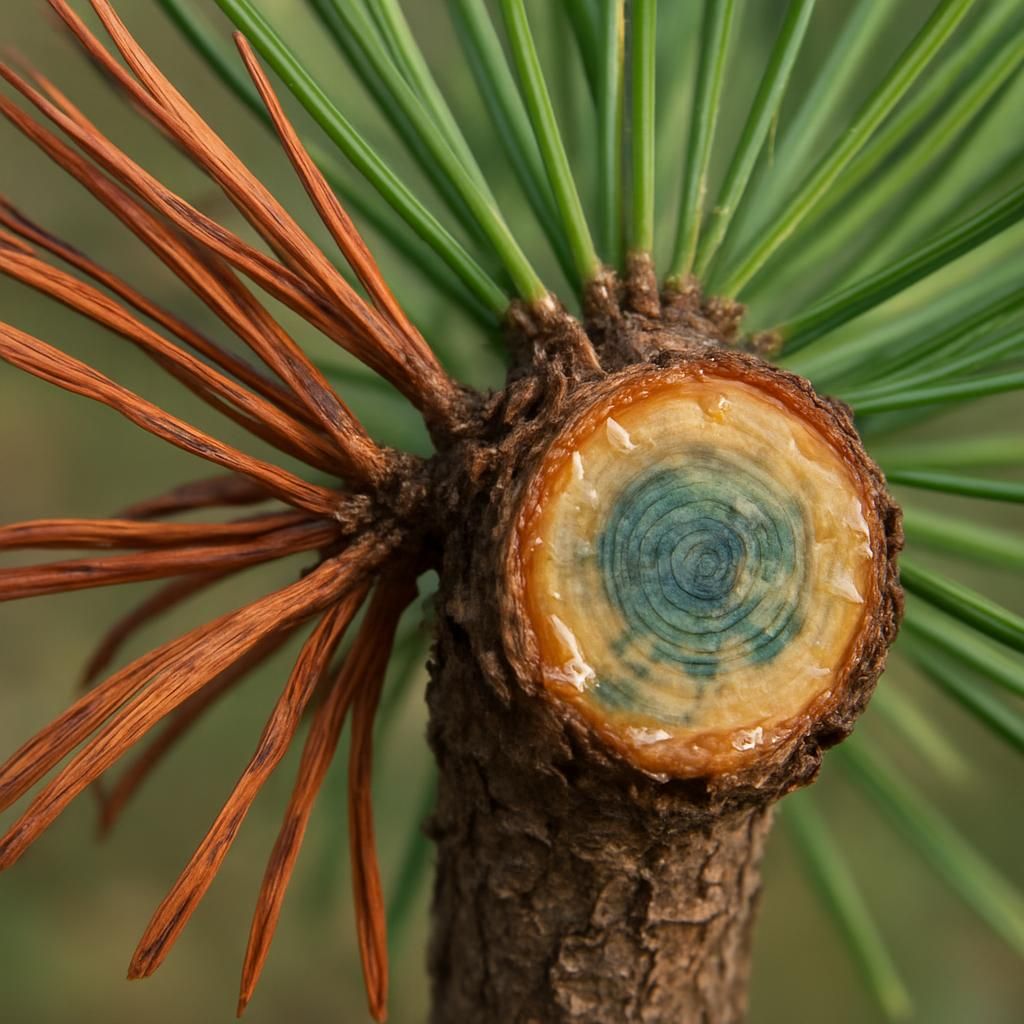
Initial symptoms appear as fading green needles that quickly turn yellowish then reddish-brown. Needles remain attached initially but droop and desiccate within weeks. Resin flow ceases, and the trunk may show blue-stain fungi associated with the vector beetles. Cross-sections of affected branches reveal darkened resin canals and nematode presence under microscopic examination.
Advanced stages show complete canopy browning, branch dieback, and tree death. Unlike typical drought stress, pine wilt progresses from the top downward and affects one side of the crown first. Blue-stain discoloration in sapwood is a common secondary sign. Laboratory extraction of nematodes from wood samples confirms the causal agent.
Lifecycle and Progression of Pine wilt
The pine wood nematode has a complex life cycle involving both the beetle vector and the host tree. Dauer juveniles are carried by adult sawyer beetles to new hosts during maturation feeding or oviposition. Inside the tree, nematodes feed on epithelial cells, reproduce rapidly, and migrate through resin canals, leading to cavitation and wilting.
| Lifecycle Stage | Description | Duration | Key Conditions |
|---|---|---|---|
| Dauer Juvenile Dispersal | Nematodes carried externally by adult Monochamus beetles | 1–3 days during flight | Warm temperatures (>20 °C) |
| Maturation Feeding | Beetles feed on healthy pine twigs, introducing nematodes | 7–14 days | Spring–early summer |
| Invasion & Reproduction | Nematodes enter resin canals, feed, and multiply | 2–6 weeks | Tree stress, temperatures 25–30 °C |
| Symptom Expression | Water transport blocked, wilting begins | 3–8 weeks | Low soil moisture accelerates |
| Beetle Oviposition | Infected trees used for egg-laying; new generation emerges | 6–10 weeks | Dead or dying trees |
| Next Generation Dispersal | New adults carry dauer juveniles to healthy hosts | Late summer–fall | Beetle flight period |
Environmental Triggers & Risk Factors
High summer temperatures above 25 °C combined with drought stress dramatically increase disease severity. Trees growing on sandy, well-drained soils with low water-holding capacity are more vulnerable. Stressed or recently transplanted pines show faster progression. Dense pine monocultures facilitate rapid spread via beetle movement.
| Factor | Optimal Range for Disease | Risk Level |
|---|---|---|
| Temperature | 25–35 °C | High |
| Soil Moisture | <30% field capacity | High |
| Tree Age | 10–40 years | Moderate-High |
| Stand Density | >800 stems/ha | High |
| Soil Type | Sandy/loamy | Moderate |
Organic Control & Treatment Plans
No curative organic treatment exists once systemic infection occurs; focus is on sanitation and vector reduction. Remove and destroy infected trees promptly to reduce inoculum and beetle breeding sites. Trap logs treated with entomopathogenic nematodes or fungi can suppress vector populations. Maintain tree vigor through mulching, proper irrigation, and species selection.
| Treatment Option | Application Method | Frequency | Notes |
|---|---|---|---|
| Sanitation Felling | Cut and chip/burn infected trees | Within 2 weeks of detection | Reduces vector habitat |
| Trap Logs + Nematodes | Place logs treated with Steinernema carpocapsae | Spring & fall | Targets beetle larvae |
| Mulching & Irrigation | 7–10 cm organic mulch; deep watering | Monthly in dry periods | Improves tree resistance |
| Resistant Pine Selection | Plant Pinus thunbergii or resistant hybrids | At replanting | Long-term prevention |
| Biological Beetle Control | Release parasitoid wasps (e.g., Sclerodermus) | Annually in high-risk areas | Reduces adult emergence |
Preventing Pine wilt in the Future
Prevention centers on planting resistant or tolerant pine species and maintaining tree health. Avoid planting highly susceptible species such as Pinus sylvestris or Pinus densiflora in high-risk zones. Implement strict sanitation protocols and monitor for early symptoms using pheromone traps for sawyer beetles. Diversify species composition in plantations to reduce spread potential.
Regular health assessments and prompt removal of stressed trees limit outbreak size. The Truth About Weather Patterns and Small Farm Resilience provides additional guidance on managing climate-related stress that predisposes trees to pine wilt.
Crops Most Affected by Pine wilt
The disease primarily impacts pine species rather than agricultural crops. Highly susceptible hosts include Scots Pine, Japanese Red Pine, and Austrian Pine. Other conifers such as Larch and some Fir species show occasional infection but rarely develop full wilt symptoms. No major food or fiber crops are known hosts.