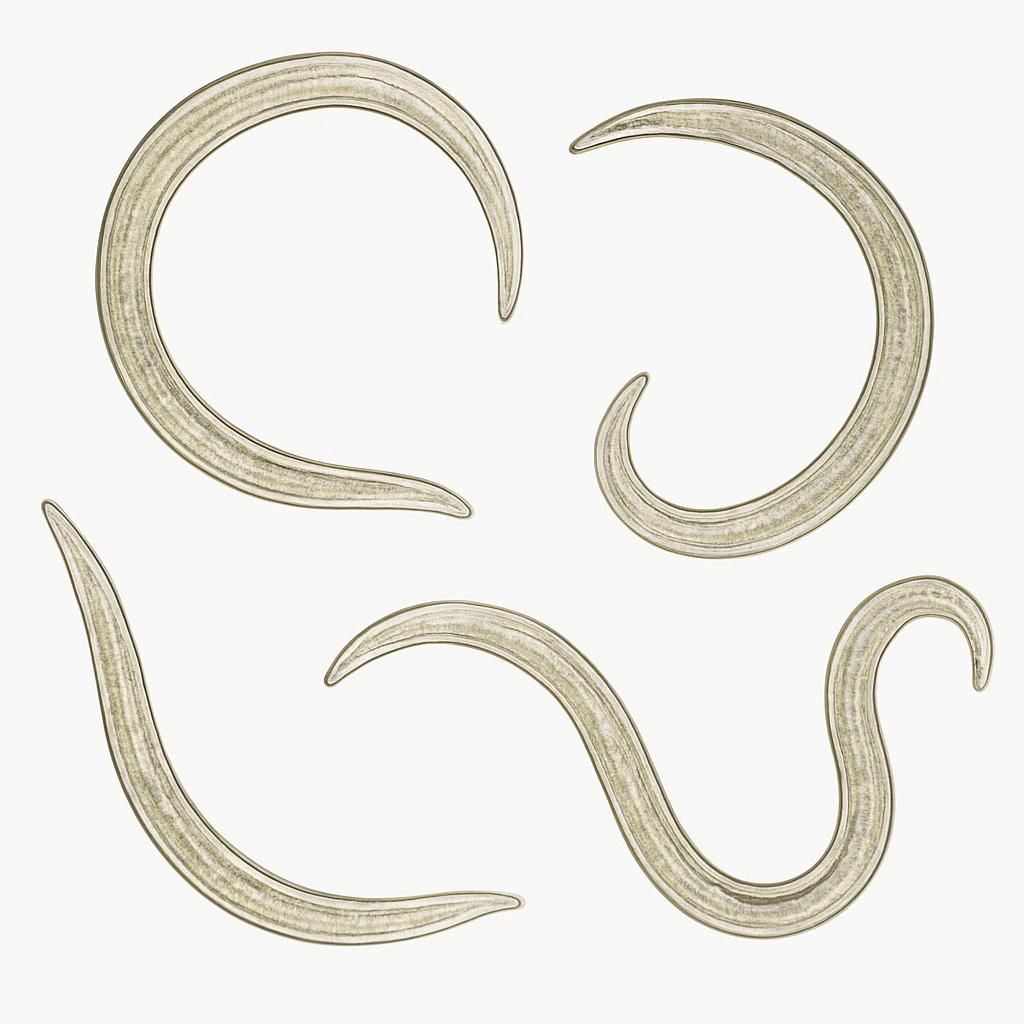
Introduction to Bursaphelenchus xylophilus
Bursaphelenchus xylophilus, commonly known as the pine wood nematode, is a microscopic plant-parasitic nematode that causes pine wilt disease. Native to North America, it has become a major invasive threat in Asia and parts of Europe, where it kills millions of pine trees annually. The nematode lives inside the resin canals of susceptible pines, blocking water transport and leading to rapid wilting and death. Its primary vectors are longhorn beetles in the genus Monochamus, which carry the nematode between trees during maturation feeding and oviposition.
The economic impact is severe in commercial pine plantations and natural forests, with entire stands succumbing within weeks under favorable conditions. Early detection through symptom monitoring and laboratory confirmation is essential for containment. Integrated management combines sanitation, vector control, resistant planting stock, and regulatory measures to slow spread.
Identifying Symptoms & Damage
Initial symptoms appear in the crown as needle discoloration progressing from gray-green to reddish-brown within days to weeks. Affected branches show resin flow cessation followed by rapid wilting, often starting on one side before spreading throughout the tree. Cross-sections of infected stems reveal blue-stained sapwood caused by associated fungi, while microscopic examination confirms the presence of nematodes in resin ducts.
Advanced damage includes complete canopy browning, branch dieback, and tree mortality within one to three months in warm weather. Bark beetle activity may increase on weakened trees, accelerating decline. Laboratory extraction and molecular testing provide definitive diagnosis, distinguishing pine wilt from similar symptoms caused by drought, fungal pathogens, or other Nematodes.
Lifecycle and Progression of Bursaphelenchus xylophilus (MUST INCLUDE A MARKDOWN TABLE OF LIFECYCLE STAGES)
The pine wood nematode completes its life cycle in as little as 10–14 days at optimal temperatures around 25–30 °C. Dauer juveniles are carried by pine sawyer beetles to new hosts, where they enter through feeding wounds or oviposition sites and rapidly multiply in resin canals.
| Lifecycle Stage | Description | Duration | Key Conditions |
|---|---|---|---|
| Egg | Laid in resin canals or beetle galleries | 2–3 days | 20–30 °C, moist wood |
| J2–J3 (Propagative) | Rapid feeding and reproduction in xylem | 3–5 days | High resin pressure, warm temps |
| J4 (Dispersal) | Pre-dauer stage triggered by food depletion | 2–4 days | Crowding, host stress |
| Dauer Juvenile (J4d) | Resistant stage carried by beetles | Indefinite | Survives in dead wood, beetle vectors |
| Adult | Mating and egg-laying inside host | 5–10 days | Optimal moisture and temperature |
Progression accelerates in summer; cooler temperatures slow development and may allow trees to compartmentalize infection temporarily.
Environmental Triggers & Risk Factors
High summer temperatures above 25 °C combined with drought stress dramatically increase pine susceptibility and nematode reproduction rates. Sandy or well-drained soils that promote rapid water loss heighten risk, while dense pine monocultures facilitate beetle movement and nematode transmission.
Proximity to infested stands, recent logging activity, and presence of stressed or injured trees are major risk amplifiers. Climate change models predict expanded suitable ranges northward and into higher elevations as average temperatures rise.
Organic Control & Treatment Plans (MUST INCLUDE A MARKDOWN TABLE OF TREATMENT OPTIONS AND FREQUENCIES)
Organic management emphasizes sanitation, cultural practices, and biological agents rather than synthetic nematicides. Prompt removal and chipping or burning of infected trees eliminates breeding sites and reduces vector populations.
| Treatment Option | Method | Frequency | Notes |
|---|---|---|---|
| Sanitation felling | Cut and destroy symptomatic trees | Within 2 weeks of symptom detection | Chip or burn to kill nematodes and beetles |
| Trap trees with attractants | Deploy baited trap logs | Spring and summer, replace monthly | Monitor and destroy before beetle emergence |
| Biological control with entomopathogenic fungi | Apply Beauveria or Metarhizium to beetle breeding sites | Early spring and post-harvest | Reduces vector populations organically |
| Resistant pine cultivars | Plant tolerant species or proven resistant stock | At establishment | Long-term strategy, site-specific selection |
| Mulching and moisture conservation | Apply organic mulch around root zones | Renew annually in spring | Reduces drought stress and improves tree vigor |
Regular scouting combined with the above measures forms the backbone of sustainable pine wilt management.
Preventing Bursaphelenchus xylophilus in the Future
Prevention relies on strict phytosanitary regulations for timber movement, early warning systems using sentinel trees, and diversified planting that avoids large monocultures of highly susceptible pines. Maintaining tree health through proper spacing, irrigation during drought, and prompt removal of stressed individuals reduces attractiveness to vectors.
Community-level coordination, including reporting of suspect trees to forestry authorities, is vital. Long-term resilience also benefits from integrating findings from resources such as The Truth About Weather Patterns and Small Farm Resilience.
Crops Most Affected by Bursaphelenchus xylophilus
While the nematode primarily targets conifers, the following species are most severely impacted:
- Pinus spp. (especially Pinus densiflora, Pinus thunbergii, Pinus sylvestris)
- Pine plantations in Asia and Europe
- Landscape and ornamental pines in urban settings
Other conifers such as Cedar and Spruce may show occasional susceptibility under extreme stress, but mortality is far lower than in true pines.