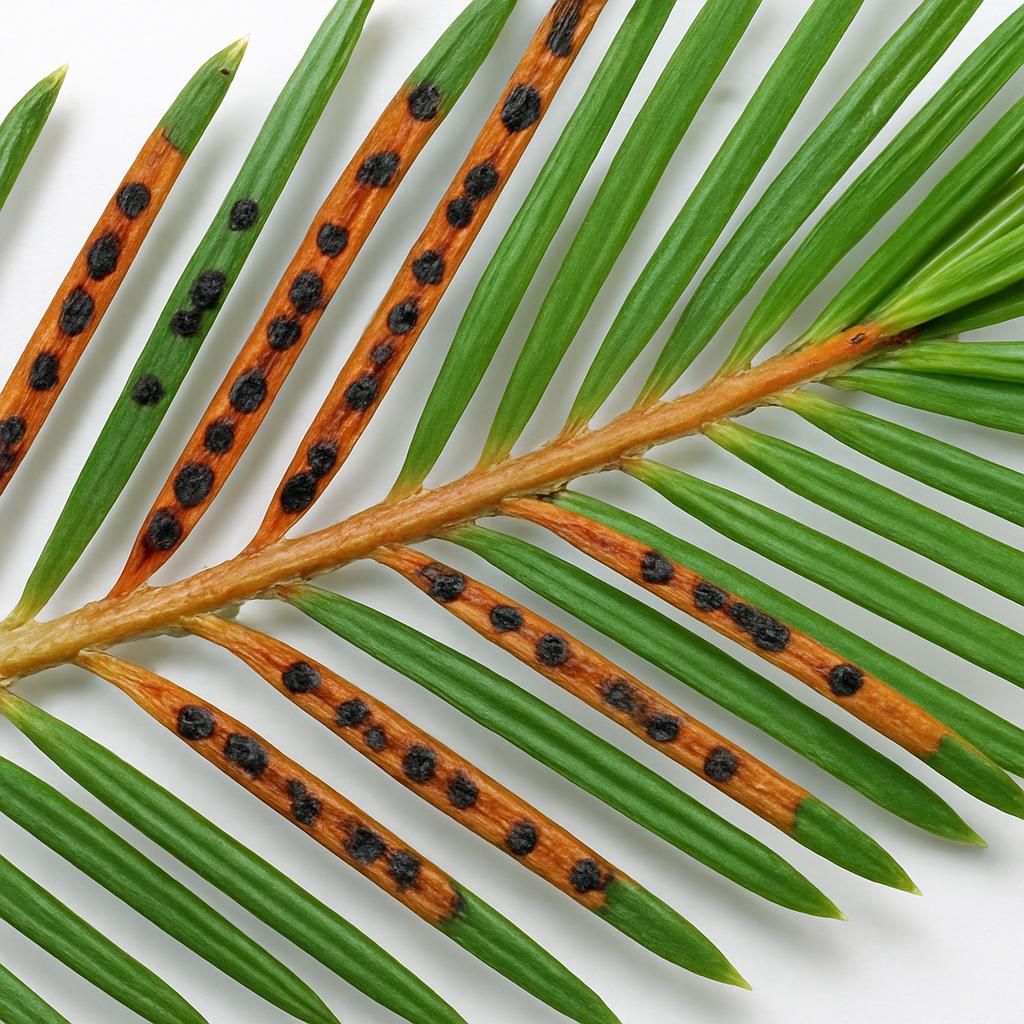
Introduction to needle cast
Needle cast refers to several closely related fungal pathogens that infect the needles of coniferous trees, leading to discoloration, defoliation, and diminished photosynthetic capacity. The most common causal agents belong to the genera Lophodermium, Rhabdocline, and Cyclaneusma. These diseases are especially problematic in commercial Christmas tree farms, reforestation projects, and ornamental landscapes where uniform needle retention is critical for both aesthetics and timber quality.
Early recognition is essential because once significant defoliation occurs, recovery can take multiple growing seasons. While needle cast rarely kills mature trees outright, repeated infections weaken hosts, making them more susceptible to secondary pests such as bark beetles and environmental stress. Effective management integrates resistant species selection, sanitation, and targeted fungicide applications timed to pathogen life cycles.
Identifying Symptoms & Damage
Initial symptoms appear as small yellow or tan spots on current-season needles during late summer or early fall. These spots enlarge into distinct bands or blotches that turn reddish-brown by winter. Infected needles often display black fruiting bodies (hysterothecia) arranged in rows along the needle surface.
Premature needle drop typically begins in the lower and inner canopy and progresses outward. Severely affected trees may retain only the current year’s needles, producing a thin, sparse appearance. Economic damage includes reduced grade in Christmas trees, slower growth rates in timber species, and increased susceptibility to opportunistic insects and drought.
Lifecycle and Progression of needle cast
The disease cycle is driven by spore production from overwintered needles. Understanding each stage allows precise intervention timing.
| Lifecycle Stage | Timing | Key Events | Visible Signs |
|---|---|---|---|
| Overwintering | Late fall–early spring | Fruiting bodies mature on fallen and attached needles | Black hysterothecia visible on brown needles |
| Spore Release | Spring (April–June) | Ascospores ejected during wet periods | Orange or white spore masses on needle surfaces |
| Infection | Late spring–early summer | Spores land on new needles; infection occurs under prolonged moisture | Tiny yellow flecks appear 4–6 weeks later |
| Symptom Development | Summer–fall | Fungal colonization produces bands and fruiting bodies | Needles turn tan to brown; premature drop begins |
| Needle Shed | Fall–winter | Infected needles abscise, returning inoculum to soil | Thin canopy; accumulation of brown needles on ground |
Environmental Triggers & Risk Factors
Needle cast severity increases under cool, wet spring conditions that favor spore germination and infection. High humidity, frequent rainfall, and overhead irrigation create extended leaf wetness periods critical for disease establishment. Dense planting reduces air circulation and prolongs drying time within the canopy.
Susceptible hosts include Douglas-fir, true firs, spruces, and some pines. Trees grown on poorly drained soils or in low-lying areas experience prolonged moisture and higher infection rates. Stressed trees resulting from drought, nutrient deficiency, or mechanical injury show greater symptom expression.
Organic Control & Treatment Plans
Integrated management combines cultural practices with approved organic and conventional options. Begin with sanitation: rake and destroy fallen needles before bud break to reduce overwintering inoculum. Improve airflow by selective pruning of lower branches and maintaining proper spacing.
| Treatment Option | Active Ingredient / Method | Application Frequency | Notes |
|---|---|---|---|
| Copper-based fungicide | Copper hydroxide or copper octanoate | Every 14–21 days from bud break until new growth hardens | OMRI-listed; avoid phytotoxicity during heat |
| Bacillus subtilis | QST 713 strain | Every 7–14 days during wet spring periods | Preventive; rotate with copper to reduce resistance |
| Neem oil | Azadirachtin + horticultural oil | 2–3 applications at 10–14 day intervals | Suppresses sporulation; test for needle burn |
| Cultural sanitation | Raking, burning, or composting fallen needles | Once in late fall and once in early spring | Essential foundation for all programs |
| Resistant species selection | Plant non-susceptible conifers (e.g., certain pines) | At establishment | Long-term prevention strategy |
Preventing needle cast in the Future
Site selection is the first line of defense. Choose well-drained locations with good air movement and avoid planting susceptible species in frost pockets. Maintain optimal fertility based on soil tests; balanced nutrition supports vigorous growth that outpaces infection.
Implement a three- to four-year rotation when establishing new blocks, alternating host species to break the disease cycle. Scout regularly from spring through fall and remove any symptomatic branches promptly. Consider The Truth About Weather Patterns and Small Farm Resilience for guidance on adapting cultural practices to changing climate conditions that influence disease pressure.
Crops Most Affected by needle cast
While primarily a conifer disease, needle cast can indirectly impact mixed plantings. The most severely affected species include Douglas-fir (Pseudotsuga menziesii), grand fir, noble fir, Colorado blue spruce, and certain pine species. In mixed landscapes, avoid planting these conifers adjacent to highly susceptible blocks to limit inoculum movement. Ornamental nurseries growing containerized evergreens should isolate new stock for at least one season before interplanting with established susceptible species.