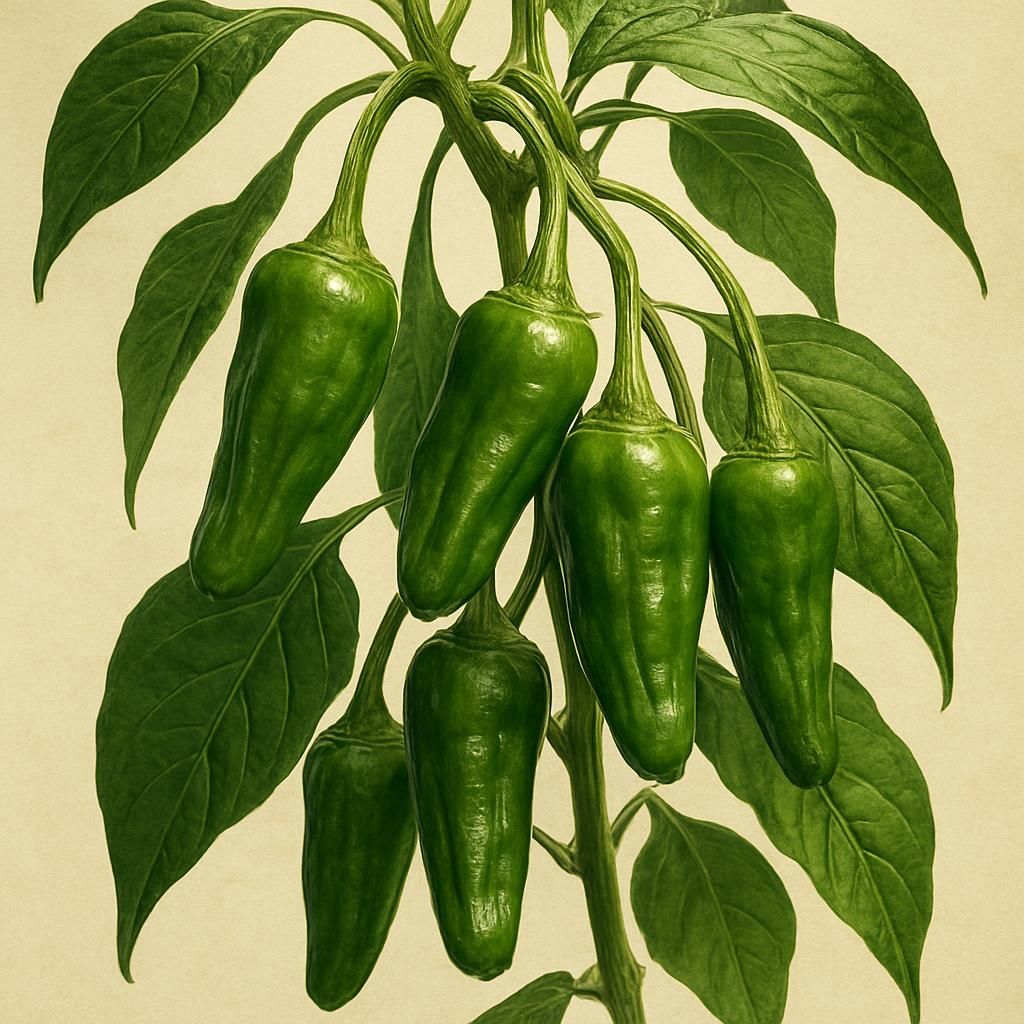
Introduction to Pimento de Padron
Pimento de Padron peppers are a cherished variety of small, green peppers originating from the Padron municipality in Galicia, Spain. Known for their unique culinary appeal, these peppers can range from mild to moderately hot, creating an exciting unpredictability in flavor. Highly popular in Spanish tapas, Pimento de Padron peppers are gaining popularity worldwide.
Botanical Profile of Pimento de Padron
Pimento de Padron belongs to the species Capsicum annuum, a member of the Solanaceae family. The plant typically reaches heights of between 18 to 24 inches (45 to 60 cm) and produces numerous small peppers that are about 2 to 4 inches (5 to 10 cm) in length. The peppers mature from a bright green to a deep red but are typically harvested when green for the best flavor.
Soil, pH, and Climate Requirements for Pimento de Padron
Growing Pimento de Padron peppers requires understanding their specific soil, pH, and climate requirements. Here's a detailed overview:
| Parameter | Ideal Condition |
|---|---|
| pH | 5.5 to 7.0 |
| Soil Type | Well-drained loamy soil with high organic matter |
| Temperature | 70°F to 85°F (21°C to 29°C) for maximal growth |
| Sunlight | Full sun exposure with at least 6 hours of direct sunlight per day |
| Watering | Consistent watering without waterlogging |
Step-by-Step Planting & Propagation
- Seed Selection: Choose high-quality seeds from a reputable supplier to ensure disease resistance and high yields.
- Starting Indoors: Begin seeds indoors 8-10 weeks before the last frost date. Plant seeds ¼ inch deep in seed-starting soil.
- Transplanting: Hardening off is crucial before planting outdoors to acclimate seedlings to external conditions. Transplant when seedlings are approximately 4-6 inches tall and the threat of frost has passed.
- Spacing: Ensure plants are spaced 18-24 inches apart in rows that are 24-36 inches apart to allow airflow and reduce disease risk.
- Propagation by Cuttings: Although not common, Pimento de Padron can be propagated through cuttings. Use only healthy stems for optimal results.
Care & Maintenance Regimes for Pimento de Padron
| Activity | Schedule |
|---|---|
| Watering | Twice a week, or as needed depending on local climate conditions |
| Fertilizer | Every 3-4 weeks with a well-balanced organic fertilizer |
| Pruning | Regularly remove damaged or diseased foliage to improve air circulation |
Pests, Diseases & Organic Management
Pimento de Padron peppers are susceptible to various pests and diseases, but there are effective organic management strategies:
- Pests: Common pests include aphids, spider mites, and whiteflies. Introducing beneficial insects such as ladybugs or using neem oil can help control these pests.
- Diseases: Powdery mildew and Verticillium wilt can affect these peppers. Utilize crop rotation and ensure proper spacing and airflow.
- Integrated Pest Management (IPM): Utilizing IPM strategies can significantly reduce pest impact while maintaining environmental health.
Harvesting, Curing & Optimal Storage
Pimento de Padron peppers are typically harvested when green, around 60-80 days after planting. Use a sharp knife or shears to cut peppers at the stem to avoid damaging the plant.
- Curing: Allow peppers to air dry for a few hours under shade.
- Storage: Stored fresh, these peppers can last up to a week in the refrigerator. Alternatively, they can be pickled or frozen for extended storage.
Companion Planting for Pimento de Padron
Companion planting can enhance growth and yield of Pimento de Padron peppers. Consider these companion plants:
- Basil: Enhances flavor and repels pests like aphids.
- Tomato: Shares similar growing conditions.
- Marigold: Repels nematodes and improves soil health.
Companion planting can also be a strategy for small farms to boost resilience. Learn more in our article on Summer Companion Planting: 10 Organic Pairings to Boost Small Farm Resilience.