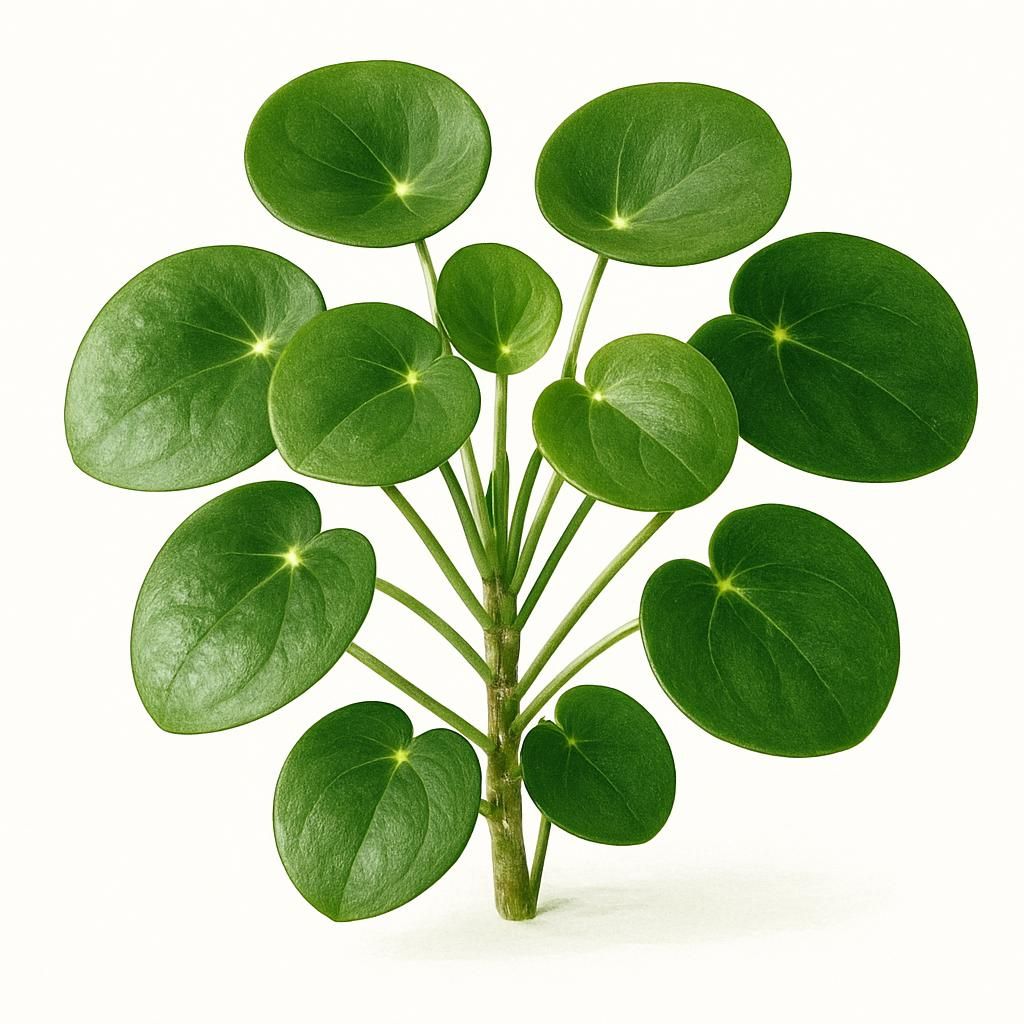
Introduction to Pilea
Pilea peperomioides is a low-maintenance, evergreen perennial native to the shady understory of Yunnan Province in China. Its distinctive circular leaves and upright growth habit have made it a staple in modern interior landscapes and small-scale commercial foliage production. Growers value Pilea for its rapid offset production, which allows for efficient vegetative propagation and consistent year-round supply. The plant tolerates a wide range of indoor light levels while remaining compact, making it ideal for both home growers and specialty plant retailers.
Botanical Profile of Pilea
Pilea peperomioides belongs to the Urticaceae family and is characterized by succulent, peltate leaves up to 10 cm in diameter supported by long petioles. The plant produces numerous basal offsets (pups) that emerge from the soil line, each capable of developing into an independent specimen. Stems are herbaceous, reaching 30–40 cm in height under optimal conditions. Small, inconspicuous greenish-white flowers occasionally appear in clusters but are rarely produced indoors. The species exhibits rapid vegetative growth, with individual leaves maturing in 4–6 weeks.
Soil, pH, and Climate Requirements for Pilea
Pilea thrives in a well-aerated, moisture-retentive medium with excellent drainage. A peat-perlite-coco coir blend provides the ideal balance of water-holding capacity and oxygen exchange around the root zone. Maintain soil pH between 5.8 and 6.5 to optimize micronutrient uptake. Daytime temperatures of 18–24 °C paired with nighttime temperatures no lower than 15 °C promote steady growth without inducing stress. Relative humidity of 50–70 % prevents leaf-edge desiccation while reducing fungal pressure.
| Parameter | Ideal Range | Notes |
|---|---|---|
| Soil Mix | 40 % peat / 30 % perlite / 30 % coco coir | Ensures aeration and moisture retention |
| pH | 5.8 – 6.5 | Prevents iron and manganese lockout |
| Temperature (Day) | 18 – 24 °C | Optimal photosynthetic rate |
| Temperature (Night) | 15 – 18 °C | Avoids chilling injury |
| Relative Humidity | 50 – 70 % | Reduces transpiration stress |
| Light | 10,000 – 20,000 lux | Bright indirect light; avoid direct sun |
Step-by-Step Planting & Propagation
- Select healthy mother plants with at least three mature leaves and visible offsets.
- Gently separate offsets at the base using a sterile blade, ensuring each pup retains a portion of root tissue.
- Prepare 7–10 cm pots with the soil mix described above; pre-moisten to field capacity.
- Insert the offset so the crown sits at soil level; firm the medium around the roots.
- Place newly potted plants under 50–60 % shade cloth or bright indirect light for 7–10 days to reduce transplant shock.
- Resume normal watering once new growth appears, typically within 14 days.
Care & Maintenance regimes for Pilea
Consistent watering, balanced nutrition, and periodic pruning maintain compact form and maximize offset production. Overwatering is the primary cause of root decline; allow the top 2 cm of medium to dry between irrigations. Apply a balanced, water-soluble fertilizer at half strength every four weeks during active growth. Remove spent or damaged leaves at the base to improve airflow and aesthetics.
| Task | Frequency | Details |
|---|---|---|
| Watering | Every 7–10 days | Water thoroughly when top 2 cm is dry |
| Fertilizer | Every 4 weeks | 10-10-10 at ½ strength during spring–fall |
| Pruning | Monthly | Remove yellow or damaged leaves at base |
| Repotting | Every 12–18 months | Upgrade one pot size when roots circle |
Pests, Diseases & Organic Management
Common pests include Aphids, Mealybugs, and Spider Mites. Inspect leaf undersides weekly; a strong water spray or insecticidal soap application at the first sign of infestation is usually sufficient. Root rot caused by Pythium or Phytophthora occurs in waterlogged conditions—improve drainage and reduce irrigation frequency. Powdery mildew can appear in high-humidity environments with poor airflow; increase spacing and apply potassium bicarbonate sprays as needed.
Harvesting, Curing & Optimal Storage
Pilea is primarily grown for foliage rather than harvest; however, offsets can be removed for sale or propagation once they reach 8–10 cm in height. Gently twist or cut pups at soil level, then allow the cut surface to callus for 24 hours before potting. Finished plants ship best in 10–15 cm pots with protective sleeves. Store finished stock at 15–18 °C with 60 % humidity for up to 14 days without quality loss.
Companion Planting for Pilea
Pair Pilea with moisture-loving foliage plants such as Thai Basil or ferns to create humid microclimates that benefit both species. Avoid proximity to heavy feeders like Tomato that may compete for nutrients. The compact habit of Pilea also makes it suitable as an understory companion beneath taller houseplants, improving overall humidity and reducing pest pressure through increased biodiversity.