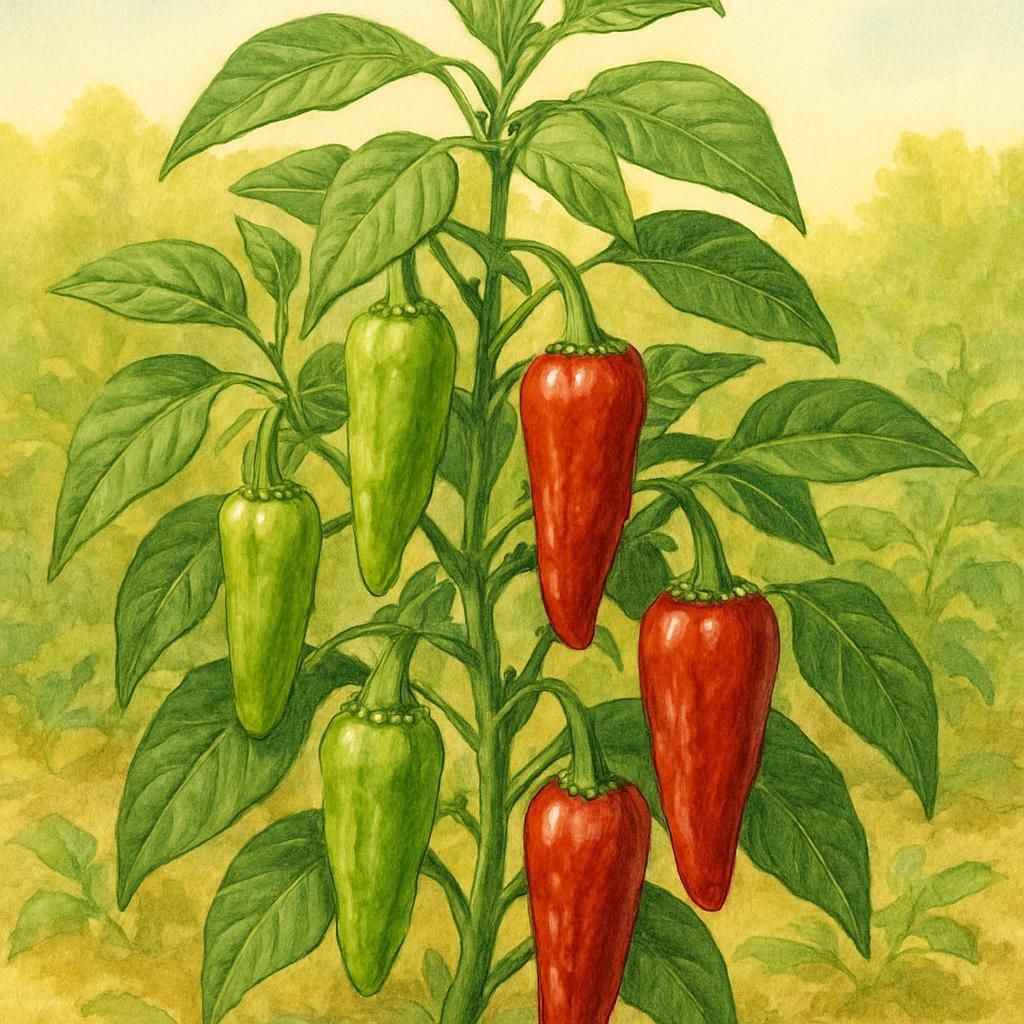
Introduction to Pepperoncini (Greek)
Pepperoncini, a member of the Capsicum annuum species, holds a cherished place in Greek cuisine. Known for its relatively mild heat compared to other chili varieties, it is commonly pickled and used as a condiment or ingredient in salads and sandwiches. Beyond its culinary uses, pepperoncini plants are popular among gardeners due to their aesthetic appeal and ease of cultivation.
Botanical Profile of Pepperoncini (Greek)
Pepperoncini (Capsicum annuum) belongs to the Solanaceae family, sharing botanical characteristics with tomatoes, potatoes, and eggplants. Typically, the plants reach heights of 2 to 3 feet, bearing elongated green pods that ripen to a vibrant red. When used unripe, their flavor is crisp, with a mild tang; upon maturation, the sweetness increases with a bit more heat.
Soil, pH, and Climate Requirements for Pepperoncini (Greek)
Pepperoncini plants thrive in warm, sunny climates. They require rich, well-drained soil and a consistent water supply to achieve optimal growth.
| Factor | Optimal Conditions |
|---|---|
| Soil Type | Loamy, well-draining |
| Soil pH | 5.5 to 7.0 |
| Sunlight | Full sun |
| Temperature Range | 70°F to 85°F (21°C to 29°C) |
| Watering | Moderate, 1 to 1.5 inches per week |
Step-by-Step Planting & Propagation
- Seed Selection and Preparation: Start with high-quality pepperoncini seeds. Soak them overnight to enhance germination rates.
- Germination: Sow seeds indoors about 8-10 weeks before the last frost date in pots filled with seed-starting mix.
- Transplanting: Once seedlings develop true leaves and daytime temperatures consistently reach 70°F, transplant them outdoors, spacing them 18 to 24 inches apart.
- Soil Preparation: Amend garden soil with well-rotted compost or a balanced organic fertilizer before planting.
- Planting: Create small mounds or raised beds to enhance drainage and prevent root rot.
Care & Maintenance Regimes for Pepperoncini (Greek)
| Task | Schedule |
|---|---|
| Watering | 1 to 1.5 inches per week or when soil feels dry |
| Fertilizing | Every 4-6 weeks with balanced fertilizer |
| Pruning | Light pruning for air circulation |
To maintain healthy pepperoncini plants, ensure regular watering and monitor soil moisture levels. Mulching can help conserve moisture and suppress weeds. Fertilize the plants every 4-6 weeks using a balanced organic fertilizer to promote robust growth and fruiting.
Pests, Diseases & Organic Management
Pepperoncini plants are primarily susceptible to pests like aphids, spider mites, and whiteflies. Diseases commonly affecting pepperoncini include powdery mildew and bacterial spot. Employ organic practices such as introducing beneficial insects for pest control and using neem oil or insecticidal soap sprays.
Common Pests:
- Aphids
- Spider mites
- Whiteflies
Common Diseases:
- Powdery mildew
- Bacterial spot
Harvesting, Curing & Optimal Storage
Pepperoncini are typically ready to harvest 65 to 80 days after transplanting. Harvest when they reach 2-3 inches in length and exhibit a light green hue. Use clean, sharp scissors to cut them from the plant to prevent damage.
Curing & Storage:
- Curing: Allow peppers to sit in a well-ventilated, shady area for a few days.
- Storage: Store in the vegetable drawer of your refrigerator for up to two weeks.
- Preservation: Consider pickling to enhance flavor and extend shelf life.
Companion Planting for Pepperoncini (Greek)
Effective companion planting provides multiple benefits, from pest control to enhanced growth rates.
Essentials of Companion Planting:
Utilize companion planting principles to improve plant health naturally. For more on these principles, refer to Summer Companion Planting: 10 Organic Pairings to Boost Small Farm Resilience.
Consider implementing organic strategies to mitigate pest issues and optimize agricultural output. For further insights on soil optimization, explore The Hidden Power of Mulching: 8 Organic Strategies to Transform Small Farm Soil.