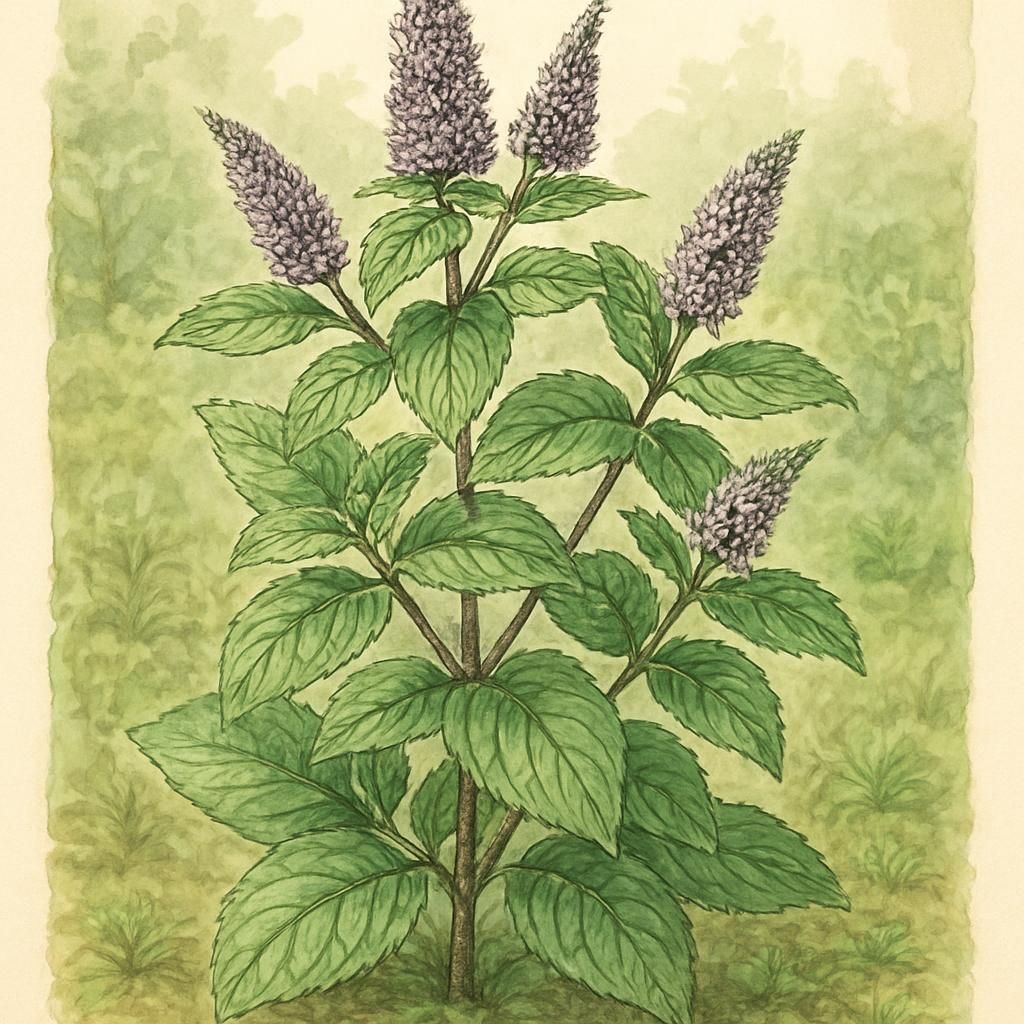
Introduction to Peppermint (Mitcham)
Peppermint (Mitcham) is a perennially popular cultivar known for its strong, minty aroma and high menthol content. Originating from England, it has become a staple in both culinary and medicinal applications. This variety is particularly valued for its essential oils and is often cultivated globally for commercial purposes. Mitcham peppermint is not only a flavorful addition to kitchens but also a vital ingredient in pharmaceutical and personal care products.
Botanical Profile of Peppermint (Mitcham)
Peppermint (Mitcham), scientifically known as Mentha × piperita 'Mitcham', belongs to the Lamiaceae family. It is a hybrid of watermint (Mentha aquatica) and spearmint (Mentha spicata). The plant has smooth, dark green leaves and mauve-colored flowers that bloom in summer. Growing to a height of 30-90 cm, it thrives in cool, moist environments. The unique characteristic of Mitcham peppermint is its high menthol content, which is greater than that of other peppermint cultivars, making it ideal for oil production.
Soil, pH, and Climate Requirements for Peppermint (Mitcham)
For optimal growth, peppermint (Mitcham) requires specific soil and climatic conditions. Below is a table summarizing the ideal requirements:
| Factor | Ideal Conditions |
|---|---|
| Soil Type | Well-drained, loamy soil |
| Soil pH | 6.0 - 7.5 |
| Temperature | 18°C - 24°C (64°F - 75°F) |
| Sunlight | Full sun to partial shade |
| Watering | Regular, moderate moisture |
| Humidity | Moderate to high |
Peppermint grows best in regions where summers are cool and winters are mild. Excessive heat can stress the plant, so a location with moderate weather conditions is favorable.
Step-by-Step Planting & Propagation
Step 1: Site Selection
Choose a site that gets full sun to partial shade and has well-drained soil. It's important to pick a location that allows for good airflow to prevent fungal diseases.
Step 2: Soil Preparation
Prepare the soil by adding organic matter like compost to enhance fertility and drainage. Loosen the soil to a depth of about 30 cm (12 inches) to accommodate the root system.
Step 3: Planting
Peppermint can be propagated through stem cuttings or root divisions. For cuttings, remove a section of the stem just below a node and plant it directly into the prepared soil. Root divisions should be done in early spring or fall, ensuring that each division has a healthy root system. Plant spaced 30-45 cm apart.
Step 4: Watering
Water newly planted peppermint adequately to establish roots, keeping the soil consistently moist but not waterlogged.
Care & Maintenance Regimes for Peppermint (Mitcham)
The care and maintenance of peppermint are crucial for achieving a high yield and quality. The schedule below suggests optimal practices:
| Task | Frequency | Notes |
|---|---|---|
| Watering | Weekly, as needed | Maintain consistent moisture |
| Fertilizing | Every 6-8 weeks | Use a balanced liquid fertilizer |
| Pruning | Regularly | Trim to prevent flowering for best oil |
Regular pruning encourages bushier growth and prevents the plant from becoming leggy. Additionally, harvesting leaves before flowering yields the best essential oil content.
Pests, Diseases & Organic Management
Peppermint (Mitcham) may face pest challenges such as Spider Mites and Aphids, as well as diseases like Powdery Mildew. Organic management strategies include:
- Introducing beneficial insects like ladybugs for aphid control.
- Conducting regular inspections to catch and treat infestations early.
- Applying neem oil or insecticidal soap for pest issues.
Consider reading our blog on 7 Summer Pest Traps That Sabotage Small Farm Harvests for more insights on pest management.
Harvesting, Curing & Optimal Storage
Peppermint is best harvested early in the day when the essential oil content is highest. Cut leaves before flowering, leaving a few centimeters of stems for regrowth. Dry leaves in a well-ventilated, dark area to preserve the oils. Store dried peppermint in airtight containers in a cool, dark place to retain flavor and aroma.
Companion Planting for Peppermint (Mitcham)
Peppermint can be an excellent companion plant due to its ability to repel certain pests. It pairs well with Cabbage and Tomato, aiding in pest control through natural chemical emissions. Avoid planting mint near chamomile, as mint may inhibit chamomile growth. For more on companion planting, see Summer Companion Planting: 10 Organic Pairings to Boost Small Farm Resilience.