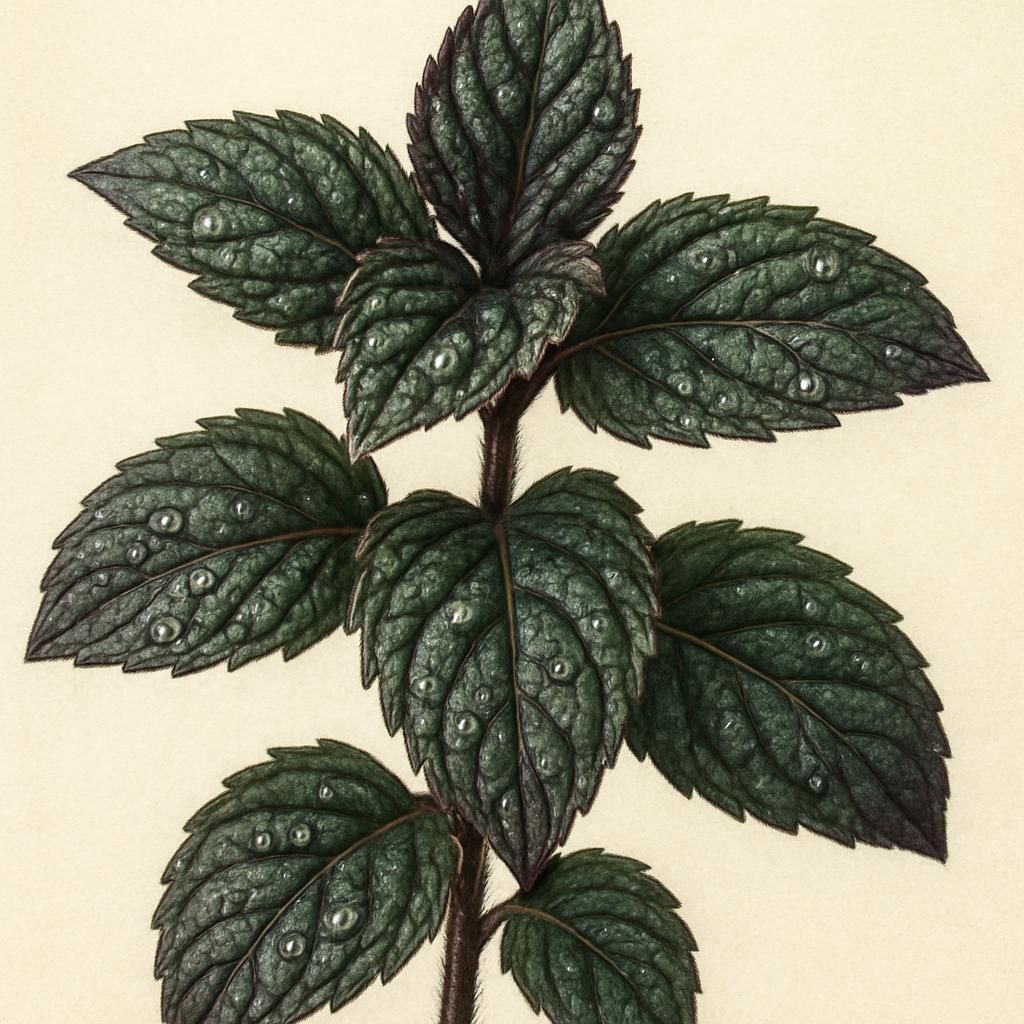
Introduction to Peppermint (Black)
Black Peppermint, also known as Mentha x piperita 'Black', is a fast-growing herb recognized for its dark green to purplish-black foliage and strong minty aroma. This hardy perennial is particularly popular in gardens and commercial farms due to its robust growth and high essential oil yield. Used in food, beverages, and therapeutic products, Black Peppermint is a versatile plant that appeals to both small-scale gardeners and commercial growers.
Botanical Profile of Peppermint (Black)
Black Peppermint belongs to the Lamiaceae family, which includes many aromatic herbs. It is a hybrid between watermint (Mentha aquatica) and spearmint (Mentha spicata). The plant is characterized by its square stems, opposite leaf arrangement, and spikes of small purple flowers. Growing up to 60-90 cm in height, Black Peppermint thrives in temperate climates and rich, well-drained soils.
Soil, pH, and Climate Requirements for Peppermint (Black)
Ensuring optimal conditions for Black Peppermint is key to achieving vigorous growth and maximum oil production. Below is a table summarizing ideal conditions:
| Condition | Ideal Range |
|---|---|
| Soil Type | Loamy, well-drained |
| Soil pH | 6.0 - 7.0 |
| Temperature | 18°C - 24°C (65°F - 75°F) |
| Sunlight | Full sun to partial shade |
| Water Requirement | Moderate moisture, avoid waterlogging |
Step-by-Step Planting & Propagation
- Site Selection: Choose a location with full sun to partial shade where soil drainage is optimal.
- Soil Preparation: Amend soil with organic matter to improve fertility and drainage.
- Propagation: Black Peppermint is best propagated through root division or cuttings. For root division, dig up an established plant and separate the root ball into smaller sections, ensuring each has several shoots. For cuttings, take 10 cm long cuttings from healthy stems, remove lower leaves, and root them in water or a moist potting mix.
- Planting: Plant divisions or rooted cuttings in the ground at a spacing of 30-45 cm apart.
- Watering: Water thoroughly after planting and maintain consistent moisture levels throughout the growing season.
Care & Maintenance Regimes for Peppermint (Black)
A balanced approach to watering, fertilizing, and pruning will ensure healthy growth of Black Peppermint. Below is a table with a suggested care schedule:
| Care Task | Schedule |
|---|---|
| Watering | Once or twice per week; adjust in dry periods |
| Fertilizing | Apply balanced organic fertilizer every 4-6 weeks |
| Pruning | Prune regularly to promote bushiness and control height |
Pests, Diseases & Organic Management
Black Peppermint can be susceptible to pests like Spider Mites and diseases such as powdery mildew. Regular monitoring and implementing organic pest control methods like neem oil sprays can be effective. Ensure good air circulation around plants by not overcrowding, which helps prevent fungal diseases.
Harvesting, Curing & Optimal Storage
Peppermint leaves can be harvested throughout the growing season. For optimal oil content, harvest leaves just before flowering. After harvesting, leaves should be washed and air-dried in a shaded, well-ventilated area. Store dried leaves in airtight containers away from direct sunlight to preserve flavor and potency.
Companion Planting for Peppermint (Black)
Black Peppermint pairs well with crops like Cabbage, Tomato, and Broccoli due to its pest-repellent properties. Such companion planting can promote a healthier and more resilient garden ecosystem. For more tips, refer to Summer Companion Planting: 10 Organic Pairings to Boost Small Farm Resilience.