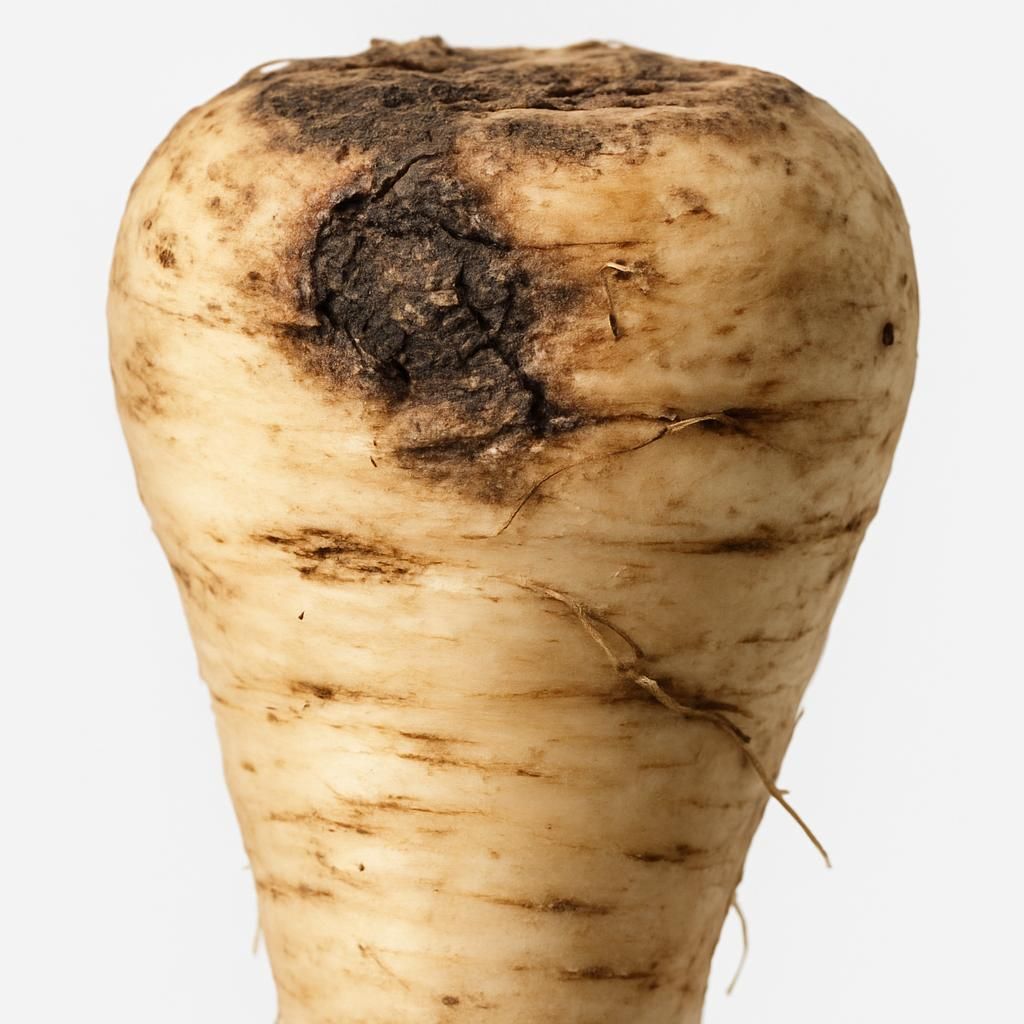
Introduction to Parsnip canker
Parsnip canker, caused by the fungus Itersonilia pastinaceae, is one of the most economically important diseases of parsnips worldwide. The pathogen produces dark, sunken lesions on the shoulder and crown of roots that often crack and allow entry of secondary organisms. In severe cases, entire crops can be rendered unmarketable. The disease is favored by cool, wet weather and persists for several years in soil and plant debris.
Identifying Symptoms & Damage
Early symptoms appear as small, dark-brown to black spots on the root shoulder near soil level. These lesions enlarge into sunken cankers with distinct margins and may develop concentric rings. Cracking of the root surface is common, leading to secondary bacterial soft rots. Foliage may show minor chlorosis, but above-ground symptoms are often subtle until root damage is advanced. Market losses result from both cosmetic downgrading and complete root collapse.
Lifecycle and Progression of Parsnip canker (MUST INCLUDE A MARKDOWN TABLE OF LIFECYCLE STAGES)
The fungus overwinters as chlamydospores and mycelium in crop residues and soil. In spring, spores are splashed onto emerging seedlings by rain or irrigation. Infection occurs through wounds or natural openings on the root crown. The pathogen produces new spores on lesion surfaces that are again dispersed by water, perpetuating the cycle.
| Stage | Description | Duration | Key Conditions |
|---|---|---|---|
| Overwintering | Chlamydospores and mycelium in soil and debris | 4–8 months | Cool, moist soil |
| Primary Infection | Splash dispersal to seedlings | 2–6 weeks after sowing | 10–18 °C, frequent rain |
| Lesion Expansion | Canker development on root shoulder | 4–10 weeks | High humidity, poor drainage |
| Secondary Spread | New spores produced on lesions | Ongoing during season | Wet foliage, splashing |
| Survival | Return to soil via debris | Post-harvest | Crop residues left in field |
Environmental Triggers & Risk Factors
Cool temperatures (10–18 °C) and prolonged leaf wetness strongly favor infection. Heavy clay soils with poor drainage increase disease severity by maintaining high moisture around the crown. High plant density, compacted soil, and mechanical injury during cultivation create entry points. Late sowing into cold, wet seedbeds also elevates risk.
Organic Control & Treatment Plans (MUST INCLUDE A MARKDOWN TABLE OF TREATMENT OPTIONS AND FREQUENCIES)
Organic management relies on cultural practices, resistant varieties, and approved biological products. No curative fungicides are available; prevention is essential.
| Treatment Option | Frequency | Application Notes |
|---|---|---|
| 3–4 year crop rotation with non-hosts | Annual | Avoid Carrot and Parsnip in same field |
| Raised beds and improved drainage | Pre-plant | Reduce crown moisture |
| Resistant varieties (e.g., ‘Javelin’, ‘Albion’) | Every season | Check seed supplier catalogs |
| Copper-based sprays (OMRI listed) | Every 7–10 days during wet periods | Begin at 4-leaf stage |
| Compost tea or Bacillus subtilis drench | At sowing and 3 weeks later | Suppress soil inoculum |
| Sanitation – remove all crop debris | Post-harvest | Deep plow or remove residues |
Preventing Parsnip canker in the Future
Select well-drained fields and avoid planting in low-lying areas. Use certified, disease-free seed and treat with hot water (50 °C for 20 min) if infection history exists. Maintain soil organic matter to improve structure and drainage. Implement strict sanitation by removing all parsnip residues after harvest. Consider cover crops such as mustard or oats to reduce soil inoculum between rotations.
Crops Most Affected by Parsnip canker
While parsnip is the primary host, closely related Carrot and Parsley can show minor infections under high disease pressure. Beet and Turnip are occasionally reported as alternative hosts in heavily infested soils.