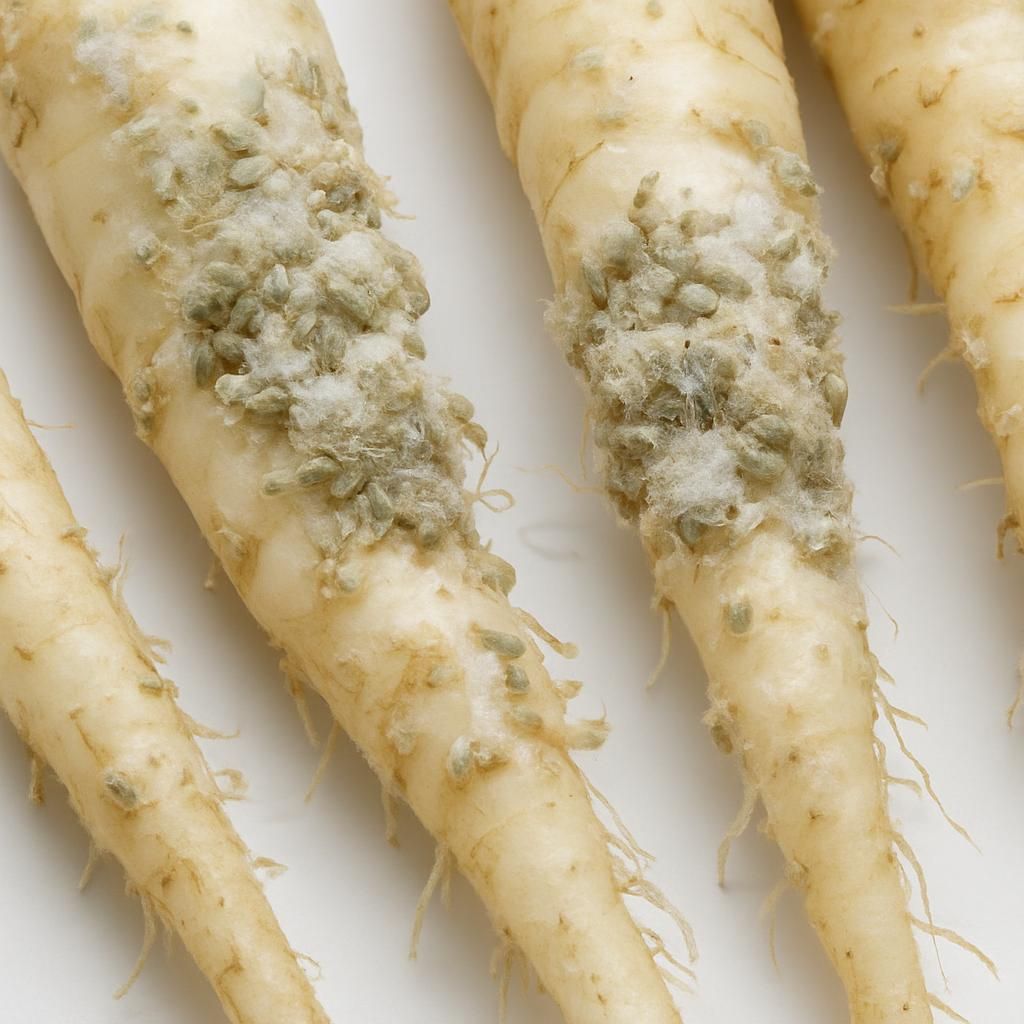
Introduction to parsley root aphid
The parsley root aphid (Pemphigus bursarius) is a specialized root-feeding aphid that primarily attacks plants in the Apiaceae family, with parsley being its most common host. Unlike foliar aphids, this species spends most of its life cycle underground, feeding on root tissues and disrupting nutrient and water uptake. Infestations often go unnoticed until plants exhibit severe above-ground symptoms, leading to significant economic losses in both field and greenhouse production.
This pest is particularly problematic in temperate regions where parsley is grown intensively. Its ability to form dense colonies protected by soil and wax secretions makes chemical control difficult, requiring a combination of cultural, biological, and targeted organic methods for effective suppression.
Identifying Symptoms & Damage
Early signs of parsley root aphid infestation include wilting during midday heat despite adequate soil moisture, followed by progressive yellowing of older leaves. Roots develop swollen, corky galls and white waxy deposits where aphid colonies aggregate. Severely affected plants show stunted growth, reduced leaf production, and eventual collapse.
Damage is most severe during cool, moist periods when aphids are actively feeding and reproducing. Root systems become distorted and inefficient, leading to poor nutrient absorption and increased susceptibility to secondary pathogens such as Pythium.
Lifecycle and Progression of parsley root aphid (MUST INCLUDE A MARKDOWN TABLE OF LIFECYCLE STAGES)
The parsley root aphid has a complex life cycle involving both sexual and asexual reproduction, with overwintering occurring as eggs on primary hosts like poplar trees before migrating to parsley roots.
| Stage | Description | Duration | Key Activity |
|---|---|---|---|
| Egg | Overwinters on poplar bark or in soil | 4-6 months | Dormant stage |
| Fundatrix (Stem Mother) | Hatches in spring and forms leaf galls on poplar | 2-3 weeks | Produces first parthenogenetic generation |
| Alate (Winged) Migrants | Fly to parsley and other Apiaceae | 1-2 weeks | Colonize new hosts |
| Apterous (Wingless) Females | Reproduce parthenogenetically on roots | Ongoing | Rapid colony expansion |
| Sexual Forms | Produced in autumn | 1-2 weeks | Mate and lay overwintering eggs |
Environmental Triggers & Risk Factors
Parsley root aphid outbreaks are favored by cool soil temperatures between 10-20°C and high soil moisture levels that facilitate root colonization. Heavy clay soils with poor drainage increase risk by maintaining the moist conditions aphids prefer.
Continuous cropping of parsley or related species without rotation allows populations to build over multiple seasons. Nearby poplar trees serve as primary hosts for the sexual phase, increasing migration pressure in spring.
| Factor | Optimal Range for Infestation | Management Implication |
|---|---|---|
| Soil Temperature | 10-20°C | Avoid planting during cool spring periods |
| Soil Moisture | >70% field capacity | Improve drainage and avoid overwatering |
| Soil Type | Clay/loam | Use raised beds or amend with organic matter |
| Crop History | Continuous Apiaceae | Implement 3-year rotation |
Organic Control & Treatment Plans (MUST INCLUDE A MARKDOWN TABLE OF TREATMENT OPTIONS AND FREQUENCIES)
Effective management relies on integrated organic strategies that combine soil health improvement, biological controls, and targeted applications.
| Treatment Option | Active Ingredient/Method | Application Frequency | Notes |
|---|---|---|---|
| Beneficial Nematodes | Heterorhabditis bacteriophora | Every 2-3 weeks during active growth | Apply to moist soil at 10-15°C |
| Neem Oil Soil Drench | Azadirachtin | Every 7-10 days for 3 applications | Use emulsified formulation for root penetration |
| Insecticidal Soap | Potassium salts of fatty acids | Weekly for 4 weeks | Target young colonies; reapply after rain |
| Companion Planting | Marigold or Nasturtium borders | Seasonal | Repels aphids and attracts beneficial insects |
| Crop Rotation | Non-host crops (e.g., Lettuce) | 3-year cycle | Breaks host continuity |
| Reflective Mulch | Silver plastic mulch | At planting | Disrupts aphid host-finding behavior |
Preventing parsley root aphid in the Future
Prevention begins with selecting well-drained planting sites and using certified disease-free seed or transplants. Implementing a strict 3-year rotation away from Apiaceae crops significantly reduces overwintering populations.
Regular soil testing and amendment with compost improves root health and plant resilience. Monitoring nearby poplar trees for spring galls allows early intervention before migrants reach parsley fields.
Crops Most Affected by parsley root aphid
The parsley root aphid primarily targets Parsley but also infests other Apiaceae including carrot, celery, parsnip, and dill. Secondary hosts may include certain varieties of Coriander when grown in close proximity to infested parsley.
While Carrot and Celery suffer similar root damage, the economic impact is greatest in parsley production due to the high value of fresh leaf harvests.