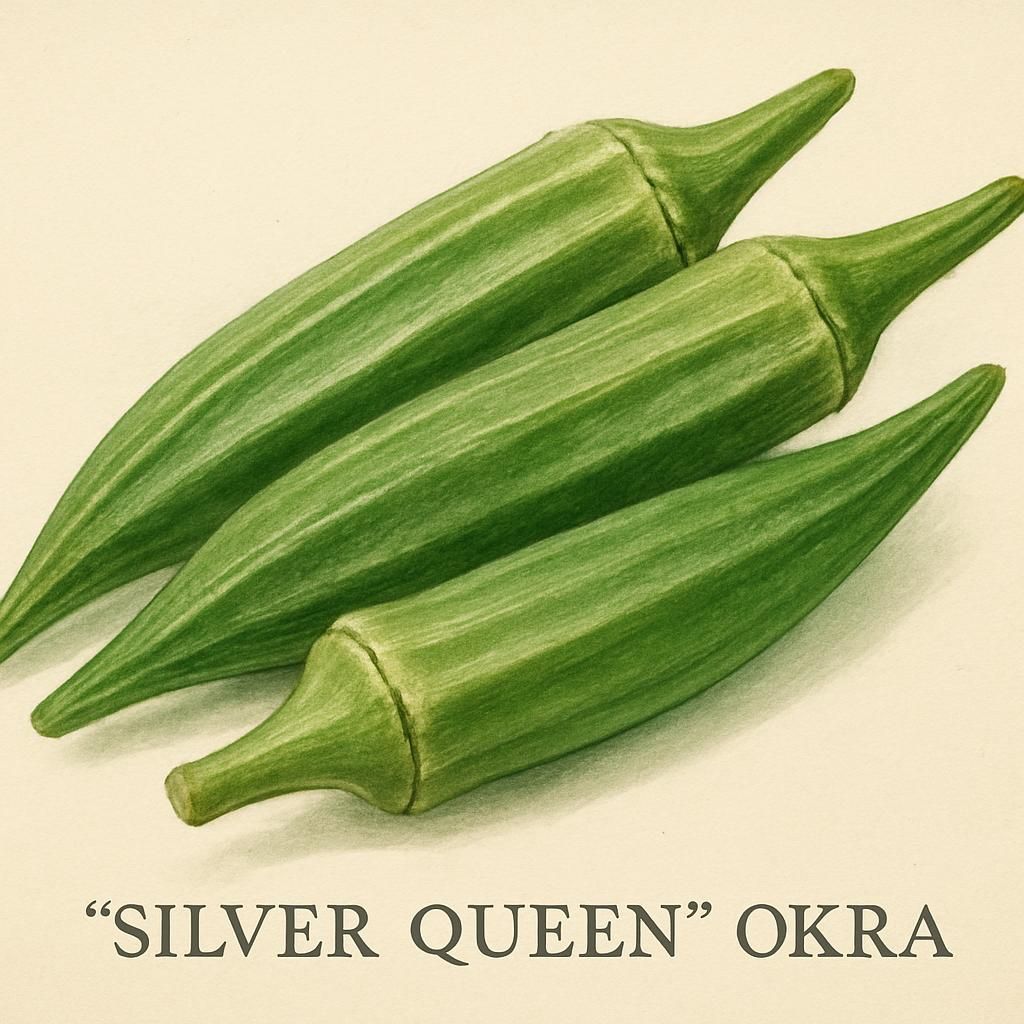
Introduction to Okra (Silver Queen)
Okra, a flowering plant in the mallow family, is valued for its edible green seed pods. The "Silver Queen" variety is especially prized for its tender and delicate pods, making it a favorite among gardeners and chefs alike. Native to tropical and subtropical regions, this warm-weather crop is renowned for its ability to thrive in heat, providing a bountiful harvest when grown under the right conditions.
Botanical Profile of Okra (Silver Queen)
Belonging to the Malvaceae family, 'Silver Queen' okra matures into a robust plant typically reaching a height of 4 to 6 feet. It produces striking flowers from which the tender, silver-green pods emerge. Botanically identified as Abelmoschus esculentus, this variety is known for its spineless pods that are ideal for culinary uses, from frying and boiling to steaming and pickling.
Soil, pH, and Climate Requirements for Okra (Silver Queen)
The 'Silver Queen' okra requires specific soil and climate conditions for optimal growth. This table summarizes the ideal growing conditions:
| Factor | Ideal Condition |
|---|---|
| Soil Type | Well-drained, sandy-loam soil |
| Soil pH | 6.0 to 6.8 |
| Temperature | 70 to 95°F (21 to 35°C) |
| Rainfall | Moderate, with well-drained soil |
| Sunlight | Full sun, at least 6 hours daily |
Step-by-Step Planting & Propagation
- Seed Selection: Source certified 'Silver Queen' okra seeds from reputable suppliers to ensure quality.
- Soil Preparation: Prepare the soil by tilling and incorporating organic matter such as compost to enhance fertility and drainage.
- Seed Sowing: Plant seeds directly into the soil after the danger of the last frost has passed. Sow seeds 1 inch deep and 12 inches apart in rows spaced 3 feet apart.
- Germination: Expect germination within 6 to 10 days. Maintain moist soil conditions to facilitate seedling emergence.
- Thinning: Once seedlings are 3 inches tall, thin them to one plant every 12 to 18 inches to prevent overcrowding.
Care & Maintenance Regimes for Okra (Silver Queen)
A well-maintained care routine ensures a healthy, productive okra crop. Here's an organized schedule:
| Task | Schedule |
|---|---|
| Watering | Moderate, about 1 inch of water per week. |
| Fertilizing | Apply a balanced fertilizer every 3 weeks. |
| Pruning | Remove lower leaves and dead branches weekly. |
Pests, Diseases & Organic Management
'Silver Queen' okra may face threats from pests and diseases. Common pests include Aphids, Spider Mites, and Whiteflies. Disease threats encompass powdery mildew and verticillium wilt.
Organic Management Tips:
- Implement crop rotation and interplant with pest repellant herbs.
- Use insecticidal soap for aphid and mite control.
- Apply neem oil as a deterrent for various pests.
For a deeper understanding of organic pest control, you can refer to this insightful blog post on Crop Diseases Under the Microscope: 9 Organic Fixes for Small Farm Resilience.
Harvesting, Curing & Optimal Storage
Harvest okra pods when they are 3 to 4 inches long to ensure tenderness. Use sharp scissors to prevent damaging the plants. For curing, leave the pods in a cool, dry area with good ventilation. Packaged in paper bags, okra can be stored in the refrigerator for up to a week.
Companion Planting for Okra (Silver Queen)
Beneficial companions include Basil and Cucumbers, which help deter pests and promote growth. Avoid planting okra near Sweet Potatoes as they compete for nutrient resources.