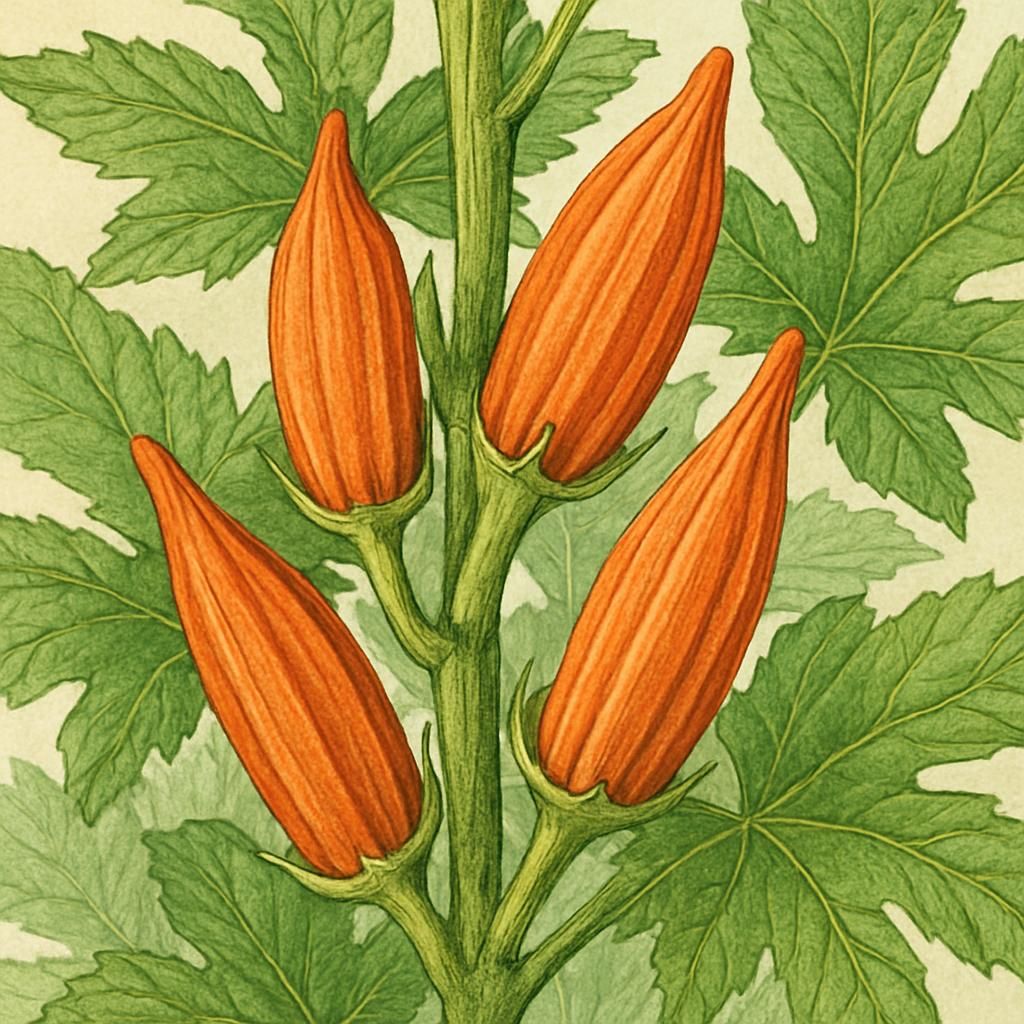
Introduction to Okra (Jing Orange)
Jing Orange Okra is a striking variety of okra prized for its vibrant orange pods. This unique plant not only adds color to the garden but also offers the same culinary versatility as traditional green okra. Native to the African continent, okra is a staple in southern cuisines worldwide, known for its mild flavor and mucilaginous texture that's perfect for thickening soups and stews.
Botanical Profile of Okra (Jing Orange)
Jing Orange Okra (Abelmoschus esculentus) belongs to the Malvaceae family, which includes hibiscus and cotton. This annual plant features tall, upright stalks that can grow up to 6 feet tall. The leaves are broad and lobed, typical of the species, and the flowers are large and typically pale yellow with a maroon center.
Soil, pH, and Climate Requirements for Okra (Jing Orange)
To thrive, Okra requires specific soil, pH, and climate conditions. Here is a comprehensive table of the ideal conditions for cultivating Jing Orange Okra:
| Factor | Ideal Condition |
|---|---|
| Soil Type | Well-drained, sandy loam |
| pH Level | 6.0 - 7.5 |
| Temperature Range | 75°F - 95°F (24°C - 35°C) |
| Sunlight | Full sun |
| Rainfall | Moderate to low |
Step-by-Step Planting & Propagation
- Seed Selection: Start with high-quality seeds of Jing Orange Okra. You can soak them overnight to improve germination.
- Site Preparation: Choose a full-sun location with well-drained soil. Prepare the soil by tilling and adding organic compost.
- Planting: Sow seeds about 1 inch deep and 12 inches apart in rows that are 3 feet apart.
- Watering: Water seeds immediately and keep consistently moist but not waterlogged until germination occurs, usually within 7-14 days.
- Thinning: Once seedlings are established, thin plants to maintain a space of about 18 inches between plants.
- Transplanting: For optimal growth, consider transplanting into richer soil or adding compost mulch around the base.
Care & Maintenance Regimes for Okra (Jing Orange)
Care and maintenance vary with climate and soil conditions; however, following a structured regime can enhance growth:
| Task | Schedule |
|---|---|
| Watering | 1-2 inches per week |
| Fertilizing | Once a month (balanced NPK) |
| Pruning | As needed to remove yellow leaves |
Pests, Diseases & Organic Management
Okra is susceptible to a variety of pests and diseases. Common pests include Aphids and Spider Mites (new link), while diseases can include powdery mildew and wilt. Employing organic management strategies like neem oil and promoting biodiversity through companion planting can mitigate these issues. For a detailed guide, consider reading this blog post on organic defenses that shield plants from common farm pests.
Harvesting, Curing & Optimal Storage
Okra pods should be harvested when they are 2-3 inches long, usually 50-60 days post-planting. Prompt harvesting prevents pods from becoming tough and woody. Curing is not typically necessary for okra, but they should be stored in a cool, dry place, preferably in a refrigerator, where they can last up to a week.
Companion Planting for Okra (Jing Orange)
Companion planting can be beneficial for Okra by enhancing growth and minimizing pests. Consider planting with Tomato, Basil, and Peas, which can improve soil quality and enhance Okra's growth by repelling pests.
To explore more companion planting strategies, especially effective ones for resilience in small farms, you might find this blog on companion planting synergies insightful.