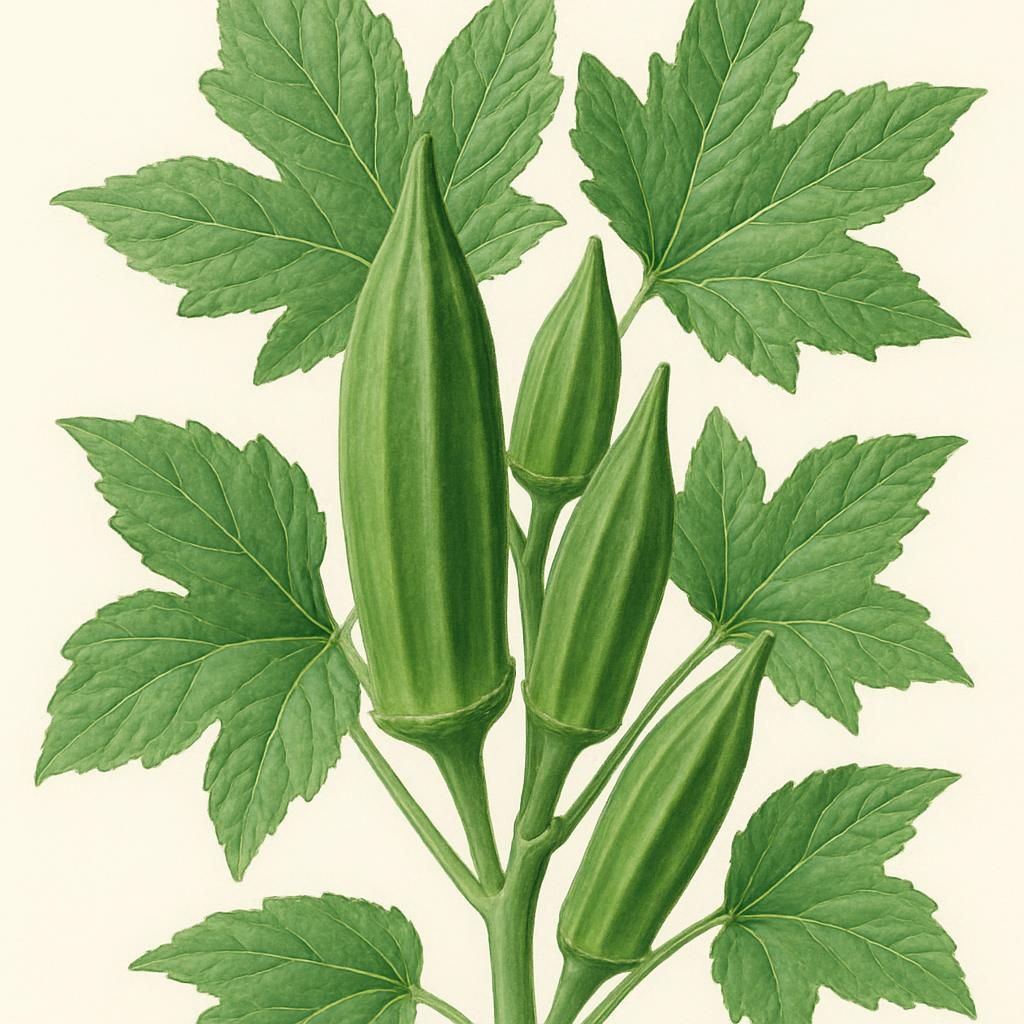
Introduction to Okra (Clemson Spineless)
Okra, scientifically known as Abelmoschus esculentus, is a warm-season vegetable renowned for its edible green pods and high nutritional value. Among its varieties, Clemson Spineless stands out for its lack of tough spines, making it a consumer and gardener favorite. This variety was developed in 1939 and has since gained popularity for producing tender, flavorful pods that are perfect for various culinary uses.
Botanical Profile of Okra (Clemson Spineless)
The Clemson Spineless okra plant is a flowering plant in the mallow family. It can grow between 3 to 6 feet tall with large heart-shaped leaves. The flowers are large and yellow with a purple center, giving way to slender, green pods typically 3 to 4 inches long. The plant is annual, meaning it completes its lifecycle within a single growing season.
Soil, pH, and Climate Requirements for Okra (Clemson Spineless)
Okra thrives in warm climates with full sunlight and a long growing season. Well-drained soil rich in organic matter is optimal for planting.
| Requirement | Ideal Condition |
|---|---|
| Soil Type | Well-drained loam |
| pH Range | 6.0 to 6.8 |
| Temperature | 75°F to 90°F |
| Sunlight | Full sun (6+ hours) |
Step-by-Step Planting & Propagation
- Timing: Plant okra seeds after the last frost when soil temperatures reach at least 65°F.
- Preparation: Soak seeds overnight to boost germination rates.
- Sowing: Sow seeds 1 to 1.5 inches deep, spaced 12 to 18 inches apart, in rows that are 3 feet apart.
- Thinning: When seedlings reach 3 inches in height, thin them to one plant every 12 inches.
- Transplanting: If starting indoors, transplant when seedlings are at least 4 inches tall and have three true leaves.
For detailed soil preparation tips, refer to Spring Soil Prep: 9 Organic Steps to Prime Small Farms for Explosive Growth.
Care & Maintenance Regimes for Okra (Clemson Spineless)
Proper care and maintenance include regular watering, fertilization, and monitoring for pests and diseases.
| Care Factor | Description |
|---|---|
| Watering | 1-inch per week; deeper in dry spells |
| Fertilization | Composted manure or balanced fertilizer |
| Pruning | Remove spent pods to encourage growth |
Pruning involves removing spent leaves and diseased parts to enhance airflow and light penetration.
Pests, Diseases & Organic Management
Clemson Spineless okra is susceptible to several pests and diseases, including Aphids, Spider Mites, and Powdery Mildew. Natural pest management includes introducing beneficial insects such as ladybugs and using neem oil or insecticidal soap solutions. Maintaining plant health through regular care and proper spacing helps prevent disease outbreaks.
Read more about integrated pest management in 7 Summer Pest Traps That Sabotage Small Farm Harvests.
Harvesting, Curing & Optimal Storage
Harvest okra pods when they are 3 to 4 inches long for the best tenderness. Use a sharp knife or scissors to cut pods from the plant to avoid damage.
- Frequency: Harvest every 3 days to encourage continuous production.
- Storage: Store unwashed pods in a perforated plastic bag in the refrigerator for up to a week.
- Curing: If necessary, curing can be done by air-drying to prolong storage.
Companion Planting for Okra (Clemson Spineless)
Companion planting enhances growth and protection. Good companions for okra include Corn, which can provide partial shade, and Peppers, which help deter pests.
For more companion planting strategies, visit Summer Companion Planting: 10 Organic Pairings to Boost Small Farm Resilience.