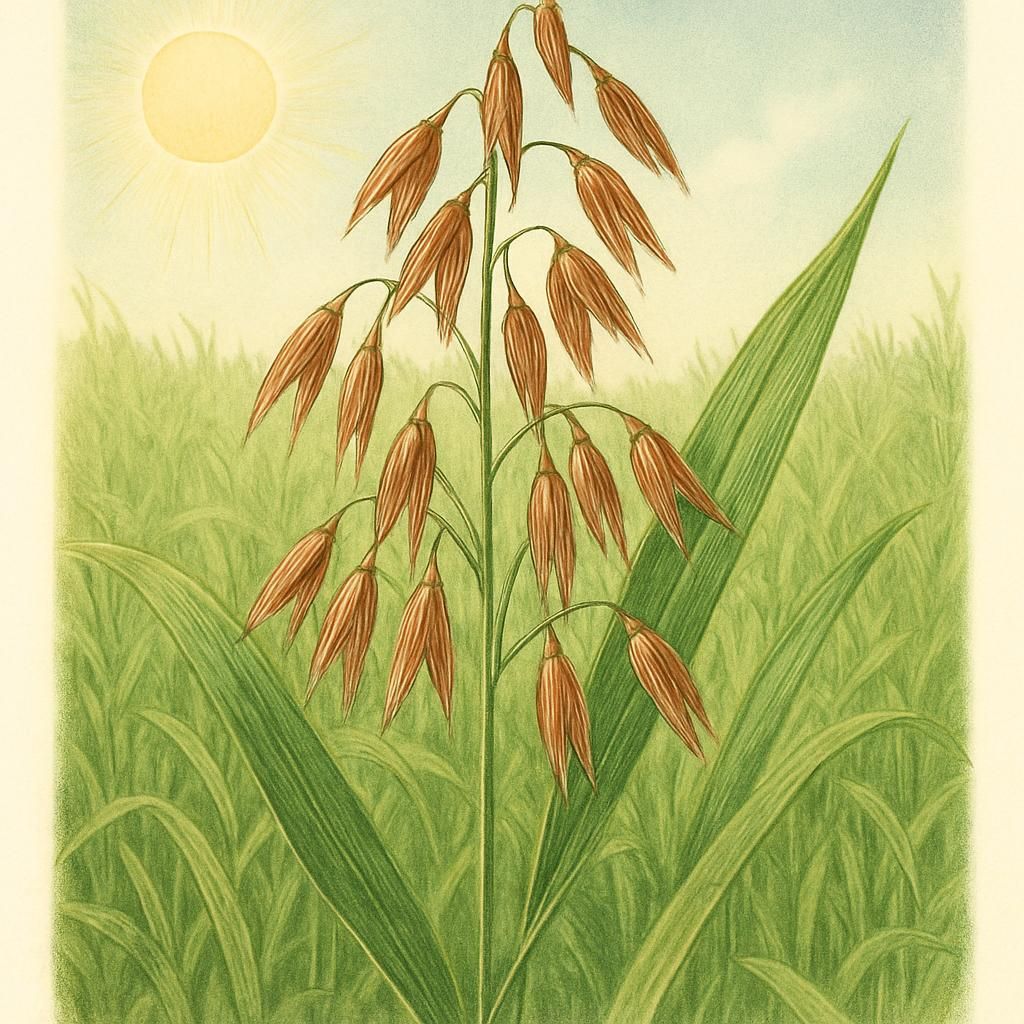
Introduction to Oat (Red Rustproof)
The Red Rustproof oat is a hardy and resilient strain known for its resistance to rust disease and adaptability to a range of soil types. This variety has become a staple crop for farmers who require a dependable source of grain that can withstand varying environmental conditions. With a high nutrient profile, Red Rustproof oats are used for both human consumption and livestock feed.
Botanical Profile of Oat (Red Rustproof)
Botanically classified as Avena sativa, this oat variety belongs to the Poaceae family. It is an annual grass, primarily grown for its seeds. The plant features tall, slender stems with feathery seed heads that mature into hull-covered grains. Unique for its rust-resistant properties, the Red Rustproof oat is characterized by its robust yield and adaptability.
Soil, pH, and Climate Requirements for Oat (Red Rustproof)
| Condition | Ideal Range |
|---|---|
| Soil | Loamy, well-drained |
| pH | 5.5 - 7.0 |
| Temperature | 15°C to 25°C |
| Rainfall | 600 - 800 mm |
Oat (Red Rustproof) thrives in loamy, well-drained soils with a neutral pH. This variety prefers moderate climates where temperature fluctuations are minimal. Adequate rainfall or irrigation is crucial, particularly during the germination and flowering stages.
Step-by-Step Planting & Propagation
- Site Selection: Choose a location with full sun exposure and well-drained soil.
- Soil Preparation: Till the soil thoroughly to a depth of 6 inches, incorporating organic matter.
- Sowing Seeds: Plant seeds 1-2 inches deep at a spacing of 8 inches apart in rows.
- Watering: Ensure consistent moisture throughout the germination period.
- Thinning: Once seedlings emerge, thin them to maintain optimal spacing.
Care & Maintenance Regimes for Oat (Red Rustproof)
| Care Practice | Frequency |
|---|---|
| Watering | Weekly |
| Fertilization | Every 4-6 weeks |
| Pruning | Not required |
Red Rustproof oats require consistent watering, especially during dry spells. Fertilization should be carried out every 4-6 weeks with a balanced fertilizer to support growth. Unlike some crops, oats do not need pruning but require weed control to reduce competition for nutrients.
Pests, Diseases & Organic Management
Though resistant to rust, Red Rustproof oats are susceptible to pests like Aphids and Spider Mites. Implementing an integrated pest management system that includes natural predators and organic pesticides can minimize pest damage. Regular field inspections can help catch infestations early.
Harvesting, Curing & Optimal Storage
Harvest oats when the grains are firm and the plant has turned golden-brown. Use a combine harvester for large fields or hand-sickle methods for smaller patches. Post-harvest, oats should be cured by air-drying. Store them in a cool, dry place in sealed containers to prevent moisture absorption.
Companion Planting for Oat (Red Rustproof)
Oats benefit from being planted alongside plants like clover, which can improve soil nitrogen content. Avoid planting near Corn to reduce competitive nutrient uptake.
Explore more on the benefits of strategic crop pairings in our article on Summer Companion Planting: 10 Organic Pairings to Boost Small Farm Resilience.
For a comprehensive guide on managing pests and diseases, check out Crop Diseases Under the Microscope: 9 Organic Fixes for Small Farm Resilience.
You can read more about Oats for further cultivation insights.