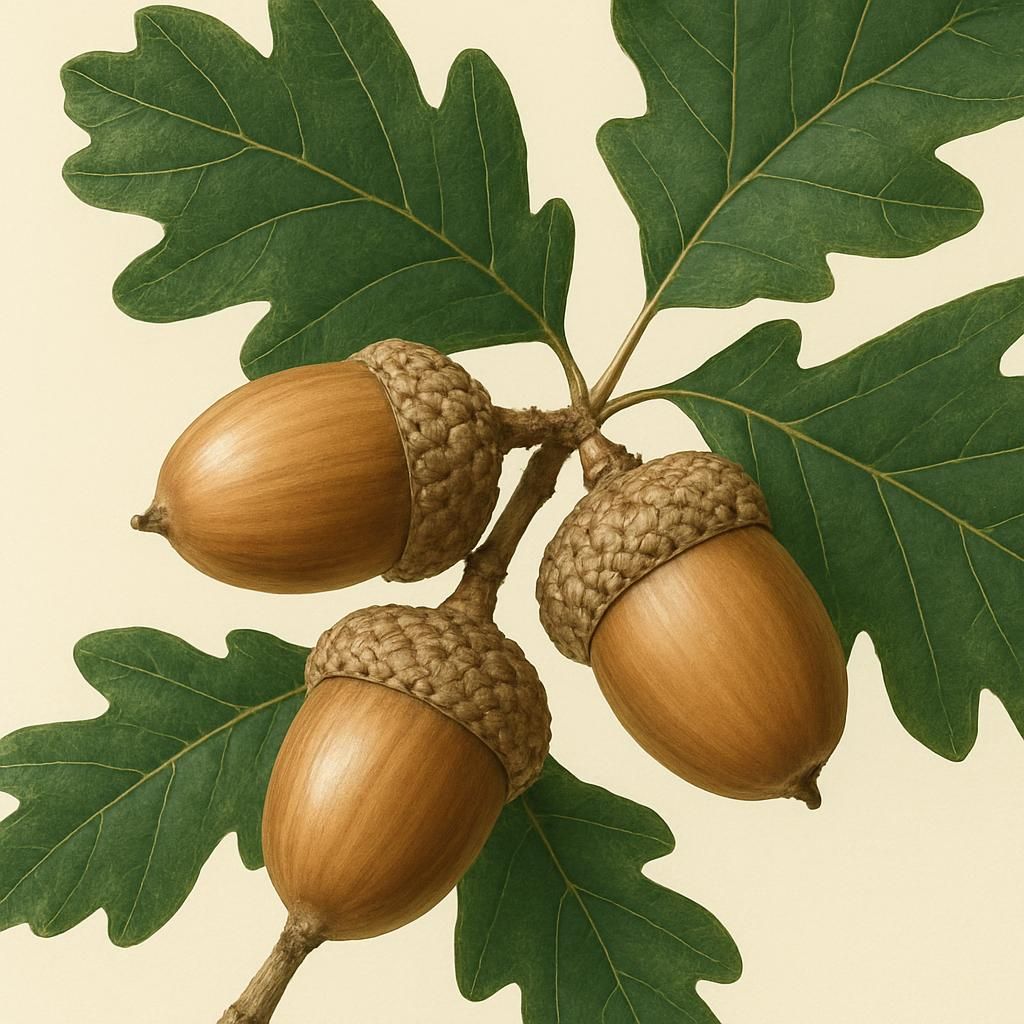
Introduction to Oak Acorn (White Oak)
White oak (Quercus alba) is one of the most ecologically and economically important hardwood trees in eastern North America. Its acorns are large, sweet, and highly sought after by wildlife and foragers alike. Unlike many oak species, white oak acorns mature in a single season and contain lower tannin levels, making them more palatable for both animals and humans after minimal processing. Growing white oak from acorn to mature tree requires patience, proper site selection, and long-term stewardship, but the rewards include timber value, wildlife habitat, carbon sequestration, and a sustainable nut crop.
This definitive growing guide provides professional-grade agricultural advice for establishing and managing white oak plantings, whether for reforestation, agroforestry systems, or small-scale nut production. Emphasis is placed on sustainable practices that support biodiversity and long-term soil health.
Botanical Profile of Oak Acorn (White Oak)
Quercus alba belongs to the beech family (Fagaceae) and is characterized by its rounded-lobed leaves that turn deep red to purple in autumn. The tree can reach 80–100 feet at maturity with a broad, rounded crown and a trunk diameter of 3–4 feet. White oak produces both male and female flowers on the same tree; wind-pollinated catkins appear in spring, followed by the development of the acorn fruit.
The acorn itself measures 0.5–1 inch long, with a light brown, smooth shell and a shallow, warty cap that covers about one-quarter of the nut. Inside, the kernel is white and sweet when mature. White oak acorns germinate in the fall shortly after dropping, sending a radicle deep into the soil before winter dormancy. This hypogeal germination strategy gives seedlings a head start the following spring.
Soil, pH, and Climate Requirements for Oak Acorn (White Oak)
White oak thrives on well-drained upland sites with deep, fertile loams. It tolerates a range of soil textures but performs best where moisture is consistent yet never waterlogged. The species is moderately drought-tolerant once established but benefits from supplemental water during the first three to five years.
| Parameter | Ideal Range | Notes |
|---|---|---|
| Soil Type | Deep loam, sandy loam, silt loam | Avoid heavy clays and compacted soils |
| Soil pH | 5.5 – 7.0 | Slightly acidic to neutral preferred |
| Drainage | Well-drained | Standing water for >48 hours is fatal |
| USDA Hardiness Zones | 3 – 8 | Native range covers much of eastern U.S. |
| Annual Precipitation | 30 – 60 inches | Supplemental irrigation helpful first years |
| Temperature Range | -30 °F to 90 °F | Avoid planting in extreme southern heat zones without irrigation |
Site preparation should include removal of competing vegetation and incorporation of organic matter to improve structure and water-holding capacity. Soil tests are recommended before planting to correct nutrient deficiencies, particularly phosphorus and potassium.
Step-by-Step Planting & Propagation
- Acorn Collection & Testing: Gather sound acorns in early autumn when they drop naturally. Float-test in water; viable acorns sink. Discard any showing weevil exit holes.
- Cold Stratification: White oak acorns require only a short cold period. Store at 33–38 °F in moist sand or peat for 30–60 days if planting is delayed.
- Site Preparation: Clear a 3-foot diameter circle around each planting spot. Loosen soil to 12 inches and incorporate aged compost.
- Direct Seeding: Plant acorns 1–2 inches deep, pointed end down, in late fall or early spring. Space trees 20–30 feet apart for timber or 40–50 feet for open-grown nut production.
- Container Propagation: Sow in deep 1-gallon pots with well-draining media. Keep seedlings in partial shade for the first season before outplanting.
- Protection: Install 4-foot tree shelters or wire cages to prevent deer browse and rodent damage during the first 3–5 years.
Care & Maintenance regimes for Oak Acorn (White Oak)
Young white oaks require consistent weed control and protection from browsing. Mulch rings 3–4 inches deep and 3 feet wide conserve moisture and suppress competition. Fertilization is rarely needed on fertile sites; however, a light application of balanced slow-release fertilizer (10-10-10) in year two can accelerate early growth on poor soils.
| Task | Schedule | Details |
|---|---|---|
| Watering | Year 1–3: 1 inch/week during dry spells | Deep soak every 7–10 days; reduce after establishment |
| Fertilizer | Year 2 only if growth <12 inches | 0.5 lb 10-10-10 per tree in early spring; avoid high-nitrogen after year 3 |
| Pruning | Dormant season (Dec–Feb) | Remove only dead, damaged, or crossing branches; maintain single leader |
| Mulch Renewal | Spring annually | Replenish 2–3 inches; keep mulch 6 inches from trunk |
| Weed Control | Monthly during growing season | Hand-pull or use organic mulch; avoid herbicides near trunk |
Mature white oaks require little intervention beyond periodic thinning in forest stands to maintain crown health and nut production.
Pests, Diseases & Organic Management
White oak faces several insect and disease pressures, though healthy, vigorous trees rarely suffer significant damage. Aphids may colonize new growth but are usually controlled by natural predators. Oak wilt (caused by Bretziella fagacearum) is a serious vascular disease; prevent spread by avoiding pruning during April–July and sanitizing tools between trees.
Gypsy moth caterpillars can defoliate young trees during outbreak years; Bacillus thuringiensis (Bt) sprays provide targeted organic control. Powdery mildew occasionally appears on shaded foliage but seldom requires treatment. Maintain spacing and airflow to reduce fungal incidence.
Rodents and deer are the primary threats to seedlings. Use physical barriers and consider planting extra acorns to account for 20–30% browse loss.
Harvesting, Curing & Optimal Storage
White oak acorns ripen and drop from September to November depending on latitude. Collect daily to minimize weevil damage and fungal infection. Remove caps and float-test again; discard floaters. Spread sound acorns in a single layer on screens in a well-ventilated area at 60–70 °F for 3–7 days to reduce moisture content to approximately 30%.
For long-term storage, refrigerate at 33–38 °F in breathable containers or freeze at 0 °F for up to two years. Tannin leaching (cold water or boiling) is required before human consumption to remove bitterness.
Companion Planting for Oak Acorn (White Oak)
White oak integrates well into diverse agroforestry and silvopasture systems. Understory plantings of Clover and Yarrow improve soil nitrogen and attract beneficial insects. Thyme and Nasturtium provide ground cover that suppresses weeds while supporting pollinators.
Avoid planting shallow-rooted crops too close to the trunk once trees exceed 10 years of age. Compatible mid-story species include serviceberry and pawpaw, which tolerate partial shade and do not compete aggressively with oak roots. In open plantings, inter-row strips of native grasses or low-growing legumes maintain biodiversity and reduce erosion.
Stop Treating Tomato Blight Like a Spray Problem: Here Is What Works Better