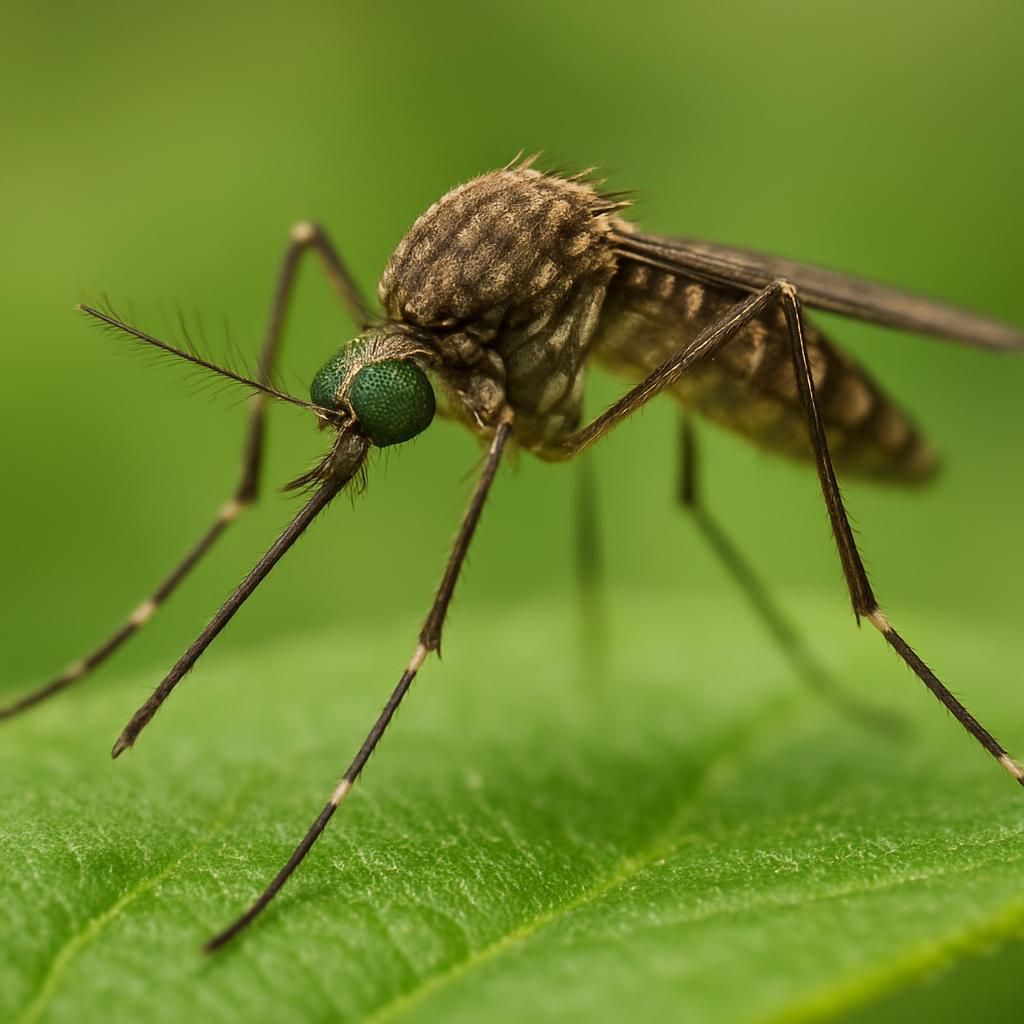
Introduction to Mosquitos
Mosquitos (family Culicidae) are small, slender flies whose females require a blood meal to develop eggs. While primarily a nuisance and public-health concern, they also impact agricultural operations by harassing field workers, stressing livestock, and occasionally transmitting plant-pathogenic viruses. Standing irrigation water, poorly drained fields, and discarded containers create ideal breeding habitats. Integrated management that targets both aquatic larvae and flying adults yields the most sustainable results.
Identifying Symptoms & Damage
Mosquito presence is first noticed by persistent biting and the characteristic high-pitched whine of females in flight. On livestock, repeated bites cause dermatitis, reduced feed intake, and lowered milk or meat production. Workers experience fatigue and lost productivity during peak activity periods at dawn and dusk. In rare cases, certain species transmit plant viruses such as tomato spotted wilt virus while feeding on sap. Larval stages are rarely seen directly but are indicated by wriggling "wigglers" in stagnant water sources near fields.
Lifecycle and Progression of Mosquitos (MUST INCLUDE A MARKDOWN TABLE OF LIFECYCLE STAGES)
Mosquitos undergo complete metamorphosis with four distinct stages. Duration varies with temperature but typically spans 7–14 days in warm conditions.
| Stage | Duration (warm climates) | Key Characteristics | Agricultural Relevance |
|---|---|---|---|
| Egg | 1–3 days | Laid in rafts or singly on water surface | First target for source reduction |
| Larva | 4–7 days | Aquatic "wigglers"; filter feed on microbes | Controlled by Bti, oils, or drainage |
| Pupa | 1–2 days | Non-feeding "tumbler"; respiratory trumpets | Brief window before adult emergence |
| Adult | 1–4 weeks | Flying; females seek blood meals | Primary vector; targeted by traps & sprays |
Environmental Triggers & Risk Factors
Warm temperatures (above 15 °C) accelerate development, while rainfall or irrigation creates standing water essential for egg-laying. Poorly graded fields, clogged drainage ditches, and uncovered water storage tanks increase risk. Livestock operations with leaking troughs or manure lagoons provide continuous breeding sites. Shaded, vegetated margins around ponds slow evaporation and favor larval survival. Windy conditions temporarily suppress adult activity but do not eliminate populations.
Organic Control & Treatment Plans (MUST INCLUDE A MARKDOWN TABLE OF TREATMENT OPTIONS AND FREQUENCIES)
Organic programs combine source reduction, biological agents, and mechanical traps. Begin with weekly inspections of all potential breeding containers and water bodies. Apply Bacillus thuringiensis israelensis (Bti) granules or dunks to standing water every 7–14 days during the active season. Introduce larvivorous fish such as Gambusia affinis into permanent ponds. Deploy CO2 or gravid traps at field edges and service them twice weekly. For adult knockdown, use plant-derived pyrethrin mists at dusk when wind is below 5 km/h. Maintain vegetative buffer strips treated with Bacillus sphaericus to intercept emerging adults.
| Treatment Option | Target Stage | Frequency | Application Notes |
|---|---|---|---|
| Bti granules/dunks | Larva | Every 7–14 days | Dose per label; reapply after heavy rain |
| Larvivorous fish (Gambusia) | Larva | One-time stocking | Maintain 5–10 fish per m² in permanent water |
| CO2/gravid traps | Adult | Twice weekly service | Place 50–100 m from livestock housing |
| Pyrethrin mist (organic) | Adult | Dusk applications as needed | Avoid pollinator bloom periods; use buffer zones |
| Bacillus sphaericus | Larva | Every 14–21 days | Effective in polluted water; complements Bti |
Preventing Mosquitos in the Future
Eliminate standing water within 100 m of production areas by filling depressions, improving drainage, and covering tanks. Schedule irrigation to avoid prolonged surface ponding. Store equipment and containers under cover or upside-down. Introduce mosquito-eating predators such as dragonflies and bats by planting nectar-rich hedgerows. Rotate livestock through paddocks to disrupt breeding cycles near manure. Monitor weather forecasts and intensify inspections after heavy rains.
Crops Most Affected by Mosquitos
While mosquitos do not directly feed on plants, their presence reduces labor efficiency in labor-intensive crops such as strawberry, tomato, and cucumber. High-value greenhouse vegetables suffer when worker exposure limits harvest windows. Livestock-adjacent forage crops including alfalfa and clover experience indirect yield losses from stressed animals. Rice paddies and flooded taro systems are uniquely vulnerable because permanent flooding coincides with peak mosquito seasons.
For additional context on vector-borne plant viruses, see the Wikipedia entry on Mosquito. Read practical small-farm resilience strategies in "The Truth About Weather Patterns and Small Farm Resilience" at /blog/the-truth-about-weather-patterns-and-small-farm-resilience.