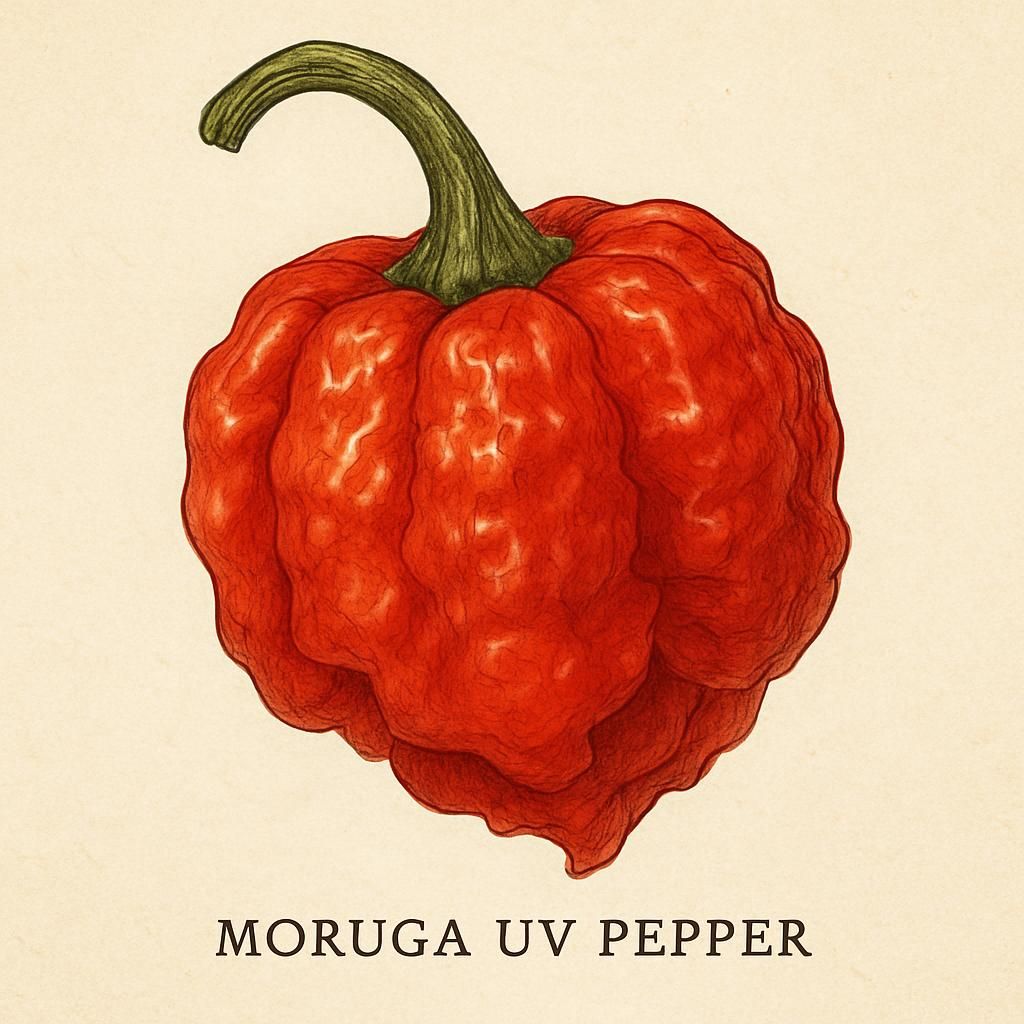
Introduction to Moruga UV Pepper
The Moruga UV Pepper, a vibrant hybrid of the famous Trinidad Moruga Scorpion, is revered for its visual appeal and extreme heat level. It's a preferred choice among chili enthusiasts who value not only the pungent taste but also its potential uses in culinary arts and hot sauce manufacturing.
Botanical Profile of Moruga UV Pepper
The Moruga UV Pepper belongs to the species Capsicum chinense, which includes some of the hottest peppers in the world. Known for its striking color and formidable heat level, it has a distinctive wrinkled appearance with flesh that transitions from green to a fiery red or orange upon ripening.
Soil, pH, and Climate Requirements for Moruga UV Pepper
To cultivate Moruga UV Peppers successfully, specific soil, pH, and climate conditions are essential:
| Parameter | Ideal Conditions |
|---|---|
| Soil Type | Well-draining loam or sandy soil |
| Soil pH | 6.0 to 7.0 |
| Temperature | 20-30°C (68-86°F) |
| Sunlight | Full sun, 6-8 hours per day |
| Humidity | Moderate, avoid excessive moisture |
Step-by-Step Planting & Propagation
- Seed Selection: Choose high-quality seeds from reputable suppliers to ensure viability and the desired pepper traits.
- Seed Starting: Sow seeds indoors 8-10 weeks before the last expected frost date. Use peat pots filled with seed-starting mix.
- Germination: Maintain a consistent temperature of around 27°C (80°F) to encourage germination, which takes 1-3 weeks.
- Transplanting: Once seedlings have developed 2-3 true leaves, transplant them outdoors, ensuring they are spaced 18-24 inches apart.
- Soil Preparation: Amend soil with organic matter or compost to enhance fertility and ensure proper drainage.
Care & Maintenance Regimes for Moruga UV Pepper
Effective care and maintenance are crucial to produce healthy Moruga UV Peppers:
| Task | Schedule |
|---|---|
| Watering | Regular watering, ensuring soil is moist but not oversaturated, ideally once or twice a week |
| Fertilization | Apply balanced fertilizer every 4-6 weeks during the growing season |
| Pruning | Trim unnecessary leaves and stems to improve airflow, focus on main stems to support fruit production |
Pests, Diseases & Organic Management
Moruga UV Peppers are susceptible to various pests and diseases, such as Spider Mites, aphids, and powdery mildew. Organic management strategies include:
- Companion Planting: Use plants like marigold and Thai Basil to repel pests.
- Neem Oil: Apply as a preventive measure against fungal diseases and insect infestation.
- Regular Monitoring: Check plants regularly for early signs of disease and manage promptly with organic treatments.
Harvesting, Curing & Optimal Storage
- Harvesting: Peppers can be harvested when they reach full color and size, typically 70-90 days after transplanting.
- Curing: Allow harvested peppers to dry in a warm, airy place to enhance flavor and heat.
- Storage: Store dried peppers in airtight containers in a cool, dark place to maintain quality for several months.
Companion Planting for Moruga UV Pepper
Companion planting is beneficial for Moruga UV Peppers to minimize pests and optimize growth. Ideal companions include Cherry Tomato, cilantro, and onions. Avoid planting with other pepper species that might cross-pollinate and alter the pepper's heat and flavor characteristics.
To explore more about strategic planting combinations, check out our blog on Summer Companion Planting: 10 Organic Pairings to Boost Small Farm Resilience.
For additional details on related topics, visit the Ghost Pepper entry, a cousin of the Moruga known for its exceptional heat.