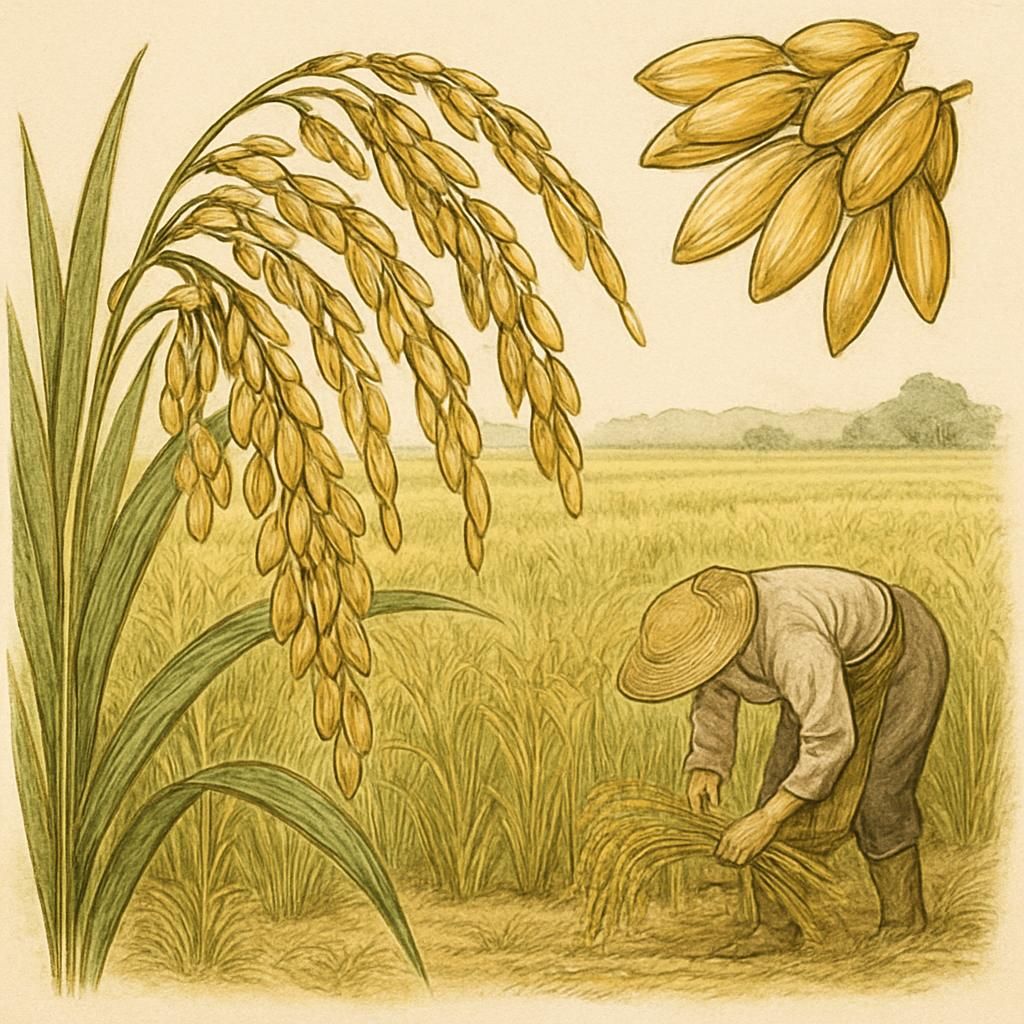
Introduction to Minikit Rice
Minikit Rice is a high-yielding variety of rice known for its short growth cycle and adaptability across various climates. It offers farmers a robust option for cultivation due to its resilience and minimal requirements.
Botanical Profile of Minikit Rice
Minikit Rice belongs to the species Oryza sativa, an annual grass in the family Poaceae. It is characterized by its slender, elongated leaves and clustered spikelets that lead to the small, edible grains. This variety is genetically developed to flourish with high yield under optimal and slightly varied conditions.
Soil, pH, and Climate Requirements for Minikit Rice
Minikit Rice thrives under specific conditions that optimize growth and yield. Soil fertility, pH, and climate play pivotal roles.
| Parameter | Ideal Conditions |
|---|---|
| Soil Type | Loamy or clay-loam |
| Soil pH | 5.5 - 7.0 |
| Temperature | 25°C - 35°C |
| Rainfall | 1000 - 1500 mm annually |
Step-by-Step Planting & Propagation
1. Seed Selection
Choose certified seeds with high germination rates to ensure quality growth.
2. Land Preparation
- Plow the Field: Begin by plowing the field to a depth of 15 cm to enhance soil aeration.
- Leveling: Ensure the field is level to promote even water distribution.
- Fertility Enhancement: Apply organic manure 2-3 weeks before planting to enhance soil nutrients.
3. Sowing
- Nursery Method: Opt for a nursery method to manage seedlings. Sow seeds in a well-prepared nursery bed, keeping them moist.
- Transplantation: After about 20-25 days, transplant seedlings to the main field, spacing them at 20 x 20 cm for optimal growth.
Care & Maintenance Regimes for Minikit Rice
Proper care enhances yield and controls pests and diseases. Here is a schedule for water, fertilizer, and pruning regimes.
| Activity | Schedule |
|---|---|
| Watering | Regularly, adjust based on rainfall |
| Fertilizer | NPK fertilizer: 15-20 kg/ha at planting and mid-season |
| Pruning/Weeding | Every 15 days |
Pests, Diseases & Organic Management
Common pests include Aphids and Spider Mites. Diseases like Bacterial Blight also threaten Minikit Rice.
Organic Management
- Neem Oil: Use neem oil solutions for pest control.
- Companion Planting: Use plants like Marigold to deter pests naturally.
- Regular Monitoring: Regular checks help in early detection and control of infestations.
Harvesting, Curing & Optimal Storage
Minikit Rice reaches maturity in about 100-120 days. Harvest when grains turn golden brown.
- Harvesting: Use a sickle for manual harvesting or combine harvesters for large-scale operations.
- Curing: Dry harvested grains in a well-ventilated area for 2-3 days.
- Storage: Store dried grains in a cool, dry place, preferably in airtight, pest-proof containers.
Companion Planting for Minikit Rice
Lychee, Marigold, and Clover are beneficial as companion plants because they enhance soil fertility, act as natural pest repellents, and provide partial shade management, promoting healthier growth conditions.
For further reading on organic farming strategies suitable for Minikit Rice, consider Crop Diseases Under the Microscope: 9 Organic Fixes for Small Farm Resilience and Rice.