Introduction to Maize (Parubina)
Maize (Parubina), scientifically known as Zea mays, is a globally important cereal crop that plays a central role in food security, animal feed, and industrial products. Known for its tall stalk and distinct ears, maize is not only a dietary staple in many countries but also a critical crop in sustainable agricultural practices.
Botanical Profile of Maize (Parubina)
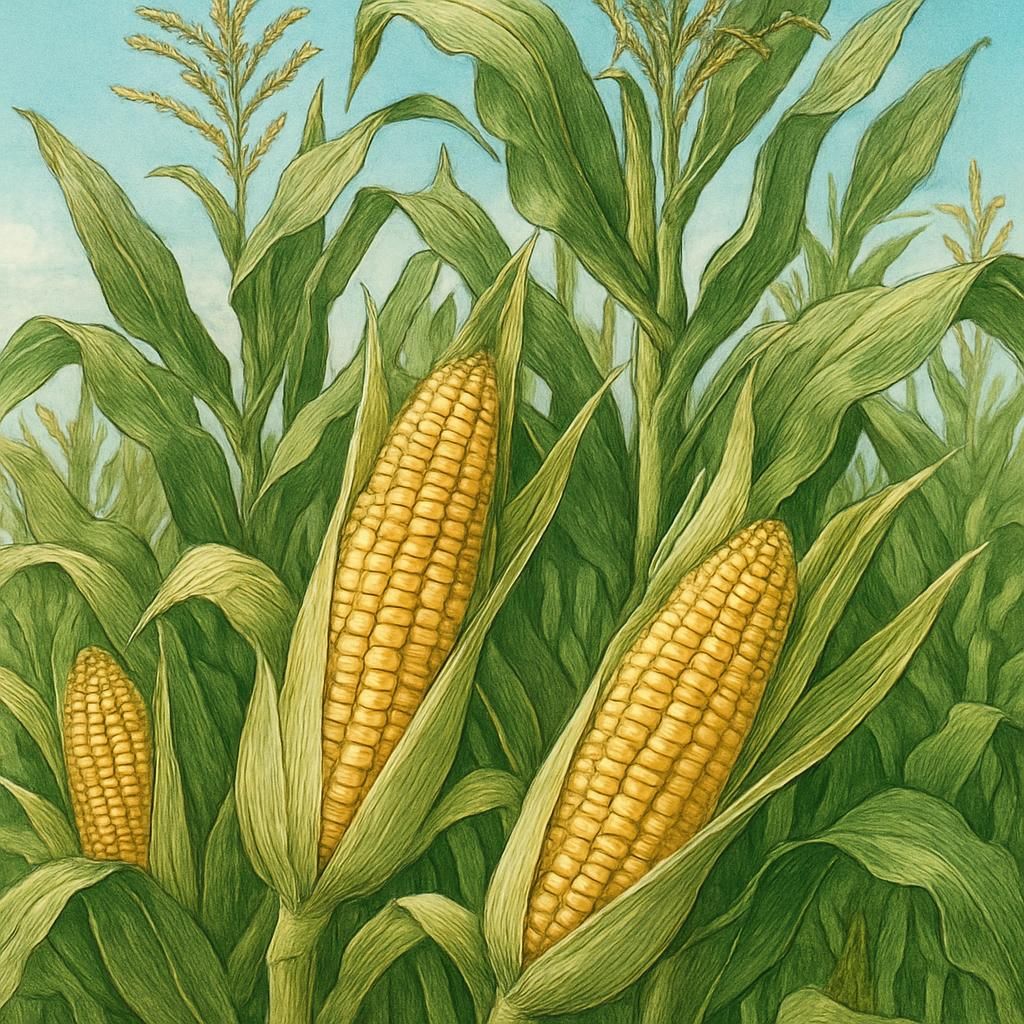
Maize belongs to the Poaceae family. It is an annual grass that can grow over 3 meters in height under optimal conditions. The plant features a fibrous root system, long leaves, and a distinct tassel at the top, with female flowers forming ears that contain the grains.
Soil, pH, and Climate Requirements for Maize (Parubina)
Maize requires specific soil conditions and climate to achieve optimal growth. The following table outlines the ideal conditions:
| Condition | Ideal Range |
|---|---|
| Soil Type | Loamy, well-draining |
| Soil pH | 5.8 to 7.0 |
| Temperature Range | 21°C to 30°C (70°F to 86°F) |
| Rainfall | 500 to 800 mm annually |
| Sunlight | Full sun (6-8 hours per day) |
Maize thrives in temperate to tropical climates but can adapt to a variety of conditions with proper care.
Step-by-Step Planting & Propagation
- Seed Selection: Choose high-quality, disease-resistant maize seeds.
- Land Preparation: Till the soil to break up clumps and remove weeds. Add organic matter to enhance fertility.
- Planting: Sow seeds at a depth of 2.5 to 5 cm, with a spacing of 20-25 cm between plants and 75-100 cm between rows.
- Watering: Ensure consistent moisture levels, especially during germination and flowering.
- Thinning: Thin seedlings to the strongest plants to reduce competition.
Care & Maintenance regimes for Maize (Parubina)
Proper care and maintenance are crucial to ensure a healthy maize crop.
| Activity | Schedule |
|---|---|
| Watering | 1-2 times per week; increase during dry spells |
| Fertilizing | Apply nitrogen-rich fertilizer every 4-6 weeks |
| Pest Control | Inspect weekly and treat as necessary |
| Pruning | Not generally required |
Regular inspection for pest and disease management, as well as ensuring adequate nutrient supply, is essential.
Pests, Diseases & Organic Management
Maize (Parubina) can be affected by various pests and diseases, including corn earworm, European corn borer, and common rust. Organic management includes crop rotation, using natural predators, and applying neem oil.
Explore more pest defenses in our article '7 Summer Pest Traps That Sabotage Small Farm Harvests'.
Harvesting, Curing & Optimal Storage
- Harvesting: Maize is ready to harvest when the husks turn yellow-brown and dry. Ears should be firm with kernels at the "dough" stage.
- Curing: Allow ears to dry further on stalks or harvest and dry under controlled conditions.
- Storage: Store dried kernels in a cool, dry place. Control humidity and use airtight containers to prevent pest infestations.
Companion Planting for Maize (Parubina)
Companion planting with crops such as beans and squash can enhance maize growth and pest resistance, following the 'Three Sisters' planting tradition. Learn more about companion planting strategies in our post 'Summer Companion Planting: 10 Organic Pairings to Boost Small Farm Resilience'.
Discover the broader applications of maize in Corn (crop) for an extensive understanding of this versatile crop.