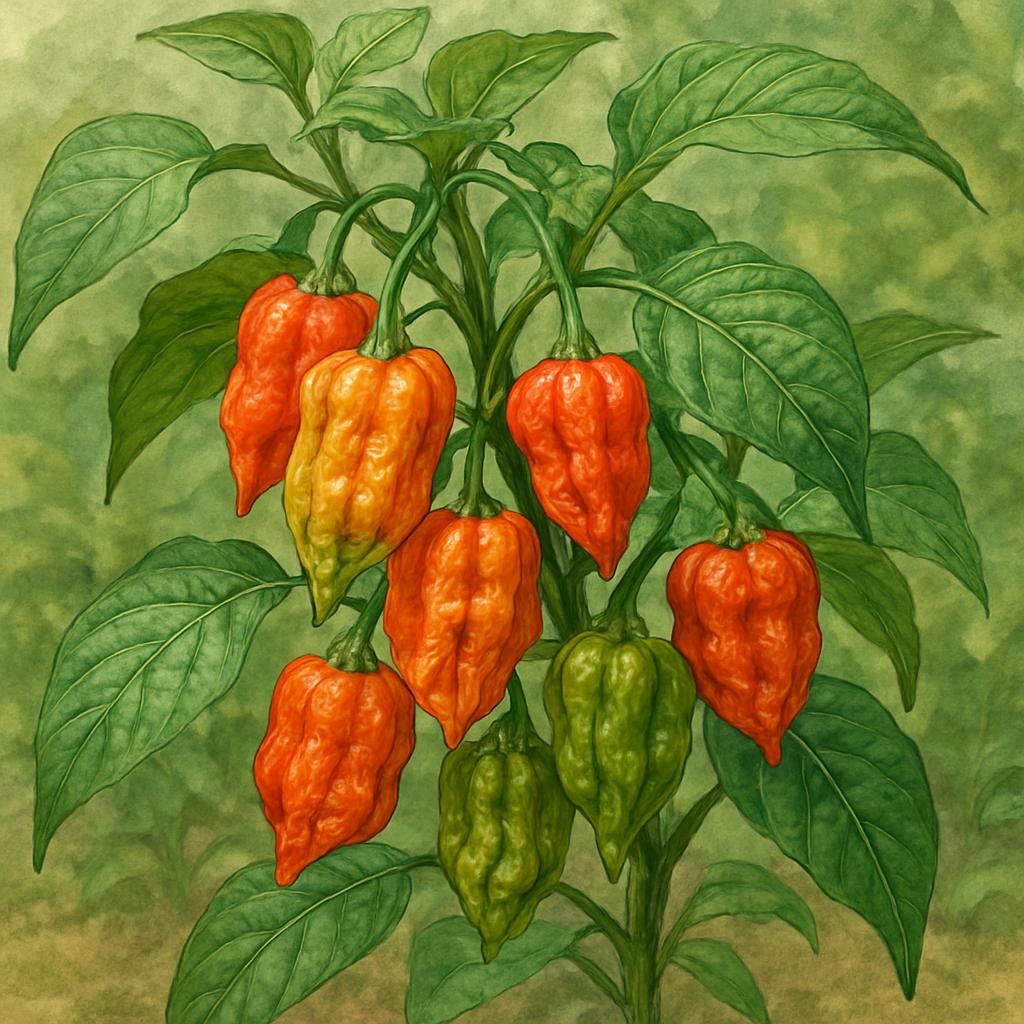
Introduction to Mad Hatter Pepper
The Mad Hatter Pepper, a unique addition to the Capsicum baccatum family, dazzles with its unusual shape reminiscent of a hat. This mild pepper offers a sweet taste with only a hint of warmth, making it an exciting choice for both culinary enthusiasts and gardeners. Besides its intriguing appearance, the Mad Hatter is praised for its high yield and versatility, used in a variety of dishes from fresh salads to pickled snacks.
Botanical Profile of Mad Hatter Pepper
Belonging to the Solanaceae family, the Mad Hatter Pepper is a cultivar of the wild species Capsicum baccatum, which originates from South America. The plant is characterized by lush green foliage and produces peppers that grow to about 5 cm across, showcasing vibrant red and green hues as they mature. The mild Scoville heat level, ranging from 500 to 1,000, allows this pepper to enhance recipes without overpowering them.
Soil, pH, and Climate Requirements for Mad Hatter Pepper
To successfully cultivate Mad Hatter Peppers, attention must be given to selecting the right soil and climate conditions. The following table provides insight into the ideal growing conditions for this pepper variety:
| Parameter | Ideal Conditions |
|---|---|
| Soil Type | Well-draining, loamy soil |
| Soil pH | 6.0 to 6.8 |
| Light Requirement | Full sun |
| Temperature Range | 70 to 85°F (21 to 29°C) |
| Humidity Level | Moderate |
Step-by-Step Planting & Propagation
Planting Mad Hatter Peppers is best begun indoors to ensure a strong start. Here are the steps to follow:
- Seed Starting: Begin 6-8 weeks before the last frost date in your area. Plant seeds about 1/4 inch deep in starter trays filled with seed-starting mix.
- Germination: Place trays in a warm area, maintaining a steady temperature of around 75-80°F (24-27°C). Germination usually takes 10-14 days.
- Transplanting: Once seedlings have 2-3 true leaves and the threat of frost has passed, gradually acclimate them to outdoor conditions. Space seedlings about 18 inches apart in well-prepared garden soil.
Care & Maintenance Regimes for Mad Hatter Pepper
Providing consistent care is crucial for a bountiful harvest. The table below outlines the recommended schedules for watering, fertilization, and pruning.
| Care Aspect | Recommended Schedule |
|---|---|
| Watering | 1-2 inches per week; ensure soil is moist but not waterlogged |
| Fertilizer | Every 3-4 weeks with balanced N-P-K fertilizer (10-10-10) |
| Pruning | Light pruning in early growth stages to encourage bushier growth |
Pests, Diseases & Organic Management
While relatively hardy, Mad Hatter Peppers can fall prey to pests like Aphids and Spider Mites, as well as diseases such as tobacco mosaic virus. Organic management strategies include:
- Regularly inspecting foliage for pests and using insecticidal soap as needed.
- Promoting good airflow and spacing to prevent fungal infections.
- Applying neem oil as a preventative measure.
Harvesting, Curing & Optimal Storage
Mad Hatter Peppers are ready for harvest approximately 70-80 days after transplanting. The peppers should be firm and vibrant when picked. For optimal storage, follow these steps:
- Harvesting: Use sharp scissors or pruners to cut peppers from the plant, avoiding damage.
- Curing: Allow peppers to dry in a warm, dry place for a few days.
- Storage: Store in a cool, dry location or in the refrigerator, ensuring proper ventilation to extend freshness.
Companion Planting for Mad Hatter Pepper
The Mad Hatter Pepper benefits from companion planting, which can improve growth and reduce pest issues. Suitable companions include:
- Tomatoes which share similar growing conditions.
- Basil to enhance pepper flavor and repel insects.
- Chili Pepper for mutual pest deterrence.
Successful companion planting strategies can increase resilience: Summer Companion Planting: 10 Organic Pairings to Boost Small Farm Resilience.
For an overview of tomato issues, visit the Tomato Wiki Page.