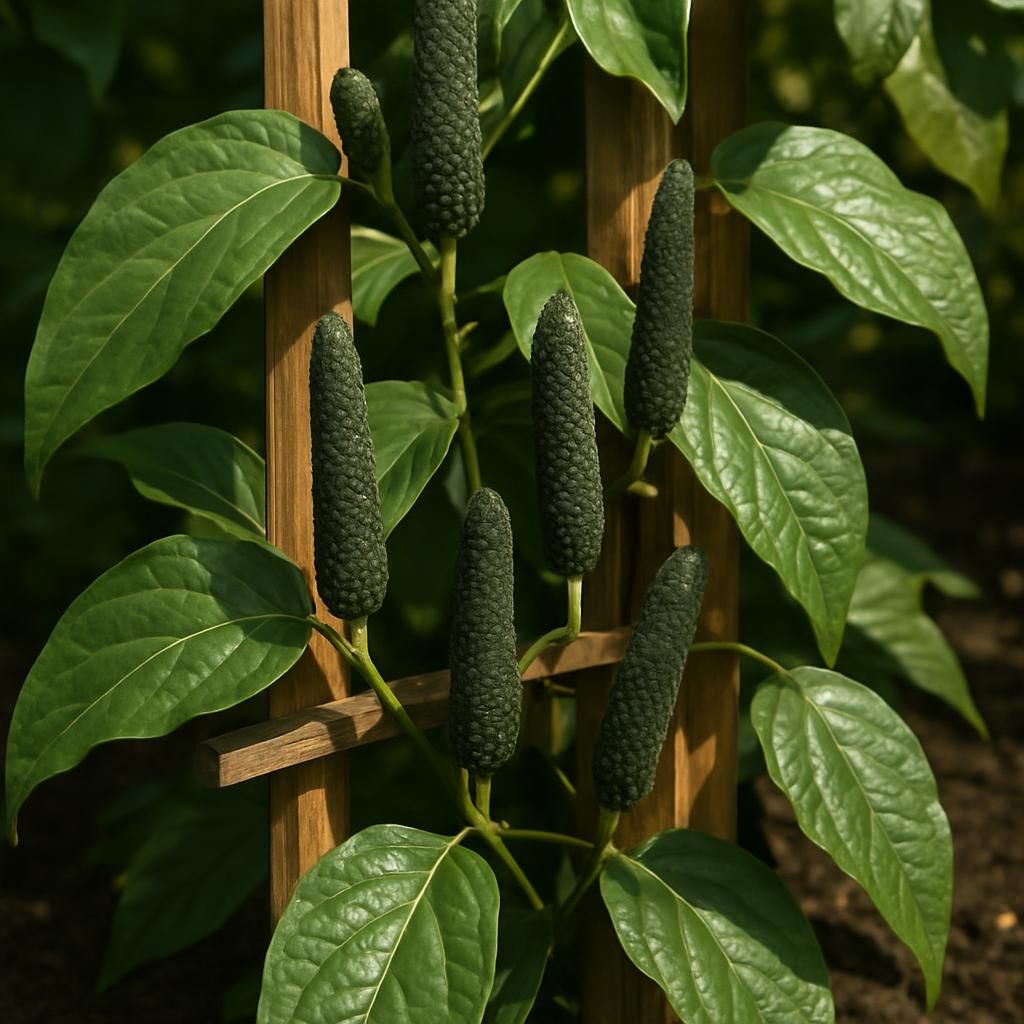
Introduction to Long Pepper (Piper longum)
Long Pepper (Piper longum) is an ancient spice crop valued for its elongated, pungent fruit spikes that deliver a hotter, more complex flavor than Black Pepper. Native to the tropical forests of India, Indonesia, and Malaysia, this perennial climbing vine has been cultivated for centuries for both culinary and medicinal purposes. The dried spikes contain piperine and essential oils that provide distinctive heat and aroma. Commercial production remains concentrated in Kerala, Assam, and parts of Southeast Asia where high humidity and consistent rainfall support vigorous vine growth.
Botanical Profile of Long Pepper (Piper longum)
Piper longum is a dioecious perennial vine belonging to the Piperaceae family. It produces heart-shaped, alternate leaves and slender, pendulous spikes that can reach 3–5 cm in length. Male plants bear longer, thinner spikes while female plants produce shorter, thicker spikes that develop into the harvestable fruit. The vine climbs using adventitious roots and can reach 3–4 meters when trained on supports. Flowers are minute and lack petals; pollination occurs primarily via wind and small insects. The plant forms a dense network of fibrous roots that efficiently extract nutrients from organic-rich topsoil.
Soil, pH, and Climate Requirements for Long Pepper (Piper longum)
Long Pepper thrives in warm, humid tropical climates with temperatures between 20–35 °C and annual rainfall of 1500–3000 mm. It prefers partial shade to full sun and grows best at elevations below 1000 m. The crop is sensitive to frost and waterlogging.
| Parameter | Ideal Range | Notes |
|---|---|---|
| Soil Type | Loamy to sandy loam | Well-drained, rich in organic matter |
| Soil pH | 5.5–6.8 | Slightly acidic to neutral |
| Temperature | 20–35 °C | Optimal 25–30 °C; avoid frost |
| Annual Rainfall | 1500–3000 mm | Even distribution preferred |
| Relative Humidity | 70–90 % | High humidity essential for spike development |
| Elevation | 0–1000 m | Performs best in lowland tropics |
| Light | Partial shade to full sun | Shade nets (30–50 %) beneficial in dry seasons |
Step-by-Step Planting & Propagation
Long Pepper is primarily propagated from stem cuttings or rooted vine segments. Select healthy, semi-hardwood cuttings 15–20 cm long with 3–4 nodes from vigorous mother vines. Root cuttings in a well-drained nursery mix of sand and compost under 70 % shade for 4–6 weeks until new leaves emerge. Transplant rooted cuttings into the main field at the onset of the monsoon when soil moisture is adequate. Prepare planting pits 45 × 45 × 45 cm filled with topsoil mixed with 10 kg well-rotted manure and 100 g rock phosphate. Space plants 2 m × 2 m and provide 2–2.5 m tall support poles or trellises. Mulch immediately after planting to conserve moisture and suppress weeds.
Care & Maintenance regimes for Long Pepper (Piper longum)
Consistent irrigation, balanced nutrition, and regular pruning are essential for sustained productivity. Vines require light, frequent watering during dry spells and protection from waterlogging during heavy rains. Apply organic manures twice yearly and supplement with balanced NPK during active growth phases. Prune to maintain 3–4 main stems and remove weak laterals.
| Activity | Frequency | Details |
|---|---|---|
| Watering | Every 3–4 days in dry season | 15–20 L per vine; drip irrigation preferred |
| Fertilizer | Twice yearly | 10 kg FYM + 200 g NPK (10:10:20) per vine |
| Pruning | After harvest & pre-monsoon | Retain 3–4 main stems; remove dead wood |
Pests, Diseases & Organic Management
Common pests include Aphids, Mealybugs, and Spider Mites. These sap-sucking insects can be controlled with neem oil sprays (3 ml/L) and yellow sticky traps. Major diseases are Phytophthora root rot and leaf spot diseases caused by fungal pathogens. Improve drainage and apply Trichoderma viride (5 g/L) as a soil drench to suppress soil-borne fungi. Regular sanitation, removal of infected plant parts, and crop rotation with non-hosts reduce disease pressure. Avoid excessive nitrogen that promotes succulent growth attractive to pests.
Harvesting, Curing & Optimal Storage
Long Pepper spikes are harvested when they turn dark green to brownish-black and begin to dry on the vine, typically 8–10 months after flowering. Cut spikes with sharp secateurs leaving 2–3 cm of stalk. Sun-dry on clean mats for 4–6 days until moisture content reaches 10–12 %. Store cured spikes in airtight containers away from direct light and humidity. Properly cured and stored long pepper retains pungency and piperine content for up to 18 months.
Companion Planting for Long Pepper (Piper longum)
Long Pepper benefits from intercropping with nitrogen-fixing legumes such as Pigeon pea and Clover that improve soil fertility and provide partial shade. Aromatic herbs including Thai Basil and Rosemary deter aphids and mealybugs. Avoid planting near solanaceous crops that share similar disease susceptibilities. Mulching with Gliricidia leaves supplies slow-release nitrogen and suppresses weeds while maintaining the humid microclimate preferred by the vine.