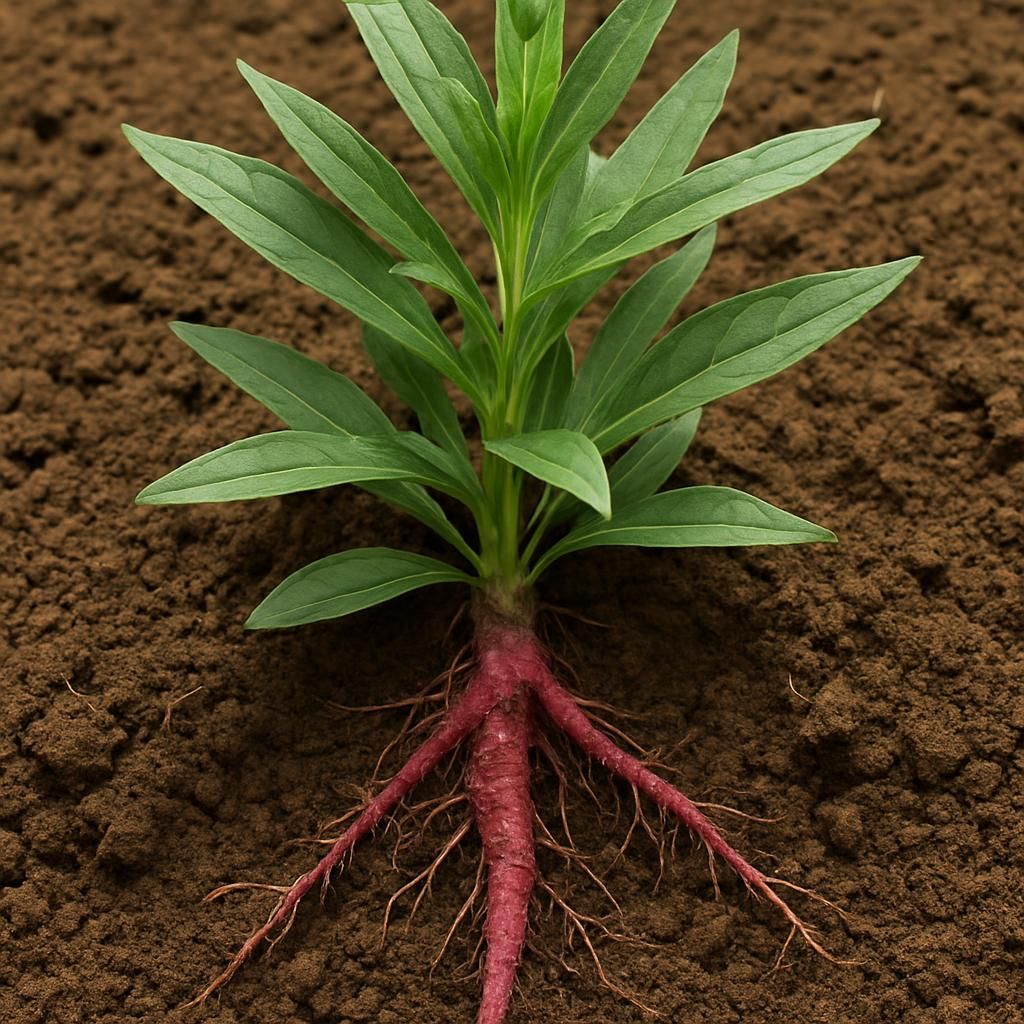
Introduction to Lithospermum erythrorhizon
Lithospermum erythrorhizon, commonly known as purple gromwell or red-root gromwell, is a slow-growing perennial native to East Asia. Its roots contain shikonin and related naphthoquinones prized for anti-inflammatory, antimicrobial, and wound-healing properties. Commercial and small-scale growers cultivate the plant for dried root material used in pharmaceuticals, cosmetics, and natural textile dyes. This guide covers botanical characteristics, site requirements, propagation methods, maintenance schedules, pest and disease management, harvesting protocols, and compatible companion species to support successful production.
Botanical Profile of Lithospermum erythrorhizon
The plant forms a basal rosette of lanceolate, dark green leaves that reach 30–40 cm in height. Flowering stems produce small, five-petaled blue-purple blooms from late spring through midsummer. The primary economic part is the thick, woody taproot that develops a vivid red-purple coloration as shikonin accumulates. Roots reach harvestable size in 2–3 years under optimal conditions. The species thrives in temperate climates with cold winters and moderate summers.
Soil, pH, and Climate Requirements for Lithospermum erythrorhizon (MUST INCLUDE A MARKDOWN TABLE OF IDEAL CONDITIONS)
Successful cultivation begins with well-drained, loamy soils rich in organic matter. The plant prefers slightly acidic to neutral conditions and full sun exposure. Cold stratification during winter improves root quality and shikonin concentration.
| Parameter | Ideal Range | Notes |
|---|---|---|
| Soil Type | Loamy, well-drained | Avoid heavy clay; incorporate compost |
| Soil pH | 5.8 – 7.0 | Test annually; lime if below 5.5 |
| Temperature Range | 15–28 °C daytime | Tolerates –15 °C winter lows |
| Annual Rainfall | 600–900 mm | Supplemental irrigation in dry periods |
| Sunlight | Full sun (6+ hours) | Partial shade reduces root coloration |
| Elevation | 0–1500 m | Higher elevations may slow growth |
Step-by-Step Planting & Propagation
- Site Preparation: Clear weeds, incorporate 5–8 cm of well-rotted compost, and create raised beds 20 cm high for drainage.
- Seed Stratification: Mix fresh seed with moist sand and refrigerate at 4 °C for 8–10 weeks.
- Sowing: Direct sow stratified seed 5 mm deep in early spring; space rows 30 cm apart.
- Thinning: When seedlings reach 5 cm, thin to 20 cm between plants.
- Root Division: In autumn of year two, divide established clumps, ensuring each section has 2–3 buds and healthy roots.
- Transplanting: Set divisions at the same depth as the parent plant and water thoroughly.
Care & Maintenance regimes for Lithospermum erythrorhizon (MUST INCLUDE A MARKDOWN TABLE OF WATER, FERTILIZER, AND PRUNING SCHEDULES)
Consistent moisture during the first growing season promotes root establishment. Reduce irrigation frequency once plants are established. Apply balanced organic fertilizers in spring and avoid excess nitrogen to prevent lush foliage at the expense of root development.
| Season | Watering Schedule | Fertilizer Application | Pruning / Maintenance |
|---|---|---|---|
| Spring | 25–30 mm/week until established | 5-5-5 organic blend at 2 kg/100 m² | Remove winter-damaged foliage |
| Summer | 15–20 mm/week; mulch to conserve | Side-dress with compost tea mid-season | Deadhead spent flowers to conserve energy |
| Autumn | Reduce to 10 mm/week | Apply 1–2 cm compost layer | Cut back to 5 cm above soil |
| Winter | Minimal; protect with mulch | None | Monitor for rodent damage |
Pests, Diseases & Organic Management
Common issues include Aphids, Spider mites, and Root-knot nematodes. Monitor leaf undersides weekly. Apply insecticidal soap or neem oil at the first sign of infestation. Fungal leaf spots can be managed by improving airflow and avoiding overhead irrigation. Crop rotation with non-host species every three years reduces nematode pressure.
Harvesting, Curing & Optimal Storage
Harvest roots in late autumn of the second or third year when foliage begins to senesce. Carefully lift plants with a garden fork to avoid root breakage. Wash gently, trim tops to 2 cm, and dry at 35–40 °C with good airflow until moisture content reaches 10 %. Store dried roots in airtight containers in a cool, dark location. Properly cured roots retain shikonin potency for up to two years.
Companion Planting for Lithospermum erythrorhizon
Compatible companions include Thyme, Yarrow, and Marigold. These aromatic herbs deter aphids and improve soil biodiversity. Avoid planting near members of the Solanaceae family that may share nematode hosts. Interplanting with nitrogen-fixing Clover can reduce fertilizer needs while maintaining ground cover between rows.