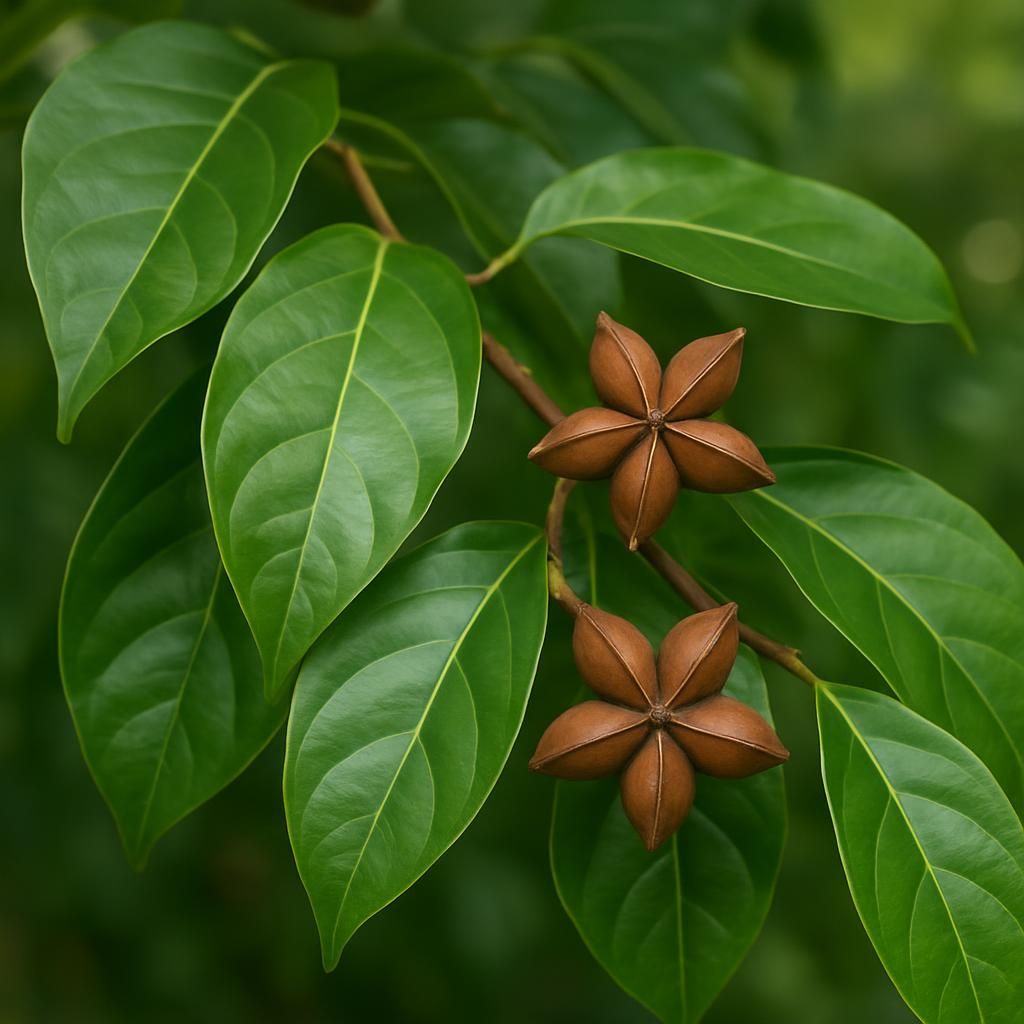
Introduction to Kola Nut (Cola acuminata)
Kola nut (Cola acuminata) is a tropical evergreen tree belonging to the Malvaceae family, renowned for its caffeine-rich seeds that have been central to West African culture, trade, and traditional medicine for centuries. The tree produces star-shaped pods containing up to eight glossy seeds, each containing 2-3% caffeine and theobromine, making them a natural stimulant. Commercial interest has grown due to demand in the beverage industry and pharmaceutical applications, with major production centered in Nigeria, Ghana, Côte d'Ivoire, and Cameroon.
Cultivation requires mimicking the humid, shaded conditions of its native rainforest understory. Successful growers focus on well-drained, fertile soils and consistent moisture without waterlogging. While primarily grown in large plantations, kola nut can be integrated into agroforestry systems alongside Cacao and other shade-tolerant species.
Botanical Profile of Kola Nut (Cola acuminata)
Cola acuminata grows as a medium-sized tree reaching 10-15 meters in height with a spreading canopy. The leaves are glossy, dark green, and elliptic, arranged alternately on the branches. Small, cream-colored flowers appear in clusters, followed by woody, star-shaped follicles that split open at maturity to reveal the seeds. The tree is slow-growing, taking 5-7 years to reach first fruiting and 10-15 years for peak production. It is closely related to Cola nitida, which is sometimes confused in trade.
Soil, pH, and Climate Requirements for Kola Nut (Cola acuminata)
Kola nut thrives in deep, fertile, well-drained soils rich in organic matter. It performs best in tropical climates with high humidity and consistent rainfall.
| Parameter | Ideal Range | Notes |
|---|---|---|
| Soil Type | Loamy to sandy loam | Deep, well-drained with good structure |
| Soil pH | 5.5 - 6.5 | Slightly acidic; avoid alkaline soils |
| Temperature | 24-30°C (75-86°F) | Frost intolerant; minimum 18°C |
| Annual Rainfall | 1500-2500 mm | Evenly distributed; supplemental irrigation in dry periods |
| Humidity | 70-90% | High humidity essential for flowering |
| Altitude | 0-600 m | Lowland tropical zones preferred |
| Light | Partial shade (30-50%) | Young trees benefit from nurse trees |
Step-by-Step Planting & Propagation
Kola nut is primarily propagated from fresh seeds, as viability drops rapidly after harvest. Select healthy, mature seeds from high-yielding trees. Soak seeds in water for 24 hours before sowing in a well-draining seedbed or polybags filled with a mixture of topsoil, sand, and compost. Germination occurs in 2-4 weeks at 28-30°C. Seedlings are transplanted to the field after 6-12 months when they reach 30-50 cm in height.
Planting should coincide with the onset of the rainy season. Dig holes 60 cm × 60 cm × 60 cm and space trees 8-10 meters apart in a triangular pattern. Incorporate well-rotted manure or compost into the planting hole. Provide temporary shade for the first 1-2 years using banana leaves or shade cloth. Grafting onto Cola nitida rootstock can be used for improved varieties.
Care & Maintenance regimes for Kola Nut (Cola acuminata)
Regular weeding, mulching, and fertilization are essential during establishment. Mulch with organic materials such as dried leaves or wood chips to conserve moisture and suppress weeds. Prune to maintain an open canopy and remove dead or diseased branches annually after harvest.
| Activity | Schedule | Details |
|---|---|---|
| Watering | Weekly during dry season | 20-30 liters per tree; maintain soil moisture |
| Fertilizer | 3 applications/year | NPK 15-15-15 or organic equivalent; 200-300g per tree per application |
| Pruning | Annual post-harvest | Remove suckers, dead wood, and crossing branches |
| Mulching | Twice yearly | 10-15 cm layer around base, keep clear of trunk |
| Weeding | Monthly during rainy season | Hand weeding or shallow cultivation |
Pests, Diseases & Organic Management
Major pests include Aphids, Mealybugs, and Scale insects. These can be controlled with neem oil sprays and introduction of natural predators such as lady beetles. Fungal diseases such as Phytophthora root rot and Anthracnose are common in poorly drained soils. Improve drainage, avoid overwatering, and apply copper-based fungicides when necessary. Regular monitoring and removal of infected plant parts are key to organic management.
Harvesting, Curing & Optimal Storage
Kola nuts are ready for harvest when the pods turn from green to yellowish-brown and begin to split naturally, typically 5-7 months after flowering. Harvest by hand or using long-handled cutters to avoid damaging branches. Remove seeds immediately and ferment in heaps for 3-5 days to reduce bitterness. Wash thoroughly and sun-dry for 5-7 days until moisture content reaches 12-15%. Store in jute bags or ventilated containers in a cool, dry place. Properly cured nuts can be stored for up to one year.
Companion Planting for Kola Nut (Cola acuminata)
Kola nut benefits from agroforestry companions that provide shade and improve soil fertility. Suitable partners include Cacao, Coffee, and Banana for canopy layering. Leguminous cover crops such as Pigeon pea and Gliricidia fix nitrogen and reduce erosion. Avoid planting with heavy feeders that compete for nutrients. Intercropping with shallow-rooted herbs can further enhance biodiversity and pest suppression.