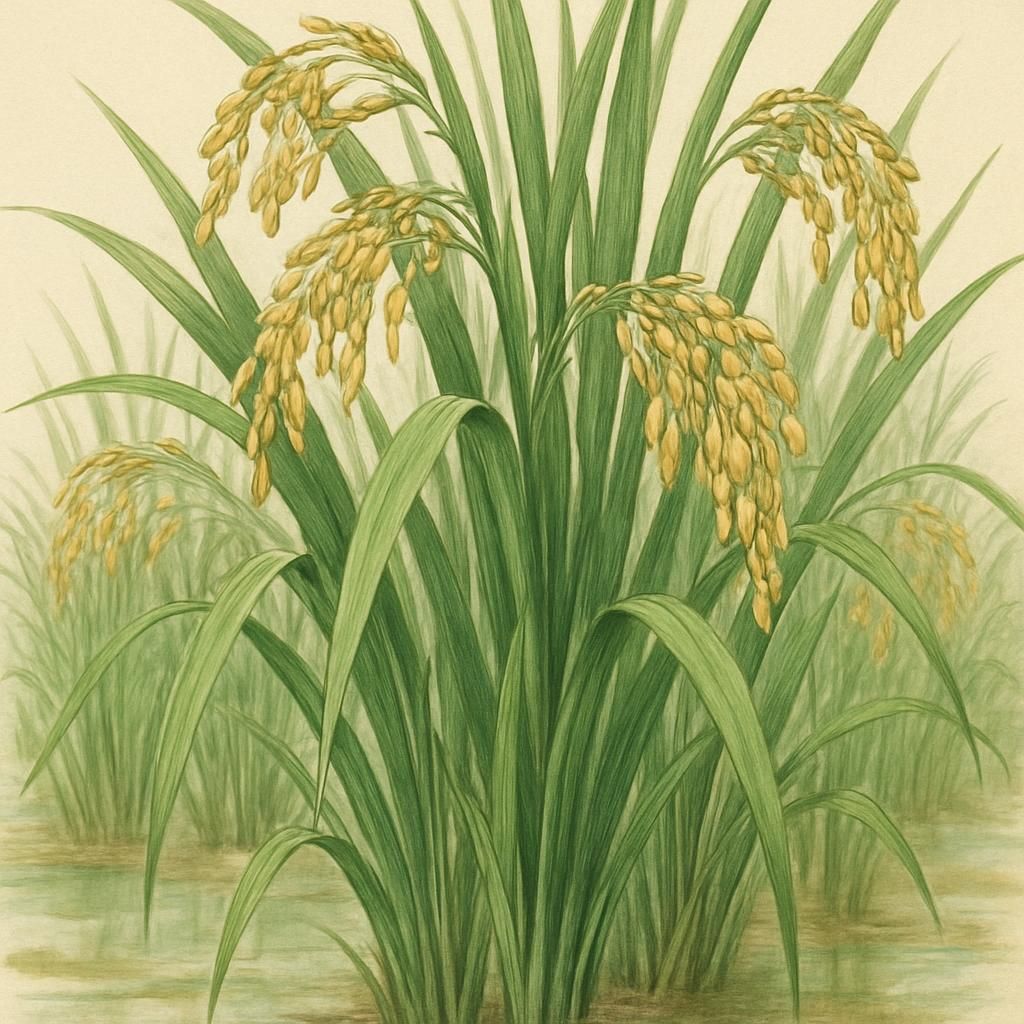
Introduction to Jupiter Rice
Jupiter Rice is an exceptional medium-grain variety of Rice that has gained popularity among farmers due to its high yield and adaptability to varying climatic conditions. Originally developed through research targeting disease resilience and optimal grain quality, this variety is a staple in rice-producing areas with a goal to elevate agricultural productivity.
Botanical Profile of Jupiter Rice
The scientific name for Jupiter Rice is Oryza sativa 'Jupiter'. It is categorized as a C3 plant with high yielding capabilities which tend to be best realized in flooded field conditions. The plant height ranges from 85 to 120 cm, and it is characterized by its robust tillering ability, making it well-suited for both direct sowing and transplanting.
Soil, pH, and Climate Requirements for Jupiter Rice
Thriving in temperate climates, Jupiter Rice demands specific soil conditions and precise pH levels for optimum growth. The following table provides essential guidelines:
| Parameter | Ideal Conditions |
|---|---|
| Soil Type | Clay loam, Silty loam |
| Soil pH | 5.5 to 6.5 |
| Temperature | 20°C to 30°C |
| Precipitation | 1000 to 1500 mm annually |
Step-by-Step Planting & Propagation
Preparation
Ensure the field is well-leveled and cleared of weeds. It's crucial to start with high-quality seeds.
- Seed Selection: Use certified Jupiter Rice seeds for assured quality.
- Seed Soaking: Soak the seeds for 24 hours before sowing to ensure even germination.
- Nursery Preparation: For transplanting, prepare a nursery bed.
Planting
- Sowing: Direct sowing or transplanting should be done when temperatures stabilize above 20°C.
- Spacing: Maintain a spacing of about 20 cm between plants.
- Water Management: Establish shallow flooding immediately after planting.
Care & Maintenance Regimes for Jupiter Rice
Jupiter Rice requires distinct care regimes to thrive optimally:
| Phase | Watering | Fertilizer | Pruning |
|---|---|---|---|
| Initial Growth | Maintain 2-5 cm standing water | Apply N-P-K formulations according to soil test results | Remove weak seedlings |
| Tillering | Increase water to 10 cm | Potassium & nitrogen boost | Not applicable |
| Flowering | 10-15 cm water level | Use phosphorous rich fertilizers | Not applicable |
| Maturity | Reduce to 5 cm | Reduce nitrogen | Not applicable |
Pests, Diseases & Organic Management
Common pests include Spider Mites, armyworms, and cutworms. Diseases like blast and bacterial blight pose threats to Jupiter Rice. Implement integrated pest management (IPM) techniques, including the use of neem oil, pheromone traps, and regular pest monitoring. Emphasizing crop rotation and resistant seed varieties can significantly reduce disease impacts. For more detailed strategies, see our blog post on Crop Diseases Under the Microscope: 9 Organic Fixes for Small Farm Resilience.
Harvesting, Curing & Optimal Storage
Jupiter Rice is ready to harvest 120-130 days after sowing. Harvest when the grains are firm. Use a combine harvester to ensure efficiency. Post-harvest, cure rice in dry conditions to reduce moisture to below 14%. Store in airtight containers or silos to prevent pest infestations.
Companion Planting for Jupiter Rice
Companion planting optimizes space and enhances productivity. Consider cultivating Clover for nitrogen fixation, or Thyme to deter pests naturally. Explore beyond these basics with our guide on Summer Companion Planting: 10 Organic Pairings to Boost Small Farm Resilience.