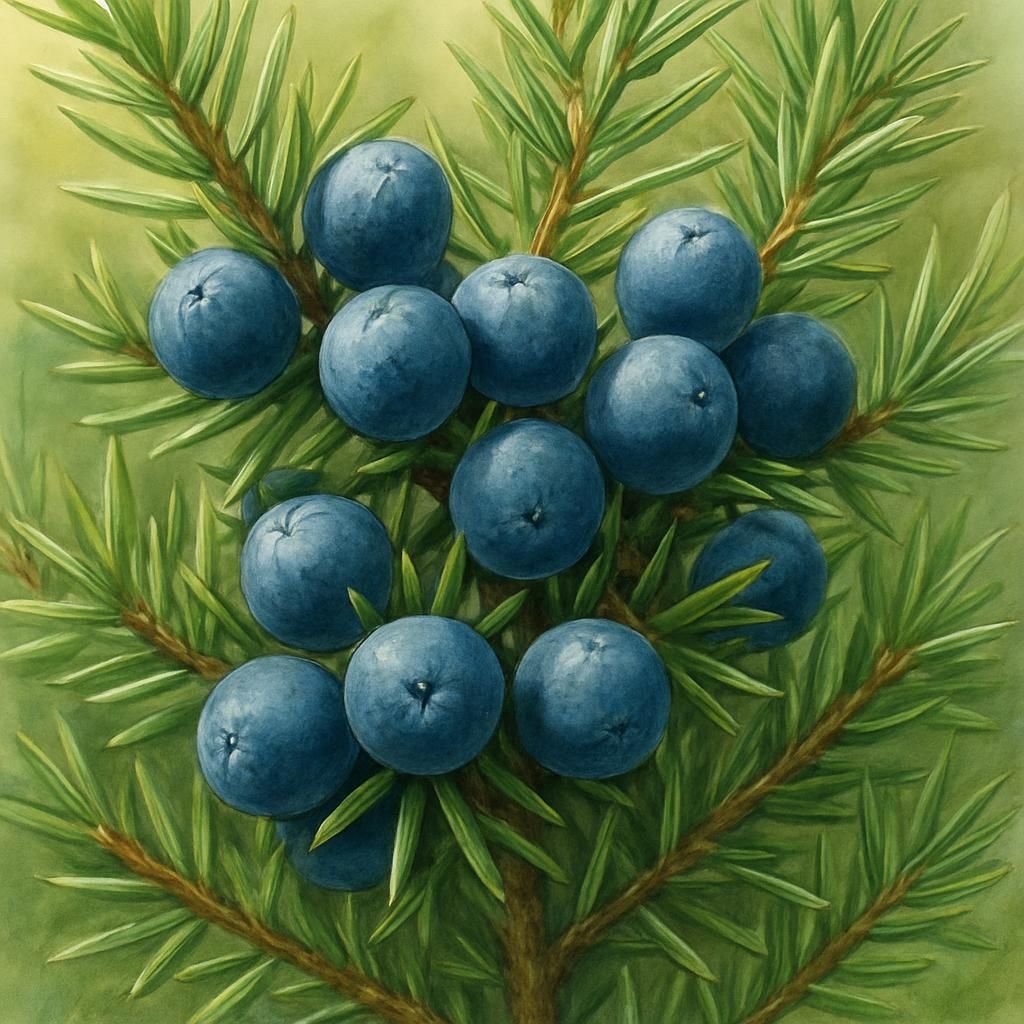
Introduction to Juniper
Juniper (Juniperus spp.) is a versatile evergreen conifer valued for its dense foliage, aromatic berries, and extreme drought tolerance. Grown for centuries across temperate regions, juniper serves both ornamental and commercial purposes, from hedging and groundcover to gin flavoring and essential oil production. Its adaptability to marginal soils and low maintenance requirements make it an excellent crop for both small-scale and commercial operations seeking resilient evergreens.
Botanical Profile of Juniper
Juniper belongs to the cypress family (Cupressaceae) and encompasses over 60 species ranging from low-growing groundcovers to upright trees exceeding 10 meters. Common cultivated species include Juniperus communis, Juniperus chinensis, and Juniperus horizontalis. The plant produces scale-like or needle-like leaves arranged in whorls, with dioecious reproduction where male plants bear pollen cones and females develop the characteristic fleshy, berry-like cones. These "berries" take 1–3 years to ripen, turning from green to deep blue-black, and contain 1–12 seeds. Juniper wood is durable and aromatic, while the foliage releases a distinctive resinous scent when crushed.
Soil, pH, and Climate Requirements for Juniper
Juniper demands well-drained soils and performs poorly in waterlogged conditions. It tolerates a wide pH range but prefers slightly acidic to neutral conditions. Full sun exposure (minimum 6–8 hours daily) is essential for dense growth and berry production. The plant is exceptionally cold hardy, surviving temperatures down to -40°C (-40°F) depending on species, and thrives in USDA zones 3–9.
| Parameter | Ideal Range/Value | Notes |
|---|---|---|
| Soil Type | Sandy loam, loam, or rocky | Excellent drainage critical |
| Soil pH | 5.5 – 7.5 | Tolerates up to 8.0 |
| Temperature Range | -40°C to 35°C | Cold hardy; avoid prolonged heat stress |
| USDA Hardiness | Zones 3–9 | Species-dependent |
| Sunlight | Full sun (6–8+ hours) | Essential for berry set and shape |
| Annual Rainfall | 300–800 mm | Drought tolerant once established |
| Spacing | 1.5–4 m (depending on cultivar) | Allow airflow to reduce disease |
Step-by-Step Planting & Propagation
Juniper can be propagated from seed, cuttings, or purchased nursery stock. Seed propagation requires cold stratification for 90–120 days at 4°C before sowing in well-draining medium. Semi-hardwood cuttings taken in late summer root reliably under mist with bottom heat. For planting, select a site with full sun and excellent drainage. Dig holes twice the width of the root ball and amend heavy clay with coarse sand or gravel. Plant at the same depth as the nursery container, backfill, and water thoroughly. Mulch with 5–8 cm of organic material, keeping it away from the trunk to prevent rot. Space plants according to mature size to ensure airflow.
Care & Maintenance regimes for Juniper
Established juniper requires minimal irrigation but benefits from supplemental water during the first two growing seasons. Fertilization is rarely needed on fertile sites; apply a balanced slow-release fertilizer in early spring only if growth is poor. Pruning maintains shape and removes dead wood; perform major shaping in late winter before new growth emerges.
| Task | Schedule | Details |
|---|---|---|
| Watering | Weekly first year; then as needed | Deep soak during prolonged drought |
| Fertilizer | Early spring (optional) | 10-10-10 slow-release at 50 g/m² |
| Pruning | Late winter/early spring | Remove dead/diseased wood; shape lightly |
| Mulching | Renew annually | 5–8 cm organic mulch, keep from trunk |
| Weeding | As needed | Hand pull or shallow cultivation |
Pests, Diseases & Organic Management
Common pests include Spider Mites, Scale insects, and Juniper webworm. Diseases such as Phytophthora root rot, cedar-apple rust, and twig blight can occur in poorly drained sites. Organic management begins with proper site selection and spacing for airflow. Introduce predatory mites for spider mite control and apply neem oil or insecticidal soap during early infestations. Remove and destroy infected branches promptly. Improve drainage and avoid overhead irrigation to reduce fungal pressure.
Harvesting, Curing & Optimal Storage
Juniper berries ripen over two years; harvest when fully blue-black and aromatic, typically in autumn of the second year. Hand-pick or gently shake branches over tarps. Spread berries in a single layer on screens in a warm, dry, shaded area for 7–14 days until moisture content drops below 12%. Store cured berries in airtight glass containers in a cool, dark place for up to two years. For essential oil extraction, distill fresh or partially dried foliage and berries immediately after harvest.
Companion Planting for Juniper
Juniper pairs well with drought-tolerant Mediterranean herbs such as Thyme and Rosemary that share similar soil and sun requirements. Low-growing Clover improves soil nitrogen while suppressing weeds. Avoid planting near apple, pear, or hawthorn trees to prevent cedar-apple rust transmission. Tall companions like Sage provide wind protection for young plants while maintaining visual harmony in xeriscapes.