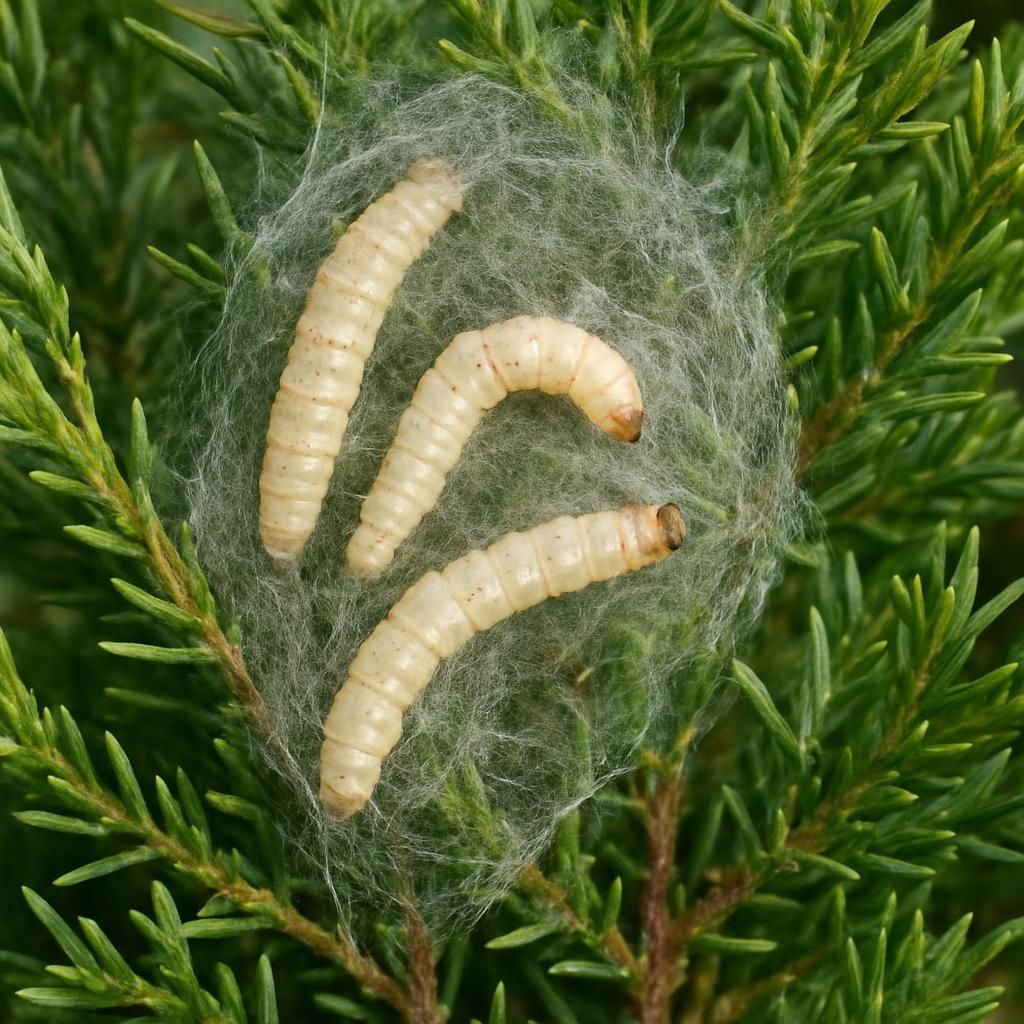
Introduction to Juniper webworm
The Juniper webworm (Dichomeris marginella) is a lepidopteran pest that primarily targets juniper species (Juniperus spp.) and occasionally arborvitae or cypress. Adult moths are small, grayish-brown insects with distinctive wing margins. Larvae are the damaging stage, constructing dense silken tents that enclose and protect feeding colonies while consuming foliage. Heavy infestations can lead to extensive browning, reduced plant vigor, and aesthetic decline in ornamental plantings and commercial nurseries.
Webworm populations tend to build in dense plantings where air circulation is poor and natural enemies are limited. While rarely fatal to established plants, repeated defoliation weakens junipers and increases susceptibility to secondary stressors such as drought or opportunistic pathogens.
Identifying Symptoms & Damage
Early symptoms include small, irregular silk mats appearing at branch tips in late spring. As larvae mature, these webs expand into conspicuous tents that enclose multiple needles. Inside the webbing, pale green to brown caterpillars with dark heads feed on needle tissue, leaving behind brown, skeletonized foliage.
Characteristic damage patterns include:
- Clustered brown tips on otherwise green foliage
- Silken webbing that persists even after larvae have pupated
- Frass accumulation within the web structure
- Gradual canopy thinning in severe cases
Differentiation from other juniper pests is important. Unlike spider mites, which cause stippling without webbing, or scale insects, which produce waxy coverings, Juniper webworm damage is defined by the presence of organized silk tents and active caterpillars.
Lifecycle and Progression of Juniper webworm (MUST INCLUDE A MARKDOWN TABLE OF LIFECYCLE STAGES)
The Juniper webworm completes one generation per year in most temperate regions. Overwintering occurs as partially grown larvae within silk shelters. Spring warming triggers resumed feeding and web expansion. Pupation takes place inside the web in early summer, followed by adult emergence and egg-laying on needle surfaces.
| Stage | Timing (Temperate Zones) | Description | Duration |
|---|---|---|---|
| Egg | Late summer to early fall | Tiny, oval, laid singly or in small clusters on needles | 7–14 days |
| Larva | Fall through spring | Overwintering stage; resumes feeding in spring; constructs expanding webs | 8–10 months |
| Pupa | Early to mid-summer | Brown pupae formed inside silk tents | 10–21 days |
| Adult | Mid-summer | Small gray-brown moths; nocturnal; short-lived | 5–10 days |
Understanding these stages is essential for timing scouting and control measures.
Environmental Triggers & Risk Factors
Several abiotic and cultural factors increase Juniper webworm pressure. Dense, unpruned plantings with poor airflow create sheltered microclimates favored by moths for oviposition. Mild winters allow higher overwintering survival, while drought-stressed plants are more attractive to egg-laying females.
Risk is also elevated in landscapes with limited natural enemy diversity. Reduced populations of parasitic wasps and predatory beetles correlate with higher webworm densities. Proximity to previously infested properties facilitates dispersal of adults.
| Factor | Optimal Range for Infestation | Management Implication |
|---|---|---|
| Temperature | 15–28 °C during larval activity | Monitor closely during warm springs |
| Relative Humidity | 60–85 % | Improve airflow through pruning |
| Plant Density | >1 plant per m² | Space plantings and thin canopies |
| Winter Severity | Mild (above -10 °C lows) | Scout early following warm winters |
Organic Control & Treatment Plans (MUST INCLUDE A MARKDOWN TABLE OF TREATMENT OPTIONS AND FREQUENCIES)
Organic management emphasizes cultural, mechanical, and biological tactics. Begin with sanitation: prune and destroy webbed branches before larvae mature. Encourage natural enemies by planting insectary borders and avoiding broad-spectrum sprays.
Biological options include Bacillus thuringiensis (Bt) formulations and spinosad, both effective against young larvae. Horticultural oils and insecticidal soaps provide contact control but require thorough coverage of webbed foliage.
| Treatment Option | Active Ingredient / Method | Application Frequency | Notes |
|---|---|---|---|
| Pruning & Sanitation | Manual removal of webs | Once in late winter/early spring | Dispose of clippings off-site |
| Bacillus thuringiensis (Bt) | Bt kurstaki | 2–3 applications at 7–10 day intervals | Target early instars; reapply after rain |
| Spinosad | Spinosad | 1–2 applications, 10–14 days apart | Effective on small larvae; UV sensitive |
| Horticultural Oil | 2 % dormant or summer oil | Once in dormant season + 1–2 growing | Thorough coverage required |
| Insecticidal Soap | Potassium salts of fatty acids | Weekly during active feeding | Contact only; avoid high temperatures |
| Beneficial Insects | Trichogramma wasps, lacewings | Release at egg hatch | Combine with habitat plantings |
Rotate products to reduce resistance risk and always follow label rates.
Preventing Juniper webworm in the Future
Long-term prevention centers on plant health and habitat management. Select juniper cultivars with open growth habits that dry quickly after rain. Maintain adequate spacing (minimum 1.5 m between plants) and prune annually to improve light penetration.
Monitor new plantings closely during the first two seasons. Remove alternative hosts such as certain cypress species when they show repeated infestations. Encourage biodiversity by installing hedgerows of flowering perennials that support parasitoids.
Fall soil health practices, including organic matter incorporation and balanced fertility, reduce plant stress and lower susceptibility. The Forgotten Art of Fall Soil Revival: 8 Organic Strategies for Small Farm Resilience provides additional guidance on building resilient growing systems.
Crops Most Affected by Juniper webworm
While the common name indicates its primary host, the pest can affect a range of coniferous ornamentals. The following evergreens are most frequently reported:
- Juniperus chinensis (Chinese juniper)
- Juniperus horizontalis (Creeping juniper)
- Juniperus virginiana (Eastern red cedar)
- Thuja occidentalis (Arborvitae)
- Cupressus sempervirens (Italian cypress)
Although not a food crop, the Juniper webworm occasionally appears near mixed plantings that include Tomato or Blueberry when those crops are grown adjacent to infested evergreens, highlighting the value of spatial separation in diversified landscapes.