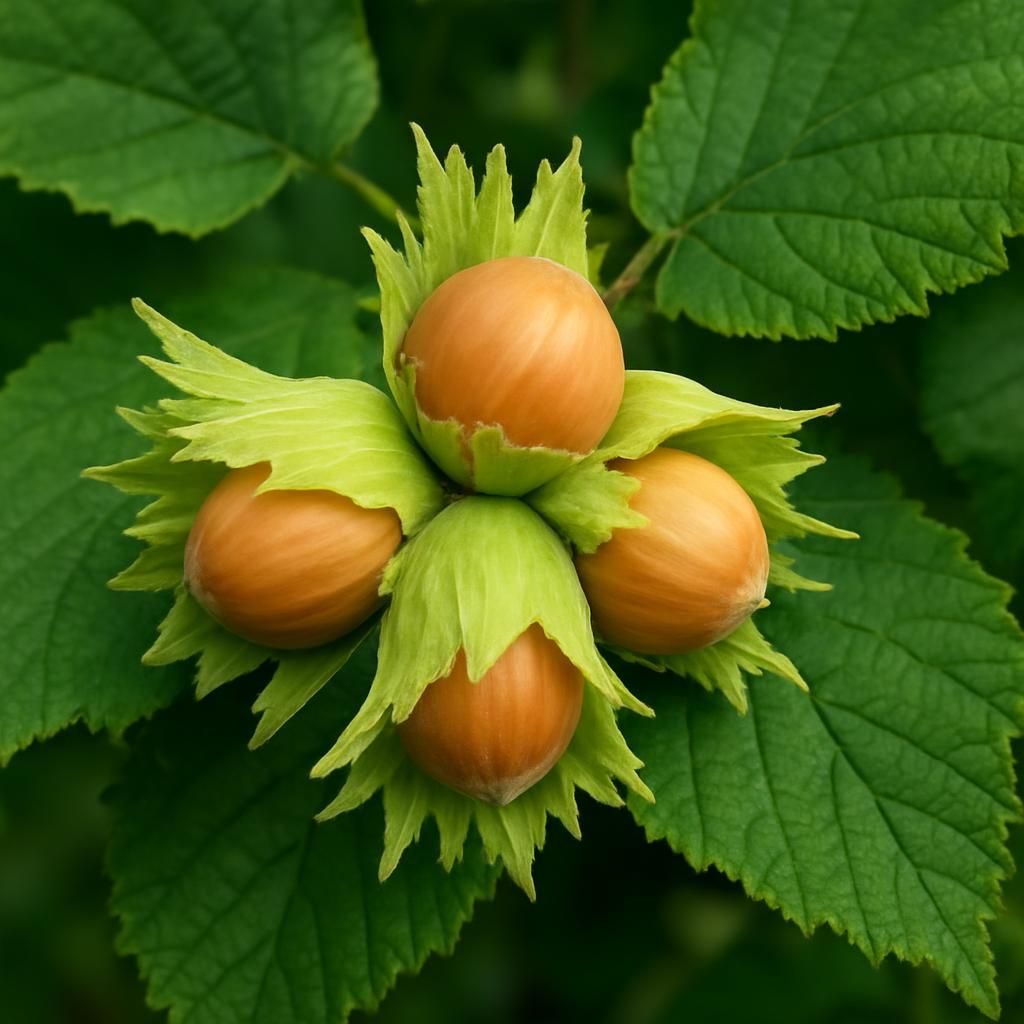
Introduction to Hazelnut (Lewis)
Hazelnut (Lewis) is a modern hybrid cultivar developed by Oregon State University specifically for commercial and small-scale growers seeking reliable nut production with strong disease resistance. Released in the early 1990s, Lewis quickly became a preferred choice in the Pacific Northwest due to its high kernel percentage, uniform nut size, and tolerance to Eastern Filbert Blight. Growers appreciate its vigorous growth habit and consistent yields that support both fresh-market sales and processing operations.
The cultivar combines the best traits of European hazelnut genetics with local adaptation, resulting in a tree that performs well in regions with cool, wet winters and dry summers. Lewis hazelnuts are known for their thin shells and high-quality kernels that command premium prices. Whether planted in large orchards or backyard settings, this variety offers excellent return on investment when managed with proper cultural practices.
Botanical Profile of Hazelnut (Lewis)
Lewis belongs to the genus Corylus within the Betulaceae family. It is a deciduous shrub or small tree that typically reaches 4–6 meters in height with a spreading canopy. The plant produces alternate, ovate leaves with double-serrate margins and prominent veins. Male catkins appear in late winter, releasing pollen before female flowers emerge, ensuring cross-pollination with compatible varieties such as Barcelona Hazelnut or Ennis Hazelnut.
The nuts develop inside a leafy involucre that splits at maturity, releasing round to slightly oval nuts with light brown shells. Kernels are plump, sweet, and have a high oil content ideal for roasting and confectionery. Lewis is self-incompatible and requires a pollinizer planted within 30 meters for optimal nut set.
Soil, pH, and Climate Requirements for Hazelnut (Lewis)
Successful establishment of Hazelnut (Lewis) begins with selecting sites that meet specific environmental parameters. The variety thrives in deep, well-drained loamy soils with good water-holding capacity yet excellent drainage to prevent root diseases.
| Parameter | Ideal Range | Notes |
|---|---|---|
| Soil Type | Loam to sandy loam | Avoid heavy clay without amendment |
| Soil pH | 6.0–7.0 | Slightly acidic to neutral |
| Annual Rainfall | 700–1200 mm | Supplemental irrigation in dry summers |
| USDA Hardiness Zones | 5–8 | Performs best in maritime climates |
| Temperature Range | -15°C to 30°C | Requires 800–1200 chilling hours |
| Sun Exposure | Full sun (minimum 6 hours) | Partial shade reduces yields |
| Elevation | Below 400 m | Higher elevations may need frost protection |
Drainage is critical; raised beds or tile drainage should be installed in marginal soils. Wind protection on exposed sites reduces desiccation of catkins during winter.
Step-by-Step Planting & Propagation
- Site Preparation: Conduct soil tests and amend with lime or sulfur to reach target pH. Incorporate 5–10 cm of well-rotted compost into the top 30 cm of soil.
- Timing: Plant bare-root or container-grown trees in late fall or early spring when soil is workable and temperatures are above freezing.
- Spacing: Space trees 4.5–5.5 m apart in rows 5.5–6.5 m wide to allow mechanical harvest equipment.
- Planting Depth: Set the graft union or root collar at soil level; backfill and water thoroughly.
- Pollination Layout: Plant at least one pollinizer (Barcelona or Ennis) for every 8–10 Lewis trees.
- Initial Irrigation: Provide 20–30 liters of water per tree immediately after planting and maintain consistent moisture for the first two growing seasons.
Propagation is primarily accomplished through layering or purchasing certified disease-free nursery stock. Avoid collecting nuts for seed propagation because Lewis is a clonal cultivar.
Care & Maintenance regimes for Hazelnut (Lewis)
Consistent cultural care maximizes both nut quality and tree longevity. Focus on balanced nutrition, moisture management, and annual pruning to maintain an open canopy.
| Season | Watering Schedule | Fertilizer Application | Pruning Schedule |
|---|---|---|---|
| Spring | 25–40 mm/week if rainfall insufficient | Apply 50 g N/tree at bud break | Remove dead wood; shape young trees |
| Summer | 30–50 mm/week during nut fill | Side-dress with 30 g potassium if leaf tests indicate deficiency | Minimal; tip-prune vigorous shoots if needed |
| Autumn | Reduce to encourage hardening | Apply 20 g phosphorus and micronutrients | Remove suckers; thin interior branches |
| Winter | Maintain soil moisture if dry | No fertilizer; apply compost mulch | Dormant pruning: remove crossing limbs |
Mulch with 7–10 cm of organic material to conserve moisture and suppress weeds. Monitor leaf nutrient levels every two years and adjust programs accordingly.
Pests, Diseases & Organic Management
Lewis exhibits strong resistance to Eastern Filbert Blight, but vigilance is still required for other issues. Key pests include Filbertworm and Nut weevils. Regular monitoring with pheromone traps allows timely intervention.
Organic management strategies include:
- Sanitation: Remove and destroy fallen nuts and infected twigs to break pest cycles.
- Beneficial insects: Release Trichogramma wasps for filbertworm control.
- Cultural controls: Maintain 1.5 m weed-free strips under trees to reduce habitat for rodents and weevils.
- Approved sprays: Use kaolin clay or spinosad products during peak flight periods when thresholds are exceeded.
Scout for Eastern Filbert Blight cankers annually in late summer and prune out infections 30 cm below visible symptoms.
Harvesting, Curing & Optimal Storage
Lewis nuts mature in late September to early October in most regions. Harvest when the involucre begins to split and nuts drop freely. Mechanical shakers or hand raking onto tarps are common methods.
Post-harvest handling steps:
- Immediate cleaning to remove husks and debris.
- Drying to 8–10% moisture content using forced-air dryers at 32–35°C for 24–48 hours.
- Curing in mesh bags or bins for 2–3 weeks at ambient temperature to equalize moisture.
- Storage at 0–4°C and 60–70% relative humidity for up to 12 months with minimal quality loss.
Proper curing prevents mold and rancidity while preserving kernel flavor.
Companion Planting for Hazelnut (Lewis)
Strategic companion planting improves biodiversity and soil health in hazelnut orchards. Nitrogen-fixing species such as Clover or Hairy vetch planted in alleyways supply 50–100 kg N/ha annually.
Flowering companions including Marigold and Nasturtium attract beneficial insects that prey on aphids and mites. Deep-rooted cover crops like Daikon Radish help break compaction and improve drainage. Avoid planting shallow-rooted vegetables directly under the canopy to prevent competition for water and nutrients.
Diverse hedgerows of native shrubs provide habitat for predatory birds and pollinators while serving as windbreaks. Regular mowing of alleyways prevents competition and maintains access for harvest equipment.