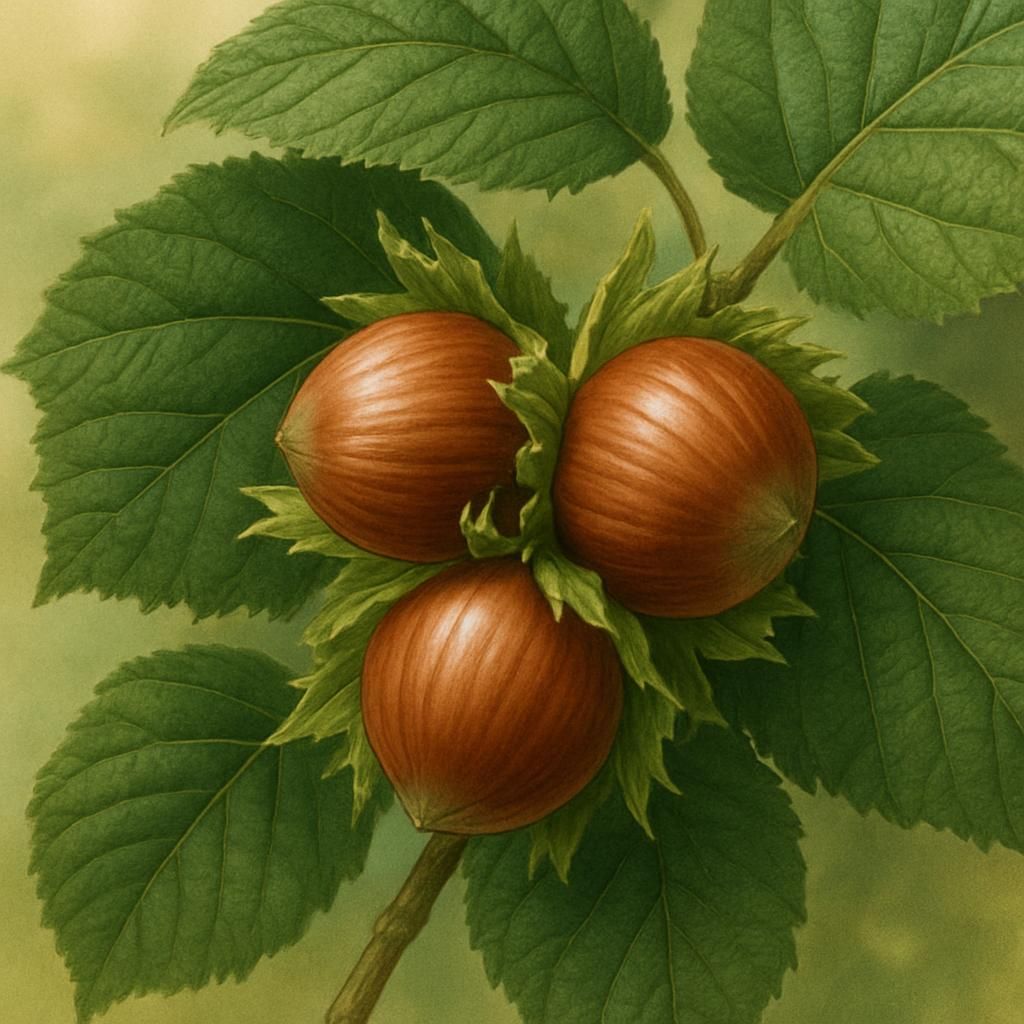
Introduction to Hazelnut (Jefferson)
Hazelnut (Jefferson) is a premium European hazelnut cultivar (Corylus avellana) bred specifically for commercial production in the Pacific Northwest. Released by Oregon State University, Jefferson combines high kernel percentage, large nut size, and exceptional resistance to Eastern Filbert Blight. Its consistent yields and superior processing quality have made it the leading variety for both fresh market and industrial applications. Growers value Jefferson for its upright growth habit, early bearing, and reliable performance under intensive management.
Botanical Profile of Hazelnut (Jefferson)
Jefferson is a deciduous multi-stemmed shrub or small tree reaching 4–6 meters at maturity. It produces monoecious catkins that release pollen in late winter, while female flowers emerge in early spring. The cultivar is self-incompatible and requires a compatible pollinizer such as Yamhill or Ennis. Nuts are large (2.5–3.0 g), round, with thin shells and high kernel fill averaging 48–52%. The kernels are plump, light-colored, and low in fiber, making them ideal for roasting and chocolate applications.
Soil, pH, and Climate Requirements for Hazelnut (Jefferson)
Jefferson performs best in deep, well-drained loamy soils with good water-holding capacity. Avoid heavy clays or sites with seasonal waterlogging. The variety tolerates a wide temperature range but requires 800–1200 chilling hours and protection from late spring frosts.
| Parameter | Ideal Range | Notes |
|---|---|---|
| Soil Type | Loam to sandy loam | Deep, fertile, good drainage |
| Soil pH | 6.0–7.0 | Slightly acidic to neutral |
| Annual Rainfall | 800–1200 mm | Supplemental irrigation in dry summers |
| USDA Zones | 5–8 | Cold hardy to –20 °C (–4 °F) |
| Temperature Range | –20 °C to 32 °C | Avoid frost pockets during bloom |
| Sun Exposure | Full sun | Minimum 6–8 hours direct sunlight |
Step-by-Step Planting & Propagation
- Site Selection: Choose south- or west-facing slopes with excellent air drainage. Conduct soil tests and amend with lime or sulfur six months prior to planting.
- Pollinizer Layout: Plant Jefferson at 5 × 6 m spacing with compatible pollinizers (Yamhill or Ennis) at a 10% ratio.
- Propagation: Use whip-and-tongue grafting on disease-free rootstocks in late winter or layer suckers in autumn.
- Planting Window: Bare-root trees are planted from November to March; container stock can be planted year-round in mild climates.
- Initial Care: Water deeply after planting and apply 5–10 cm of organic mulch, keeping it 10 cm from the trunk.
Care & Maintenance regimes for Hazelnut (Jefferson)
Jefferson orchards require balanced nutrition, consistent irrigation, and annual pruning to maintain productivity and light penetration.
| Practice | Schedule | Details |
|---|---|---|
| Watering | March–October | 25–40 mm/week during kernel fill; drip irrigation preferred |
| Fertilizer | Early spring & post-harvest | 50–80 kg N/ha split applications; maintain leaf K >1.5% and B 30–50 ppm |
| Pruning | Dormant season (Dec–Feb) | Remove 20–25% canopy annually; open center to improve light and airflow |
Pests, Diseases & Organic Management
The primary disease threat is Eastern Filbert Blight caused by Anisogramma anomala. Jefferson’s genetic resistance greatly reduces canker incidence, but sanitation and resistant pollinizers remain essential. Key pests include Filbertworm and Leafrollers. Organic management relies on mating disruption, Bacillus thuringiensis sprays timed to egg hatch, and removal of dropped nuts. Regular monitoring with pheromone traps helps maintain populations below economic thresholds.
Harvesting, Curing & Optimal Storage
Jefferson nuts mature in late September to early October when the involucre turns brown and nuts drop freely. Sweep or vacuum nuts daily to minimize mold. Dry to 8–10% moisture within 48 hours using forced-air dryers at 32–35 °C. Store in-shell at 0–5 °C and 60–65% relative humidity for up to 18 months. Shelled kernels keep best vacuum-packed at –18 °C.
Companion Planting for Hazelnut (Jefferson)
Leguminous cover crops such as Clover and Hairy vetch improve soil nitrogen and support beneficial insects. Interplanting with Nasturtium and Marigold provides habitat for predatory beetles that suppress Aphids. Avoid shallow-rooted vegetables within the dripline to prevent competition for water and nutrients.