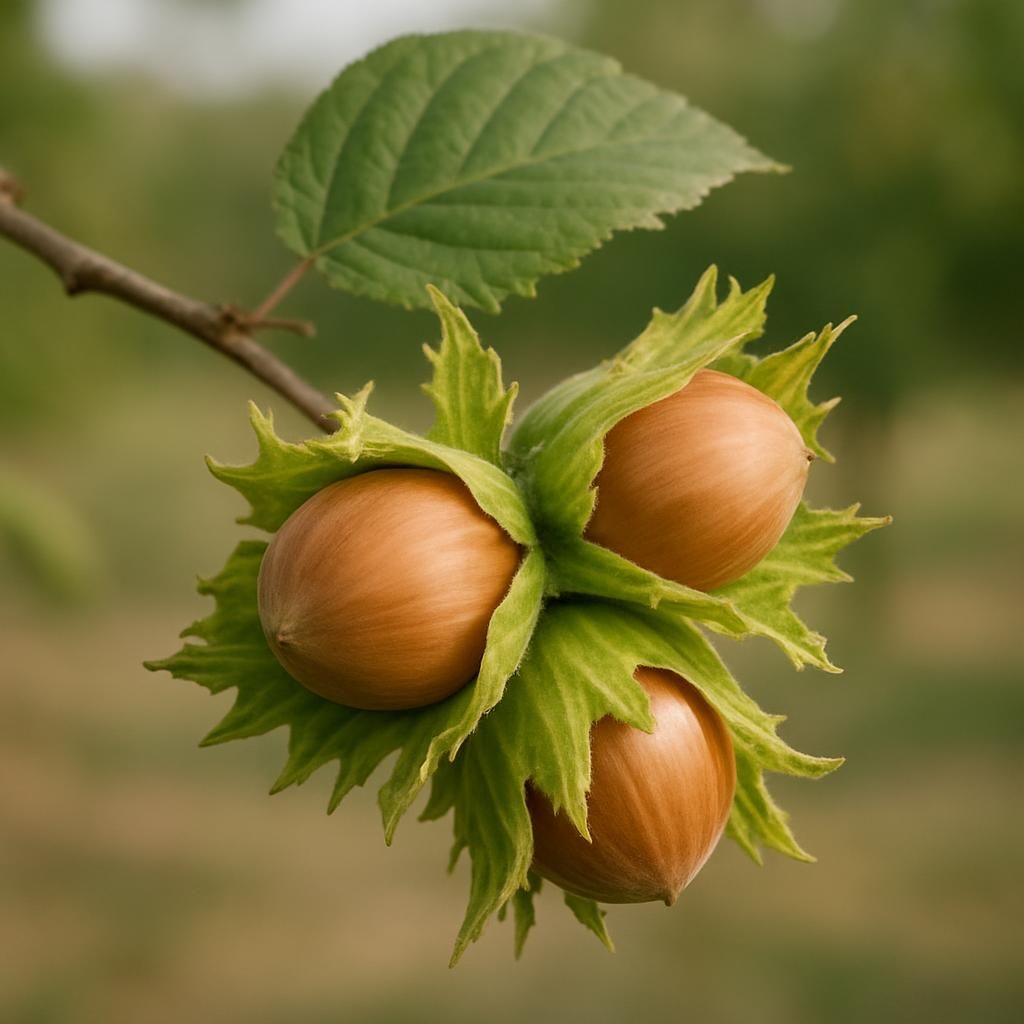
Introduction to Hazelnut (Dorris)
Hazelnut (Dorris) is a premium European hazelnut cultivar developed by Oregon State University for superior kernel size, late-season bloom that avoids spring frosts, and partial resistance to eastern filbert blight. Growers seeking reliable yields in USDA zones 5–8 value its upright growth habit and consistent production of large, round nuts with excellent flavor and blanching characteristics.
Botanical Profile of Hazelnut (Dorris)
Dorris belongs to the birch family (Betulaceae). It forms a multi-stemmed deciduous shrub or small tree reaching 12–18 feet (3.7–5.5 m) at maturity. The cultivar produces monoecious catkins; male flowers appear in late winter while female flowers emerge later, reducing frost risk. Nuts develop inside a leafy involucre (husk) and ripen in September–October.
Soil, pH, and Climate Requirements for Hazelnut (Dorris) (MUST INCLUDE A MARKDOWN TABLE OF IDEAL CONDITIONS)
Dorris performs best in deep, fertile, well-drained loams with moderate organic matter. The cultivar tolerates a wide pH range but yields decline outside the optimum window.
| Parameter | Ideal Range | Notes |
|---|---|---|
| Soil Type | Loam to sandy loam | Avoid heavy clays and waterlogged sites |
| Soil pH | 6.0–7.0 | Slightly acidic to neutral |
| Drainage | Excellent | Raised beds or tile drainage on marginal sites |
| Annual Rainfall | 30–45 inches (760–1140 mm) | Supplemental irrigation needed in drier areas |
| USDA Hardiness Zones | 5–8 | Protect young plants from extreme cold |
| Chill Hours | 800–1200 hours | Required for uniform bud break |
| Temperature Range | -10 °F to 95 °F (-23 °C to 35 °C) | Late bloom reduces spring frost damage |
Step-by-Step Planting & Propagation
- Site Selection: Choose full-sun locations with protection from strong winds. Conduct soil tests and amend pH with lime or sulfur six months prior.
- Propagation: Use whip-and-tongue grafts on disease-resistant rootstocks such as Hazelnut seedlings or clonal selections.
- Spacing: Plant in hedgerows 12–15 ft (3.7–4.6 m) between trees and 18–20 ft (5.5–6.1 m) between rows.
- Planting Time: Install bare-root or potted plants in late fall or early spring when soils are workable.
- Initial Care: Water thoroughly after planting and apply 3–4 inches of organic mulch, keeping it away from the trunk.
Care & Maintenance regimes for Hazelnut (Dorris) (MUST INCLUDE A MARKDOWN TABLE OF WATER, FERTILIZER, AND PRUNING SCHEDULES)
Consistent moisture during nut fill and balanced nutrition produce the largest kernels. Annual pruning maintains an open canopy and removes diseased wood.
| Season | Watering Schedule | Fertilizer Application | Pruning Schedule |
|---|---|---|---|
| Spring | 1 inch/week during bloom & leaf-out | 0.5 lb N per tree at bud break | Remove suckers and crossing branches |
| Summer | Maintain soil moisture at 50–60% field capacity | Side-dress 0.25 lb N in June if leaf analysis indicates need | Tip-prune new growth to encourage branching |
| Fall | Reduce to encourage hardening off | Apply 1–2 inches compost around drip line | Remove dead or EFB-infected wood |
| Winter | Minimal unless drought persists | Soil test every 3 years; adjust P & K | Dormant structural pruning |
Pests, Diseases & Organic Management
Eastern filbert blight (Anisogramma anomala) remains the primary disease threat. Monitor for Filbertworm, Leafrollers, and Aphids. Organic strategies include resistant cultivars, removal of infected branches 12–18 inches below cankers, and mating-disruption pheromones for filbertworm. Beneficial insects and kaolin clay sprays help suppress aphids and leafrollers.
Harvesting, Curing & Optimal Storage
Harvest when husks begin to split and nuts drop freely, typically mid-to-late September. Collect daily to minimize mold and wildlife loss. Dry nuts to 8–10% moisture over 2–3 weeks at 90–100 °F (32–38 °C) with good airflow. Store in-shell at 32–40 °F (0–4 °C) and 60–65% relative humidity for up to 12 months. Shelled kernels keep 6–9 months under the same conditions or up to 18 months when vacuum-packed and frozen.
Companion Planting for Hazelnut (Dorris)
Leguminous cover crops such as Clover and Hairy vetch fix nitrogen and improve soil structure between rows. Aromatic herbs including Thyme and Rosemary attract beneficial insects while repelling certain pests. Avoid planting shallow-rooted crops that compete for moisture during nut fill. Diverse hedgerows of native shrubs provide habitat for pollinators and natural enemies of Filbertworm and Aphids.