Introduction to Frankincense Resin (Boswellia)
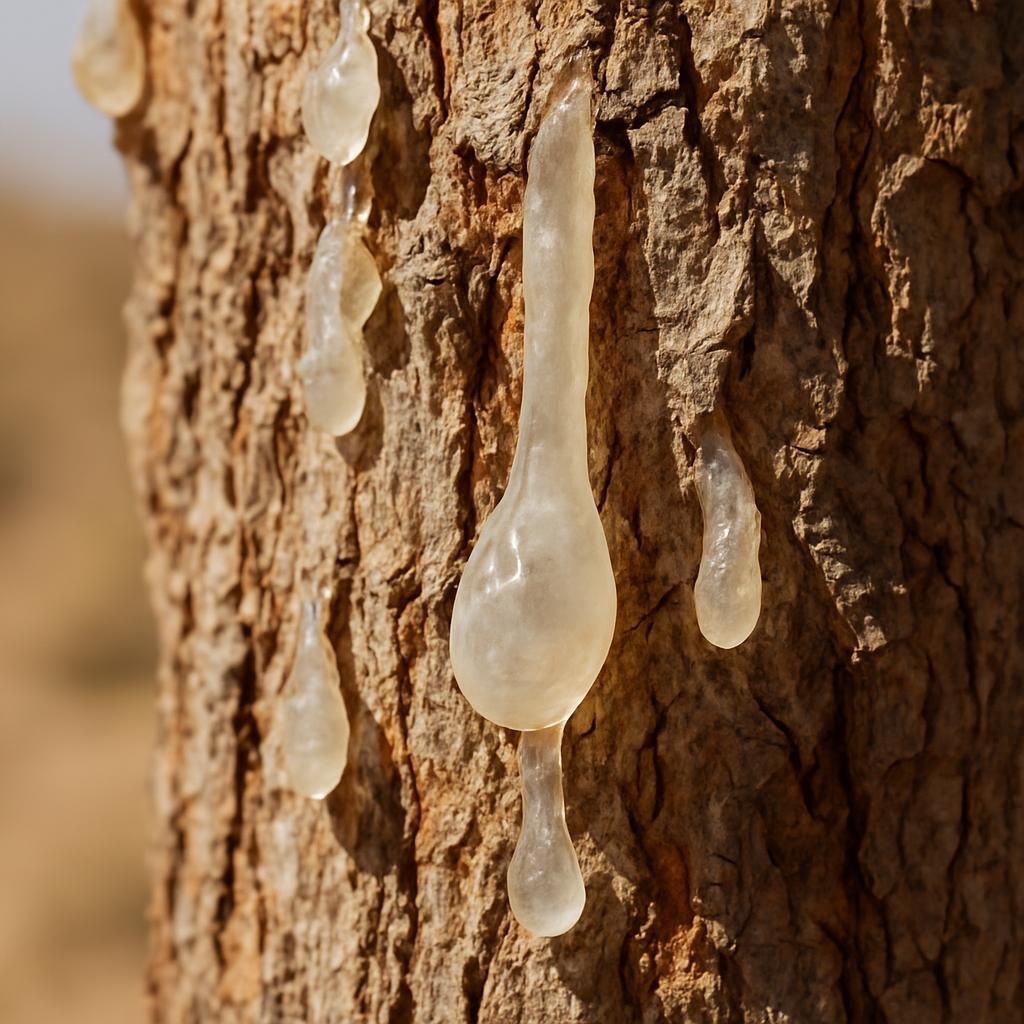
Frankincense resin, derived primarily from Boswellia sacra and related species, has been prized for millennia for its aromatic, medicinal, and ritual uses. The resin exudes from incisions made in the bark of these slow-growing deciduous trees and hardens into tear-shaped droplets valued in perfumery, traditional medicine, and incense production. Commercial cultivation remains limited due to the species' specific arid requirements and slow maturation, making high-quality resin a premium agricultural product.
Successful resin farming requires replicating the harsh, rocky environments of the species' native range while implementing modern agronomic practices to improve yields and sustainability. This guide provides professional-grade, actionable advice for growers seeking to establish or expand Boswellia plantations.
Botanical Profile of Frankincense Resin (Boswellia)
Boswellia sacra is a small to medium-sized tree reaching 2–8 meters in height with a spreading crown and thick, papery bark that peels in layers. The compound leaves consist of 6–15 leaflets arranged in pairs, and the tree produces small, white or pinkish flowers in axillary racemes during the dry season. Resin ducts located in the inner bark are responsible for the characteristic oleo-gum-resin that is tapped seasonally.
Related commercial species include Boswellia carterii, Boswellia papyrifera, and Boswellia serrata, each adapted to slightly different microclimates but sharing the same resin-producing physiology. The trees exhibit strong drought deciduousness, shedding leaves during prolonged dry periods to conserve water.
Soil, pH, and Climate Requirements for Frankincense Resin (Boswellia)
Boswellia thrives in extremely well-drained, nutrient-poor substrates that mimic its native limestone and rocky outcrops. Heavy clay or water-retentive soils cause rapid decline. The following table summarizes ideal conditions:
| Parameter | Ideal Range/Value | Notes |
|---|---|---|
| Soil Type | Sandy loam, gravelly, rocky | Must drain within 30 minutes after rain |
| Soil pH | 7.5 – 8.8 | Strongly alkaline preferred |
| Temperature Range | 25–40 °C daytime; 15–25 °C night | Frost below 5 °C is lethal |
| Annual Rainfall | 100–300 mm | Supplemental irrigation in first 3 years |
| Altitude | 300–1,500 m | Higher elevations may reduce resin yield |
| Sunlight | Full sun (minimum 8 hours) | Partial shade reduces resin production |
| Humidity | <40 % RH | High humidity promotes fungal issues |
Step-by-Step Planting & Propagation
- Seed Collection & Treatment: Harvest mature capsules in late dry season. Soak seeds in warm water for 24 hours, then scarify lightly with sandpaper to improve germination rates of 60–75 %.
- Nursery Phase: Sow in deep, free-draining tubes using a 70 % coarse sand / 30 % perlite mix at 28–32 °C. Keep barely moist; seedlings emerge in 10–21 days.
- Hardening: After 6–8 weeks, reduce watering frequency and expose seedlings to full sun for 4 weeks before transplanting.
- Field Planting: Dig 60 cm × 60 cm × 60 cm holes filled with native rocky soil amended with 10 % well-rotted manure. Space trees 4 m × 4 m for resin tapping or 3 m × 3 m for higher density.
- Establishment Irrigation: Provide 10 L per tree every 10–14 days for the first two dry seasons, then taper to natural rainfall.
Care & Maintenance regimes for Frankincense Resin (Boswellia)
The table below outlines seasonal schedules for water, fertilizer, and pruning:
| Season | Watering Schedule | Fertilizer Application | Pruning Schedule |
|---|---|---|---|
| Spring | 15 L/tree every 14 days if no rain | 50 g/tree of 8-4-12 slow-release (low N) | Remove deadwood and crossing branches |
| Summer | Natural rainfall or 10 L every 21 days | None; foliar seaweed tea (1:20) monthly | Light tipping of new growth to shape crown |
| Autumn | Cease irrigation; allow dormancy | 30 g/tree rock phosphate broadcast | None |
| Winter | None unless prolonged drought | Compost tea drench once in mid-winter | Major structural pruning of 20 % canopy |
Mulch with 5–8 cm of gravel or crushed limestone around the base to suppress weeds and retain heat. Avoid organic mulch that retains moisture against the trunk.
Pests, Diseases & Organic Management
Boswellia is relatively pest-resistant due to its resinous nature, but young trees may suffer from Aphids, Spider Mites, and occasional Scale insects. Root rot from Phytophthora occurs in poorly drained soils. Apply neem oil (0.5 %) at first sign of soft-bodied insects and maintain strict drainage. For fungal issues, drench soil with aerated compost tea and improve airflow through pruning.
Harvesting, Curing & Optimal Storage
Tapping begins when trees reach 8–10 years of age. Make shallow, 2–3 cm incisions in a spiral pattern around the trunk during the hottest, driest months. Collect hardened resin tears after 2–4 weeks. Air-dry collected resin in shade for 7–10 days until moisture content falls below 8 %. Store in airtight glass or food-grade plastic containers in a cool, dark location (15–20 °C) for up to 5 years without loss of aromatic quality.
Companion Planting for Frankincense Resin (Boswellia)
Boswellia benefits from drought-tolerant companions that improve soil structure without competing for water. Thyme and Rosemary planted in the inter-row spaces provide ground cover, attract beneficial insects, and their essential oils may deter pests. Leguminous shrubs such as Gliricidia can fix nitrogen in deeper soil layers while maintaining the open canopy preferred by Boswellia. Avoid high-water-demand crops that alter microclimate humidity.