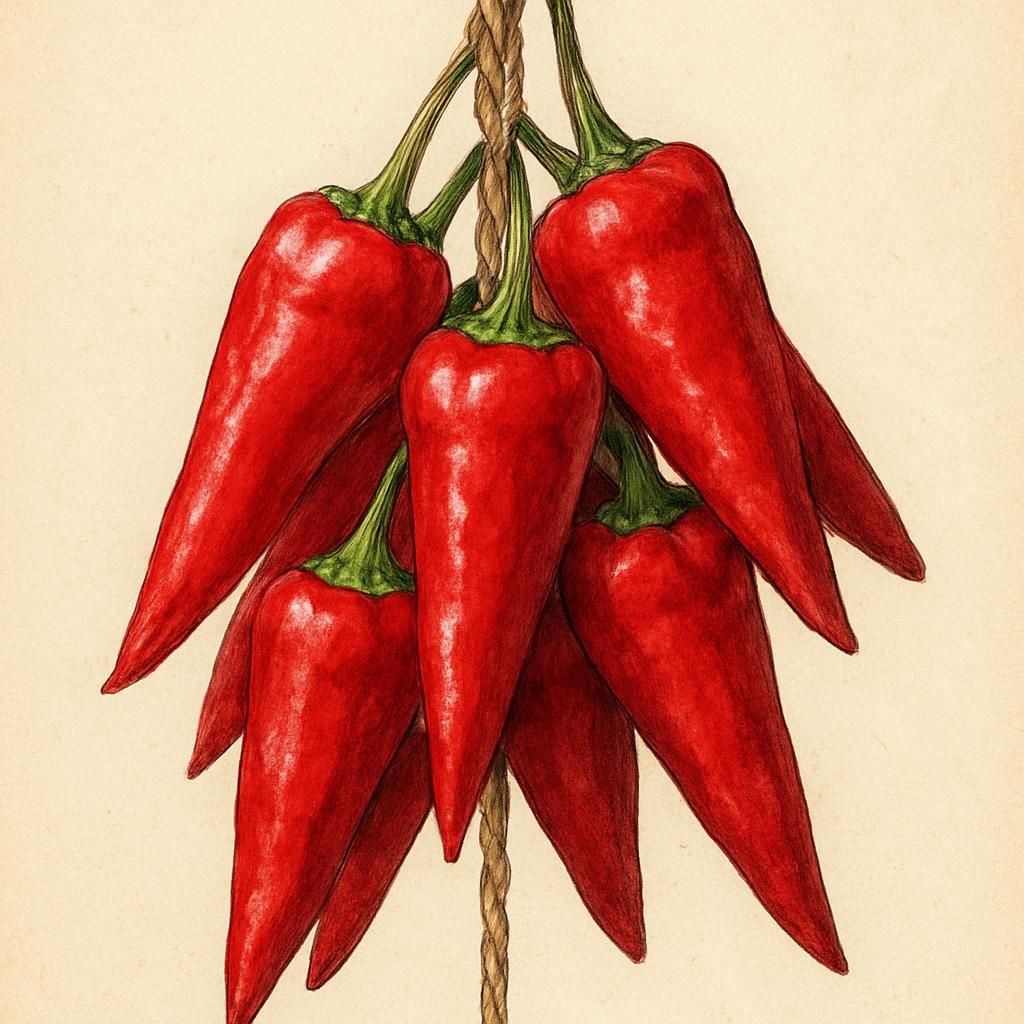
Introduction to Espelette Pepper
The Espelette Pepper, also known as Piment d'Espelette, is a cherished culinary pepper that hails from the Basque region of France. This variety of pepper, named after the town of Espelette, is renowned for its vibrant red color, gentle heat, and rich, fruity flavor. While its Scoville heat units only range between 1,000 to 4,000, it is a staple in French cooking, often used to enhance the flavor of stews, sauces, and meats. Its mild nature makes it versatile enough to serve as a delicately spicy ingredient or even a decorative element in some dishes.
Botanical Profile of Espelette Pepper
Espelette Peppers belong to the species Capsicum annuum, which is known for its wide variety of sweet and hot peppers. The plants are relatively small in size, typically reaching heights between 50 to 80 cm. The peppers themselves are conical to horn-shaped, measuring approximately 10 to 15 cm in length. As they ripen, they transition from a bright green to a striking red hue.
Soil, pH, and Climate Requirements for Espelette Pepper
To cultivate Espelette Peppers successfully, certain soil and climate conditions must be met. They thrive in well-drained soils rich in organic matter. The ideal pH range and temperature conditions for the growth of Espelette peppers are shown in the table below:
| Parameter | Ideal Condition |
|---|---|
| Soil type | Well-drained, loamy |
| pH level | 5.5 to 7.0 |
| Temperature range | 20°C to 28°C (68°F to 82°F) |
| Sunlight | Full sun |
Step-by-Step Planting & Propagation
- Seed Selection: Opt for high-quality seeds from a reputable source to ensure healthy growth.
- Sowing Seeds Indoors: Start seeds indoors about 8 to 10 weeks before the last expected frost date. Sow the seeds about 1/4 inch deep in small pots filled with seed-starting mix.
- Transplanting: Once the seedlings have developed two sets of true leaves and the risk of frost has passed, they can be transplanted outdoors. Choose a location with full sun exposure and space the plants about 30 cm apart.
- Hardening Off: Before planting outside, gradually expose the seedlings to outdoor conditions over a week.
- Propagation by Cuttings: Take cuttings from mature plants in late summer, root them in water or a seed-starting medium, and maintain constant moisture.
Care & Maintenance Regimes for Espelette Pepper
Espelette Peppers require consistent care to thrive. This includes proper watering, fertilization, and pruning, as shown in the table below:
| Task | Schedule |
|---|---|
| Watering | Once or twice a week, allowing soil to dry between waterings |
| Fertilizer | Every 4 to 6 weeks with a balanced fertilizer |
| Pruning | Regularly remove suckers and non-productive branches |
Pests, Diseases & Organic Management
Espelette Peppers are susceptible to a range of pests and diseases, including Spider Mites and Pepper Weevil. Organic management strategies include:
- Using neem oil or insecticidal soap for pest control.
- Employing crop rotation to prevent soil-borne diseases.
- Encouraging beneficial insects like ladybugs.
Harvesting, Curing & Optimal Storage
- Harvesting: Peppers are ready for harvest when they turn a deep red color. Use clean, sharp shears to avoid damaging the plant.
- Curing: Traditionally, Espelette Peppers are hung to dry in strings, which not only preserves them but also intensifies the flavor.
- Storage: Once dried, store the peppers in an airtight container in a cool, dark place to maintain their aroma and potency.
Companion Planting for Espelette Pepper
Companion planting can enhance the growth of Espelette Peppers. Pair them with Basil, onions, or Tomatoes to improve flavor and deter pests. Avoid planting them next to cabbage or Fennel as they can inhibit pepper growth.
For more detailed planting strategies and pest management tips, visit the Crop Diseases Under the Microscope: 9 Organic Fixes for Small Farm Resilience. The art of choosing the right plant pairings can be further explored in Summer Companion Planting: 10 Organic Pairings to Boost Small Farm Resilience.