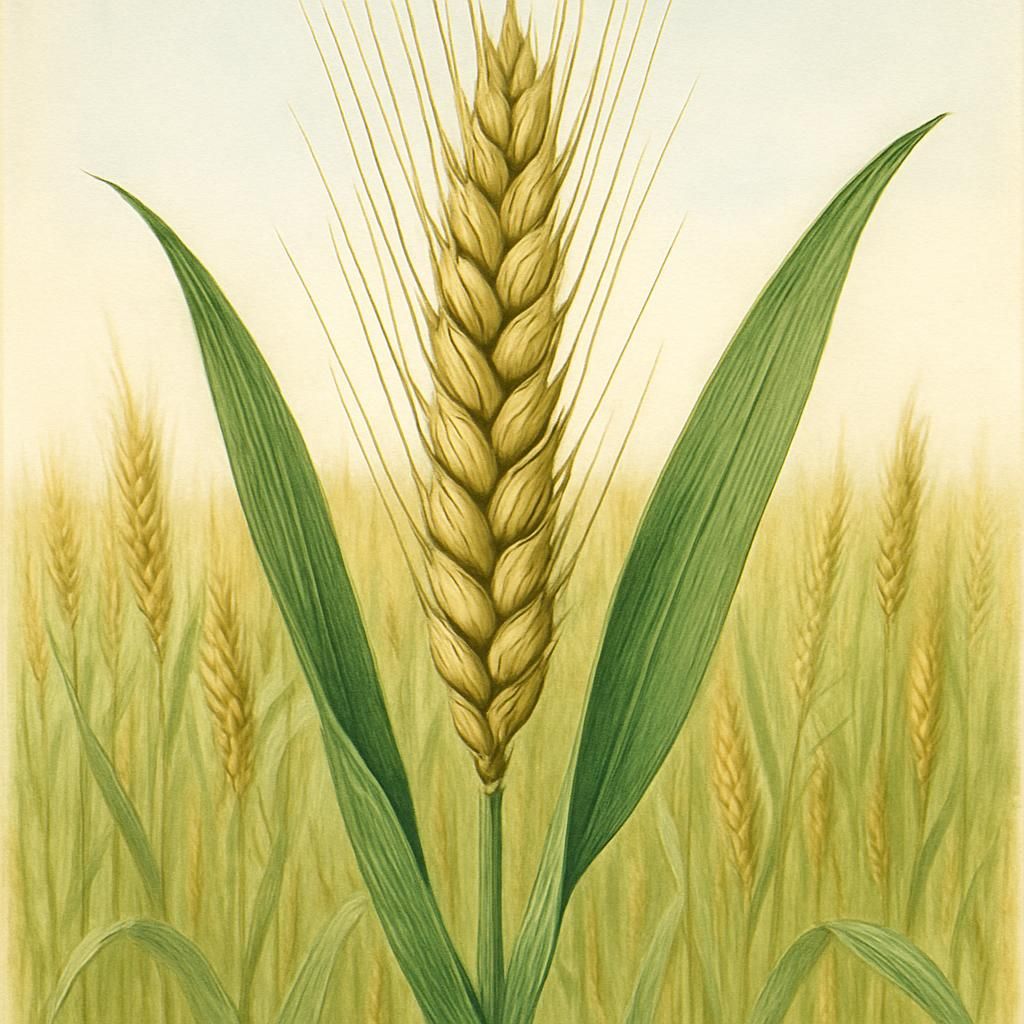
Introduction to Durum Wheat (Saragolla)
Durum wheat, scientifically known as Triticum durum, is a hard wheat variety renowned for producing high-quality pasta. Its dense kernels and high protein content make it ideal for semolina production, a key ingredient in pasta. Originating from the Mediterranean region, the Saragolla variety of Durum wheat is prized for its rich flavor and robust characteristics.
Botanical Profile of Durum Wheat (Saragolla)
Durum wheat belongs to the Poaceae family. This annual grass grows erect, typically reaching heights of up to 120 cm. It has broad, flat leaves and produces large, dense spikes that contain firm, high-protein grains. These characteristics contribute to its viability as a staple crop, particularly in areas with a suitable climate.
Soil, pH, and Climate Requirements for Durum Wheat (Saragolla)
Durum wheat thrives best in specific soil and climate conditions, as outlined below:
| Soil Type | Ideal pH | Temperature Range | Rainfall |
|---|---|---|---|
| Loamy, well-drained | 6.0 - 7.5 | 20°C - 30°C | 350-500 mm |
The crop prefers loamy soil that is well-drained to avoid waterlogging, which can lead to disease. The pH should be slightly acidic to neutral, which facilitates nutrient absorption. Durum wheat grows optimally in temperatures ranging from 20°C to 30°C, making it favorable in Mediterranean climates with moderate rainfall.
Step-by-Step Planting & Propagation
- Site Selection & Soil Preparation: Begin by selecting a site with well-drained soil. Prepare the field prior to planting by plowing and harrowing to achieve a fine tilth.
- Sowing: Plant the seeds in early spring or late autumn. Use a seed drill for even distribution, planting at a depth of about 3-4 cm.
- Spacing: Maintain a row spacing of 15-20 cm to allow adequate air circulation.
- Irrigation: Provide moderate irrigation, especially during the tillering and grain-filling stages, but ensure that the field does not remain waterlogged.
Care & Maintenance Regimes for Durum Wheat (Saragolla)
Effective care and maintenance ensure healthy growth and high yield.
| Task | Frequency | Details |
|---|---|---|
| Watering | Moderate | Ensure soil is moist, but avoid waterlogging. |
| Fertilization | Twice | Use balanced NPK fertilizer at planting and tillering period. |
| Pruning | N/A | Not applicable for wheat crops. |
Regular monitoring for weeds is crucial, especially in the early stages, to prevent competition for nutrients. Use organic mulches if necessary to suppress weed growth.
Pests, Diseases & Organic Management
Durum wheat is susceptible to various pests and diseases, including Hessian fly, Cereal leaf beetle, and disease like Leaf Rust. Regular monitoring and early intervention using organic control methods such as insecticidal soaps or neem oil can help manage these threats.
Diseases such as Fusarium head blight and Take-all can be serious, so it's vital to rotate crops and maintain field hygiene. For more detailed strategies, explore the link to our article on Blog.
Harvesting, Curing & Optimal Storage
Harvesting should occur when the grains are fully matured and moisture content is about 12-14%. Use a combine harvester for efficient collection. Post-harvest, dry the grains thoroughly before storing in a cool, dry place to prevent mold growth.
Companion Planting for Durum Wheat (Saragolla)
Durum wheat can be grown alongside Nasturtium and Clover. These companions help in pest control and soil enrichment. Avoid planting near crops like Corn which may compete for resources. Consider reading Blog for more insights.