Introduction to Dasheen mosaic virus
Dasheen mosaic virus (DsMV) is a member of the Potyviridae family and one of the most widespread viral pathogens affecting aroid crops worldwide. The virus was first described in the 1960s on dasheen (Colocasia esculenta) and has since been reported in nearly every tropical and subtropical region where taro, cocoyam, and ornamental aroids are grown. Infected plants exhibit reduced photosynthetic capacity, leading to smaller corms and lower market quality. Because the virus is systemic, once established in a planting it persists through vegetative propagation, making clean stock programs essential. Farmers, extension agents, and commercial nurseries must integrate symptom recognition, vector management, and certified planting material to limit economic losses.
Identifying Symptoms & Damage
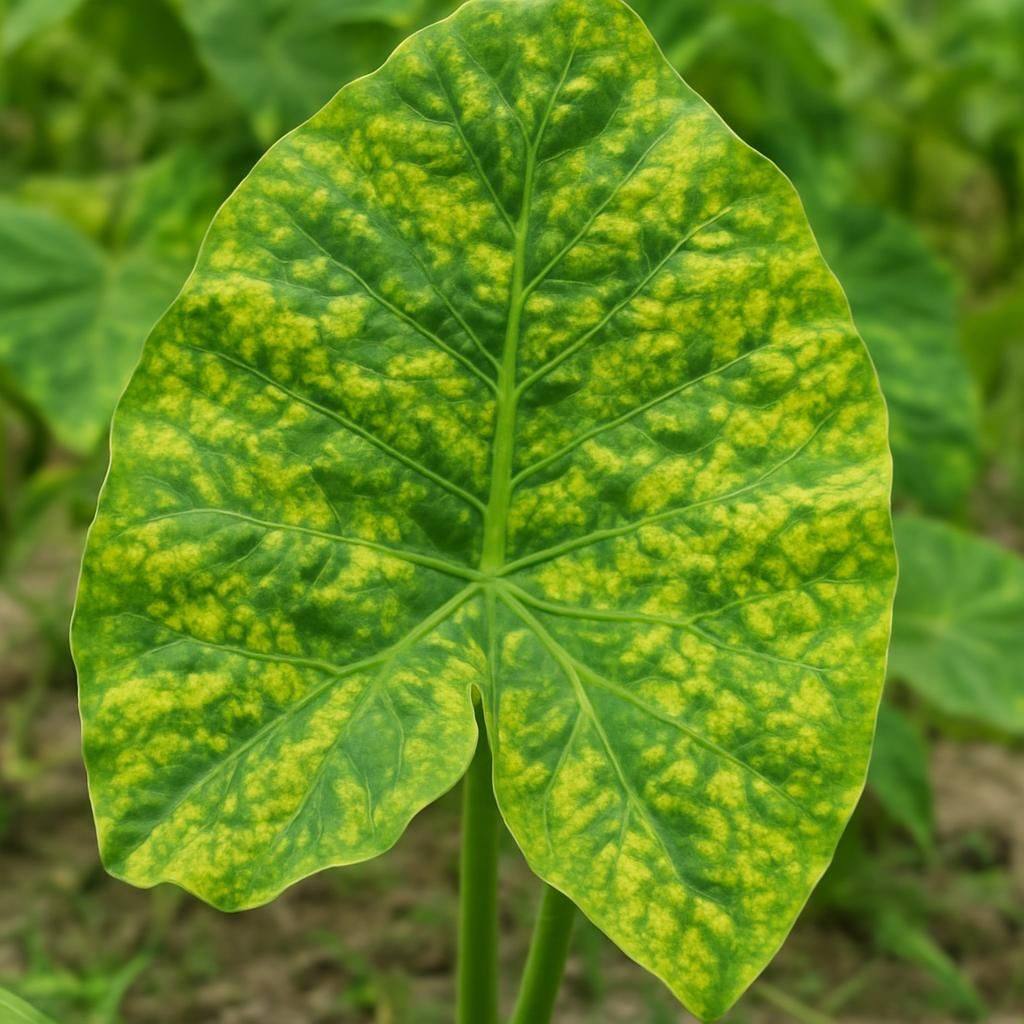
Early foliar symptoms appear 2–4 weeks after infection as irregular chlorotic or pale-green mosaic patterns along leaf veins. As the disease advances, leaves develop puckering, twisting, and reduced lamina size, giving plants a stunted, bunched appearance. Petioles may show dark green streaking or water-soaked lesions. Corm development is impaired, resulting in 30–70 % yield reductions depending on cultivar susceptibility and infection timing. Secondary effects include increased susceptibility to fungal leaf spots and root rots because weakened plants cannot maintain normal physiological defenses. Diagnostic confirmation requires ELISA or RT-PCR testing because visual symptoms overlap with nutrient deficiencies and other mosaic viruses.
Lifecycle and Progression of Dasheen mosaic virus (MUST INCLUDE A MARKDOWN TABLE OF LIFECYCLE STAGES)
DsMV is transmitted mainly by several aphid species, including Myzus persicae and Aphis gossypii, in a non-persistent manner; virions adhere to the stylet during brief feeding probes and are lost after molting. The virus does not replicate in the vector. Primary infection occurs when viruliferous aphids move from infected to healthy plants. Once inside host cells, the single-stranded RNA genome is translated into a polyprotein that is cleaved into functional proteins enabling replication and systemic movement. The virus moves through the phloem to reach meristematic tissues and newly forming corms. Vegetative propagation perpetuates the pathogen across seasons.
| Lifecycle Stage | Description | Typical Duration | Key Management Point |
|---|---|---|---|
| Acquisition | Aphid stylet picks up virions from infected leaf epidermis during short probes | Seconds to minutes | Remove infected plants before aphid populations peak |
| Inoculation | Viruliferous aphid probes healthy leaf, depositing virions into cells | Seconds | Use reflective mulches or oil sprays to deter aphids |
| Replication | Viral RNA translated and replicated in host cytoplasm | 3–7 days | Apply systemic insecticides only if vector threshold exceeded |
| Systemic spread | Virus moves via phloem to new leaves and developing corms | 7–21 days | Rogue symptomatic plants immediately |
| Overwintering | Survives in infected corms, suckers, or perennial weeds | Entire off-season | Plant only certified virus-free corms |
Environmental Triggers & Risk Factors
Warm temperatures (25–32 °C) and high relative humidity favor rapid aphid reproduction and efficient virus transmission. Heavy monsoon or irrigation events increase aphid flight activity between fields. Continuous monoculture of Taro or related aroids without rotation allows virus reservoirs to accumulate. Use of infected “seed” corms is the single largest risk factor; surveys show 60–90 % of farm-saved propagules carry DsMV in endemic areas. Nutrient-stressed plants with low potassium or magnesium display more severe symptoms. Proximity to weedy borders harboring alternative hosts such as wild taro or ornamental philodendrons further elevates risk.
Organic Control & Treatment Plans (MUST INCLUDE A MARKDOWN TABLE OF TREATMENT OPTIONS AND FREQUENCIES)
No curative chemical exists for DsMV; management relies on cultural, mechanical, and biological tactics. Organic programs emphasize prevention and vector suppression. Reflective silver mulch reduces aphid landing rates by 40–60 %. Weekly applications of horticultural oils or insecticidal soaps during peak aphid flights limit non-persistent transmission. Rogueing infected plants within 48 hours of symptom appearance keeps inoculum low. Introducing banker plants with beneficial insects such as Aphidius colemani can suppress aphid colonies. All planting material must originate from tissue-culture certified virus-free stock.
| Treatment Option | Frequency | Application Notes | Expected Efficacy |
|---|---|---|---|
| Reflective silver mulch | At planting, maintain season-long | 70 % reflective, 1.2 m wide strips | 40–60 % reduction in aphid landings |
| Horticultural oil (1 % v/v) | Every 7–10 days during aphid flights | Spray undersides of leaves at dawn | 50–70 % reduction in transmission |
| Insecticidal soap (2 % v/v) | Every 5–7 days when aphids exceed 5 per leaf | Rotate with oils to avoid resistance | Moderate suppression |
| Rogue symptomatic plants | Within 48 h of detection | Bag and destroy off-site | Prevents 80 % of secondary spread |
| Certified virus-free corms | Every planting cycle | Source from accredited labs | Near 100 % prevention |
| Companion planting with Thai Basil | Interplant rows | Repels aphids via volatile oils | 15–25 % ancillary reduction |
Preventing Dasheen mosaic virus in the Future
Long-term prevention centers on clean propagation systems and integrated vector management. Establish on-farm nurseries using meristem-tip culture followed by ELISA indexing; replace all stock every 3–4 years. Implement a 3-year rotation with non-host crops such as Rice or Corn to break aphid cycles. Maintain a 10 m weed-free buffer around fields and destroy volunteer aroids. Train laborers to recognize early mosaic symptoms and enforce strict tool sanitation with 10 % bleach between plants. Monitor aphid populations weekly with yellow sticky traps and act at the first sign of increase. Where possible, select tolerant cultivars such as Taro line ‘Aka’ or ‘Bun Long’ that show delayed symptom expression.
Crops Most Affected by Dasheen mosaic virus
Taro (Colocasia esculenta) and its many regional varieties suffer the greatest economic impact. Closely related aroids including Elephant Ear Taro, tannia (Xanthosoma sagittifolium), and giant taro (Alocasia macrorrhizos) are also highly susceptible. Ornamental plants such as Caladium, Anthurium, and Philodendron can serve as reservoirs. Occasional natural infections have been recorded on Cassava and certain Banana cultivars under heavy aphid pressure, though these are not primary hosts.