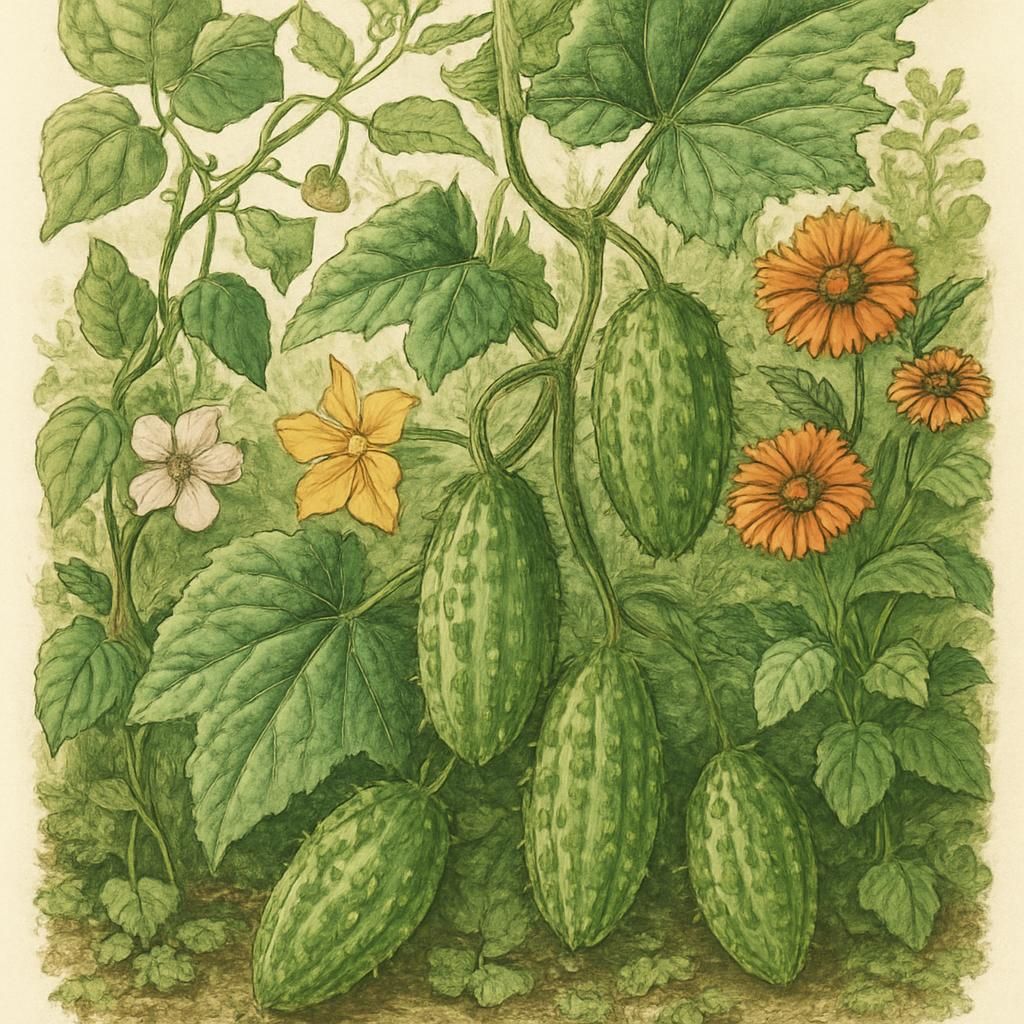
Introduction to Cucumber (Gherkin - West Indian)
The West Indian Gherkin, scientifically known as Cucumis anguria, is a unique type of cucumber that is cherished for its small, spiny fruits. Originating from tropical and subtropical regions, it is a staple in traditional and modern cuisines. Due to its robust flavor and crunchy texture, the West Indian Gherkin is a favorite for pickling processes.
Botanical Profile of Cucumber (Gherkin - West Indian)
The West Indian Gherkin is an annual vine that is part of the Cucurbitaceae family. It is characterized by its small, spiky fruits and lobed leaves. This plant thrives in warmer climates and requires a well-drained soil type for optimal growth. The gherkin vine can grow profusely, creating green carpets that yield plenty of fruits during the harvesting season.
Soil, pH, and Climate Requirements for Cucumber (Gherkin - West Indian)
Cultivating West Indian Gherkins requires attention to particular soil and climatic conditions to ensure a fruitful harvest. The following table outlines ideal growing conditions:
| Condition | Ideal Range |
|---|---|
| Soil Type | Sandy loam, well-drained |
| Soil pH | 6.0 - 6.8 |
| Temperature Range | 70°F to 85°F (21°C to 29°C) |
| Rainfall Requirement | 24 - 36 inches per year |
Step-by-Step Planting & Propagation
- Seed Selection: Choose high-quality West Indian Gherkin seeds from a reputable supplier. Seeds should be dense and not shriveled.
- Starting Seeds Indoors: Start seeds indoors if you are in a region where the growing season is short. Plant seeds 1 inch deep in seed trays filled with a quality seed-starting mix.
- Transplanting: After the danger of frost has passed, transplant seedlings outdoors into well-prepared soil. Space the plants 12-18 inches apart in rows 3 feet apart.
- Direct Sowing: In warmer climates, direct sowing is effective. Plant seeds 1 inch deep into the soil after the last frost date.
- Trellising: Use trellises to save space and encourage vertical growth, which helps manage diseases and improves sunlight exposure.
Care & Maintenance regimes for Cucumber (Gherkin - West Indian)
Gherkins require careful maintenance to ensure a high yield. The table below details important care routines.
| Task | Frequency | Details |
|---|---|---|
| Watering | Twice a week | Ensure deep watering without waterlogging |
| Fertilizing | Every 4 weeks | Use a balanced fertilizer (10-10-10) |
| Pruning | Regularly | Remove yellow leaves and older stems |
Pests, Diseases & Organic Management
West Indian Gherkins are prone to certain pests and diseases, such as Spider Mites, Cucumber Beetles, and powdery mildew. Employing organic management practices like neem oil spray or insecticidal soap can mitigate these problems. Crop rotation and interplanting with pest-repellent plants like Basil are also beneficial strategies.
Harvesting, Curing & Optimal Storage
Harvesting should be done when fruits are still immature for the best texture and flavor, usually at about 1-2 inches in length. Gherkins can be picked with or without their spiky skin. After harvest, clean and dry gherkins thoroughly before storing them in a cool, dry place. They can be stored for up to three weeks under refrigeration conditions.
Companion Planting for Cucumber (Gherkin - West Indian)
Companion planting is an effective way to enhance the growth and yield of gherkins. Ideal companions include Corn, Sunflower, and radishes. Avoid planting near aromatic herbs like Rosemary as they can hinder growth. Discover more companion planting strategies in the blog post Summer Companion Planting: 10 Organic Pairings to Boost Small Farm Resilience.