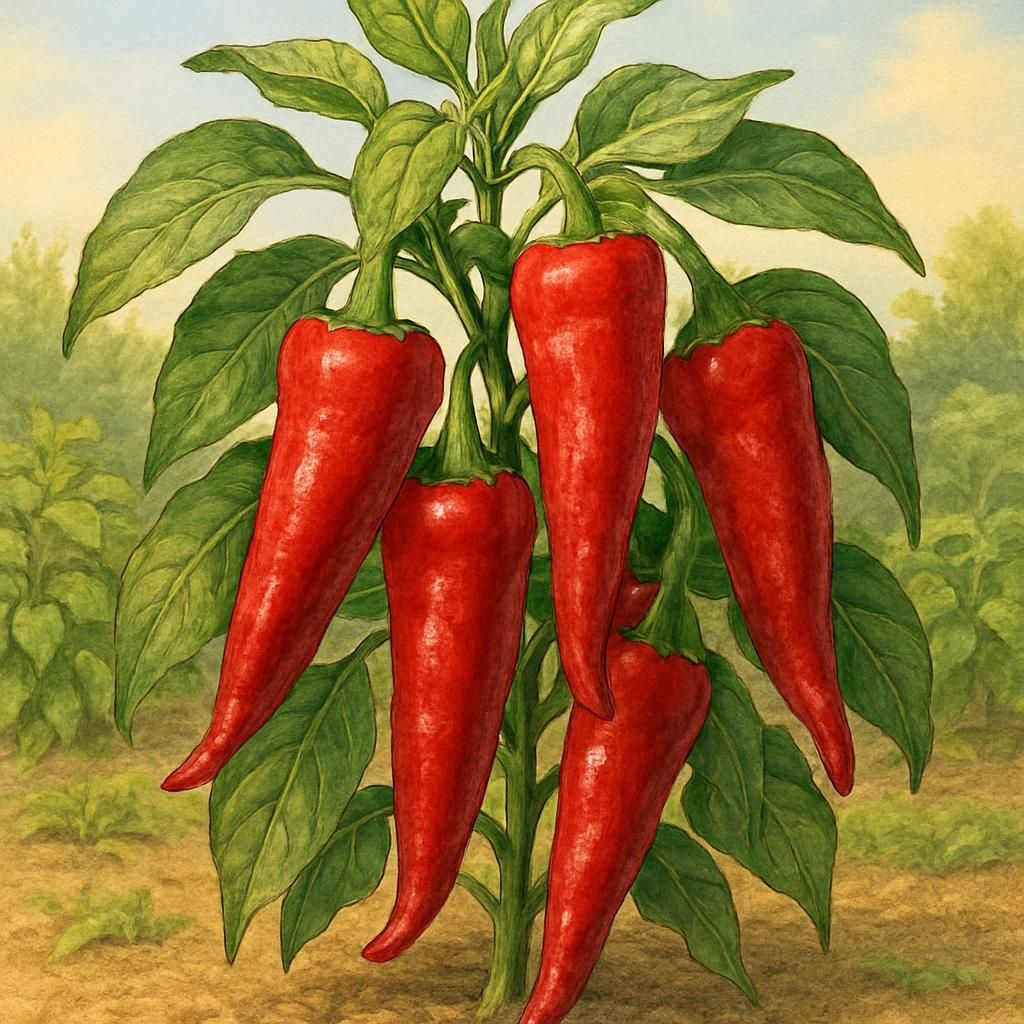
Introduction to Corno di Toro Rosso (Red Bull's Horn)
Corno di Toro Rosso, also known as the Red Bull's Horn, is a prized heirloom pepper originating from Italy. Renowned for its elongated, horn-like shape and sweet flavor, it is a popular choice for culinary uses such as roasting, grilling, and eating fresh. This variety is celebrated for its robust size and vibrant red color when fully mature, making it a standout in both gardens and kitchens.
Botanical Profile of Corno di Toro Rosso (Red Bull's Horn)
Botanically classified as Capsicum annuum, Corno di Toro Rosso belongs to the Solanaceae family, like other peppers and the Tomato. The plants typically grow to about 24 to 30 inches in height and produce fruit that can reach up to 8 to 10 inches long. The peppers transition from green to a glossy red upon ripening, and they generally thrive in warm, sunny conditions.
Soil, pH, and Climate Requirements for Corno di Toro Rosso (Red Bull's Horn)
To successfully cultivate Corno di Toro Rosso, it’s crucial to meet its specific growing needs. This variety prefers warm weather and can be grown in USDA Hardiness Zones 5-11. Here is a detailed table of the ideal growing conditions:
| Parameter | Ideal Condition |
|---|---|
| Soil Type | Well-drained loamy soil |
| Soil pH | 6.0 - 6.8 |
| Temperature | 70°F - 85°F (21°C - 29°C) |
| Sun Exposure | Full Sun |
| Watering | Moderate, consistent |
Step-by-Step Planting & Propagation
- Seed Starting: Begin with good quality seeds about 8-10 weeks before the last expected frost. Use seed pots filled with a sterile seed-starting mix.
- Germination: Place the seeds 1/4 inch deep. Maintain a temperature of 70-75°F for optimal germination, which typically occurs within 7-14 days.
- Transplanting: Once seedlings have 2-3 sets of leaves, harden them off over a week. Plant them outdoors after the danger of frost has passed, spacing plants approximately 18-24 inches apart.
- Propagation: Corno di Toro Rosso is best propagated by seeds, though cuttings can also be used.
Care & Maintenance Regimes for Corno di Toro Rosso (Red Bull's Horn)
Proper care and maintenance are crucial for a successful harvest. Here's a comprehensive care regime:
| Task | Schedule/Details |
|---|---|
| Watering | Regular, 1-1.5 inches per week |
| Fertilization | Balanced fertilizer every 4-6 weeks |
| Pruning | Remove lower leaves to prevent disease |
Consistent monitoring for adequate moisture is essential, as irregular watering can lead to issues like blossom end rot.
Pests, Diseases & Organic Management
Corno di Toro Rosso is susceptible to various pests and diseases, common ones being Spider Mites and aphids. Organic solutions include:
- Neem Oil: Effective against a wide array of insects.
- Companion Planting: Interplant with Nasturtium to deter pests.
- Home-made Sprays: Use soap-water mixtures to control soft-bodied insects.
Diseases like Verticillium wilt and bacterial spot can be managed through crop rotation and maintaining cleanliness in gardening tools.
Harvesting, Curing & Optimal Storage
- Harvesting: Harvest when peppers are fully red and firm. Cut instead of pulling to avoid damaging the plant.
- Curing: Not necessary for immediate use, but drying for seeds requires placing them in a dry, sunny spot.
- Storage: Peppers can be stored in a refrigerator crisper drawer for up to two weeks. For long-term storage, consider freezing or pickling.
Companion Planting for Corno di Toro Rosso (Red Bull's Horn)
Corno di Toro Rosso benefits from strategic companion planting strategies:
- With Tomatoes: Helps maximize soil space and deter pests.
- With Basil: Can enhance flavor and deter insects.
For more companion planting tips, see our article on Summer Companion Planting: 10 Organic Pairings to Boost Small Farm Resilience.
Conclusion
Growing the Corno di Toro Rosso pepper is a rewarding experience, offering a combination of aesthetic beauty and outstanding culinary utility. By following the outlined guide, you can ensure a healthy crop that will supply delicious produce throughout the season. Carefully managing soil conditions, controlling pests, and following diligent care regimes will result in a bountiful harvest of these stunning red peppers.