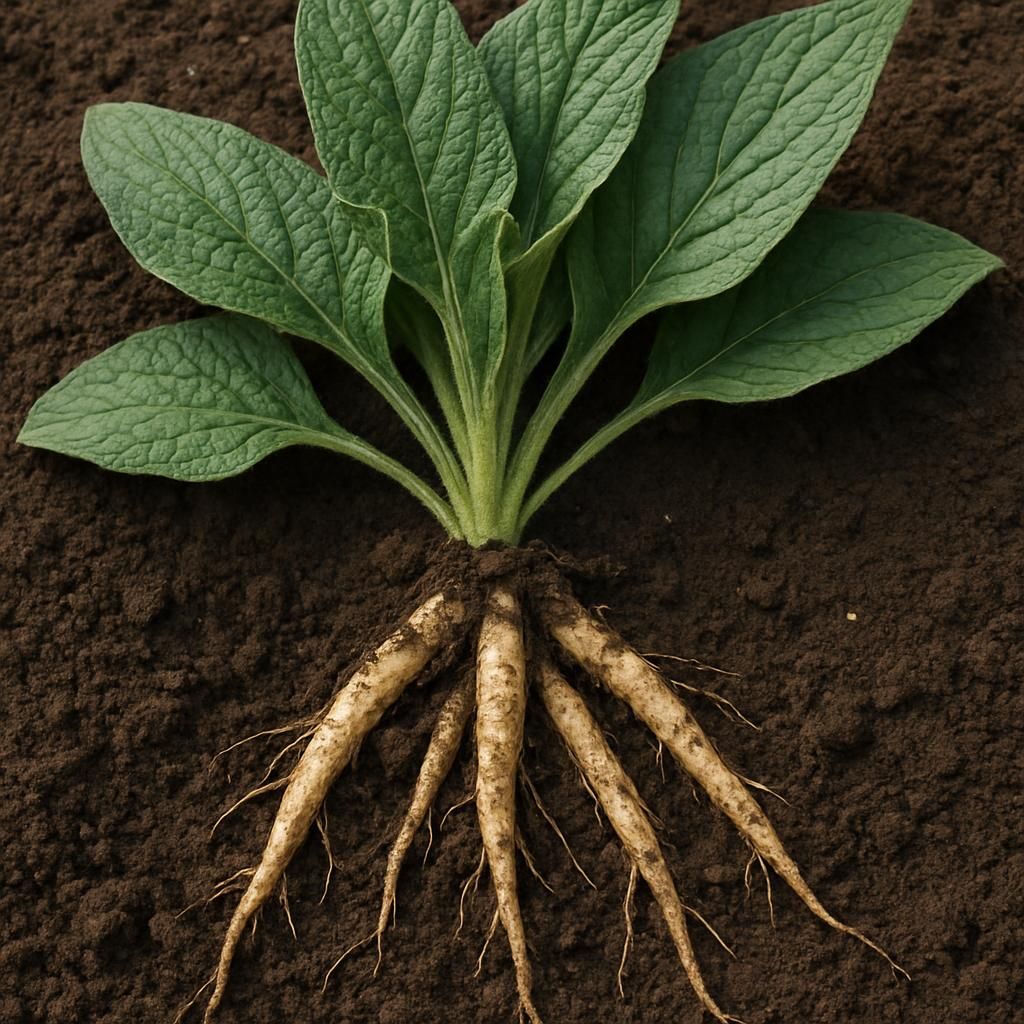
Introduction to Comfrey Root
Comfrey root (Symphytum officinale) is one of the most valuable plants in sustainable and regenerative farming systems. Known for its extraordinary ability to draw nutrients from deep soil layers, it serves as a living fertilizer factory. Farmers and gardeners rely on comfrey root to build soil fertility, suppress weeds, and produce high-quality mulch and compost tea. Its rapid growth and perennial nature make it an excellent long-term investment for any diversified farm.
Beyond soil improvement, comfrey root has a long history of use in traditional medicine and animal husbandry. The leaves and roots contain allantoin and other bioactive compounds that promote tissue repair. When integrated thoughtfully into crop rotations or agroforestry systems, comfrey root enhances biodiversity and supports pollinators while reducing reliance on external inputs.
Botanical Profile of Comfrey Root
Comfrey is a member of the Boraginaceae family and grows as a clump-forming perennial reaching 60–120 cm in height. It produces large, hairy, lance-shaped leaves and clusters of bell-shaped flowers that range from white to purple. The plant develops a deep, fleshy taproot system that can extend more than two meters into the subsoil, enabling it to access minerals unavailable to shallow-rooted crops.
The root system is the primary reason for its agricultural value. These thick, mucilaginous roots store carbohydrates and break up compacted soil layers. Once established, comfrey root can live for many years, regenerating vigorously from root fragments. This trait requires careful site selection to prevent unwanted spread into neighboring beds or fields.
Soil, pH, and Climate Requirements for Comfrey Root
Comfrey root performs best in fertile, moisture-retentive soils with good structure. It tolerates a wide range of soil types but excels in loams and clay loams enriched with organic matter. The plant prefers full sun to partial shade and grows vigorously in temperate regions with consistent rainfall.
| Parameter | Ideal Range | Notes |
|---|---|---|
| Soil Type | Loam to clay loam | Deep, well-structured soils preferred |
| Soil pH | 6.0 – 7.5 | Slightly acidic to neutral |
| Temperature Range | 15–25 °C daytime | Frost hardy once established |
| Annual Rainfall | 600–1200 mm | Supplemental irrigation in dry periods |
| Light Requirement | Full sun to partial shade | Avoid deep shade for maximum biomass |
| Spacing (mature) | 60–90 cm between plants | Rows 90–120 cm apart |
Step-by-Step Planting & Propagation
Comfrey root is most reliably propagated from root cuttings rather than seed. Begin by selecting healthy, disease-free parent plants in late winter or early spring. Dig up sections of root 5–10 cm long, ensuring each piece has at least one growing bud. Plant cuttings horizontally 5–8 cm deep in prepared beds, spacing them 60 cm apart.
Water thoroughly after planting and maintain consistent moisture until new shoots emerge. Root cuttings typically sprout within 2–4 weeks. For faster establishment, plant in early spring when soil temperatures reach 10 °C. Avoid planting in waterlogged or frozen ground. Once established, comfrey root requires minimal intervention but benefits from annual applications of compost or well-rotted manure.
Care & Maintenance regimes for Comfrey Root
Established comfrey stands need little maintenance beyond periodic cutting and mulching. Regular harvesting of leaves stimulates new growth and prevents flowering, which can reduce overall biomass. Mulch around plants with straw or wood chips to conserve moisture and suppress weeds. In colder climates, a winter mulch of leaves or straw protects crowns from heaving.
| Task | Frequency | Details |
|---|---|---|
| Watering | As needed | Deep watering during prolonged dry spells |
| Fertilizer | Early spring & mid-summer | 2–5 cm layer of compost or aged manure |
| Pruning/Cutting | 3–5 times per season | Cut to 10 cm above ground when 60 cm tall |
| Mulching | Spring & autumn | Maintain 5–8 cm organic mulch layer |
| Weed Control | Ongoing | Hand pull or shallow cultivation as needed |
Pests, Diseases & Organic Management
Comfrey root is generally resistant to most pests and diseases due to its high allantoin and tannin content. Occasional issues include Aphids and Slugs on young growth. Powdery mildew may appear in humid conditions with poor airflow. Organic management focuses on cultural practices: maintain spacing for airflow, remove affected leaves promptly, and encourage beneficial insects.
Root rot can occur in poorly drained soils. Improve drainage and avoid overwatering. Because comfrey root is a dynamic accumulator, it rarely suffers nutrient deficiencies when grown in reasonably fertile ground. Monitor for Spider mites during hot, dry periods and treat with insecticidal soap if populations increase.
Harvesting, Curing & Optimal Storage
Harvest comfrey leaves when plants reach 60 cm in height, typically 4–6 weeks after cutting. Use clean shears to remove foliage, leaving 10 cm of stem for regrowth. For root harvest, dig mature plants in autumn or early spring when carbohydrate reserves are highest. Wash roots thoroughly and slice into thin pieces for drying.
Dry leaves and roots in a shaded, well-ventilated area or dehydrator at temperatures below 40 °C to preserve bioactive compounds. Store dried material in airtight containers away from light and moisture. Properly cured comfrey retains potency for 12–18 months. Fresh leaves can be used immediately for mulch or compost tea.
Companion Planting for Comfrey Root
Comfrey root pairs well with many fruit and vegetable crops that benefit from its nutrient-rich mulch. Plant it near Tomato, Potato, and fruit trees to provide ongoing fertility. Its deep roots do not compete aggressively with shallow-rooted annuals when spaced properly.
Avoid planting comfrey root directly adjacent to slow-growing perennials that may be shaded out. In mixed orchards, position comfrey in alleys or borders where regular cutting supplies mulch without interfering with harvest operations. Its flowers also attract pollinators, enhancing biodiversity across the farm.