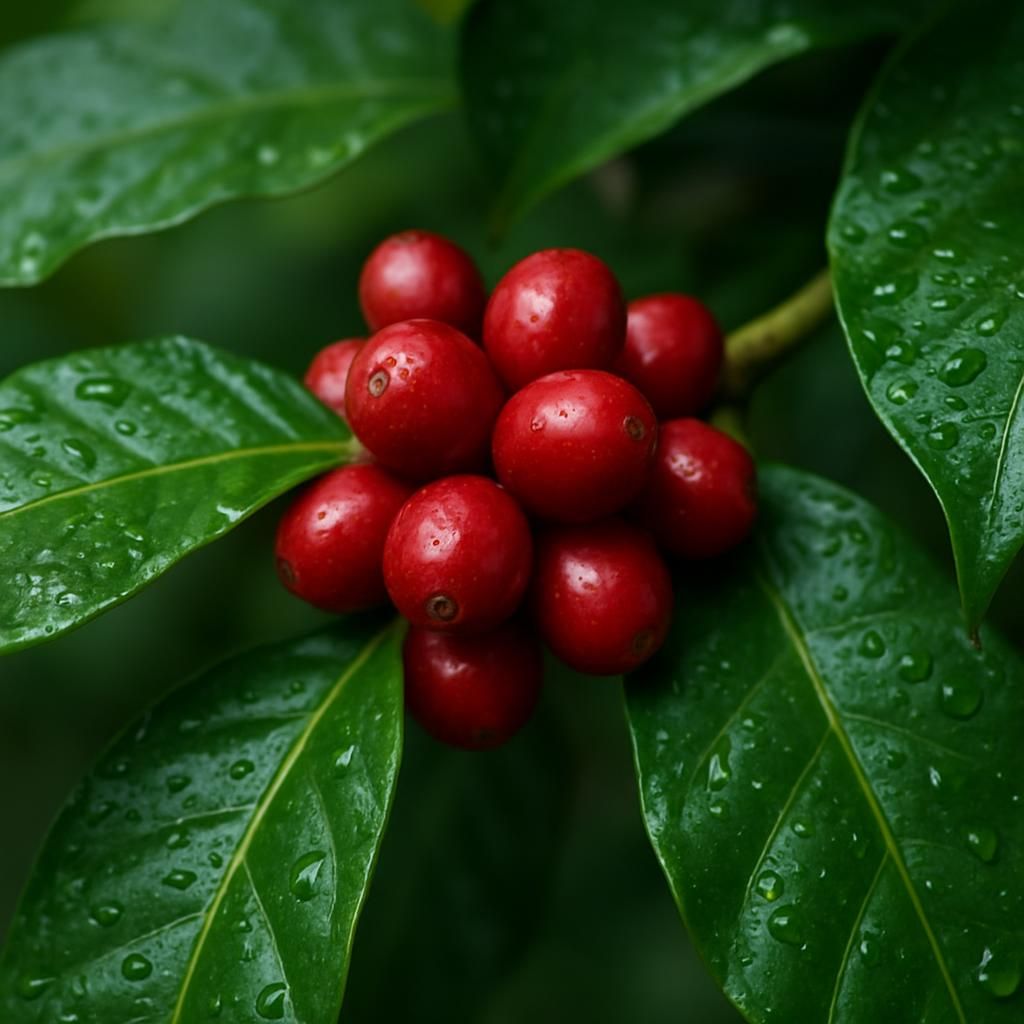
Introduction to Coffee (Arabica - Mundo Novo)
Mundo Novo is a foundational Brazilian Arabica selection released in the 1950s from a natural cross between Sumatra and Red Bourbon lines. It quickly became one of the most widely planted cultivars across Latin America due to its strong vigor, resistance to some leaf rust races, and reliable yields at elevations between 600 and 1,200 m. Today it remains a benchmark variety for farmers seeking both volume and cup quality without extreme susceptibility to common diseases.
Professional growers value Mundo Novo for its upright growth habit that lends itself to both single-stem and multi-stem pruning systems. The cultivar produces large, elongated beans with good density when grown under optimal conditions, delivering a clean cup with medium acidity, chocolate, and mild fruit notes. Its genetic background also confers moderate tolerance to drought once established, making it suitable for regions experiencing shifting rainfall patterns.
Botanical Profile of Coffee (Arabica - Mundo Novo)
Coffea arabica 'Mundo Novo' belongs to the Rubiaceae family. Mature trees reach 3–4 m in height with a semi-erect branching pattern. Leaves are dark green, elliptic, and glossy, measuring 12–18 cm. Flowers are white, fragrant, and appear in clusters at leaf axils; each flower lasts only 1–2 days. Fruit (cherries) ripen from green to deep red over 8–9 months, containing two seeds (beans) per cherry. The cultivar exhibits strong apical dominance and responds well to both manual and mechanical harvesting.
Soil, pH, and Climate Requirements for Coffee (Arabica - Mundo Novo)
Successful Mundo Novo cultivation begins with matching site conditions to the cultivar’s physiological needs. The table below summarizes ideal parameters.
| Parameter | Ideal Range | Notes |
|---|---|---|
| Soil Type | Deep, well-drained loam or volcanic | Avoid heavy clay; incorporate organic matter |
| Soil pH | 5.8 – 6.5 | Slightly acidic; correct with lime if below 5.5 |
| Altitude | 600 – 1,200 m | Higher altitudes improve bean density |
| Temperature (day) | 18 – 24 °C | Avoid prolonged exposure above 30 °C |
| Temperature (night) | 12 – 18 °C | Critical for flowering induction |
| Annual Rainfall | 1,500 – 2,500 mm | Even distribution; 2–3 month dry period beneficial |
| Relative Humidity | 70 – 85 % | High humidity favors fungal pressure |
| Shade Requirement | 30 – 50 % canopy cover | Use Gliricidia or native trees |
Step-by-Step Planting & Propagation
- Select healthy, rust-free seedlings from certified nurseries; Mundo Novo is usually propagated by seed or grafting onto resistant rootstocks.
- Prepare planting holes 60 × 60 × 60 cm; mix topsoil with 5 kg well-rotted compost and 200 g rock phosphate.
- Plant at the onset of rains, spacing 2.5 m × 1.5 m for single-stem or 3.0 m × 2.0 m for multi-stem systems.
- Water immediately after transplanting and apply a 10 cm layer of organic mulch around the base, keeping mulch 10 cm from the stem.
- Install temporary shade (30 %) for the first 6–12 months using banana leaves or shade cloth.
Care & Maintenance regimes for Coffee (Arabica - Mundo Novo)
Consistent cultural practices are essential for sustained productivity. The following table outlines seasonal schedules.
| Operation | Frequency / Timing | Rate / Method |
|---|---|---|
| Irrigation | Every 7–10 days in dry season | 20–30 L per tree; drip preferred |
| Fertilizer (NPK) | Split applications: Mar, Jun, Sep | 200 g 20-10-20 + 100 g urea per tree per year |
| Organic Matter | Annual basal dressing | 5–8 kg compost or 3 kg castor cake per tree |
| Pruning | After harvest (Dec–Jan) | Remove 2–3 oldest stems; maintain 4–6 productive stems |
| Weeding | 3–4 times per year | Manual or cover-crop mowing; avoid herbicide drift |
| Mulch Renewal | Every 6 months | 10 cm layer of coffee pulp or grass clippings |
Pests, Diseases & Organic Management
Key threats include Coffee leaf rust, Coffee berry borer, and root-knot nematodes. Regular scouting and cultural sanitation remain the first line of defense. Copper-based fungicides or resistant rootstocks help manage rust. For berry borer, sanitation (prompt cherry collection) combined with Beauveria bassiana sprays reduces populations below economic thresholds. Nematode pressure is mitigated by rotating with Crotalaria cover crops and applying neem cake at planting.
Harvesting, Curing & Optimal Storage
Mundo Novo cherries reach peak ripeness 210–240 days after flowering. Selective hand-picking every 10–14 days ensures uniform quality. After harvest, process within 6 hours using either washed or honey methods. Ferment 12–36 hours at 20–25 °C, wash thoroughly, and dry on raised beds to 10–12 % moisture. Store green beans in jute bags inside ventilated warehouses at 18–22 °C and 60 % RH. Cup quality remains stable for 12–18 months under these conditions.
Companion Planting for Coffee (Arabica - Mundo Novo)
Integrate nitrogen-fixing species such as Gliricidia and Pigeon pea to supply 60–80 kg N ha⁻¹ annually while providing light shade. Understory herbs like Thai Basil and Marigold deter aphids and whiteflies. Avoid planting Banana too close as it competes aggressively for water during dry spells.