Introduction to Coffee (Arabica - Geisha)
Geisha coffee has become one of the most sought-after Arabica cultivars in the specialty market, routinely fetching record auction prices due to its distinctive jasmine, bergamot, and tropical fruit notes. Originally discovered in Ethiopia's Gesha forest, the variety was later propagated in Panama where it gained international fame. Professional growers value Geisha for both its cup quality and its potential for differentiation in competitive markets.
Successful cultivation requires replicating the cool, misty highland conditions of its origin while managing the variety's relatively low yield and disease susceptibility. This guide delivers professional-grade agronomic practices for establishing and maintaining productive Geisha plantings.
Botanical Profile of Coffee (Arabica - Geisha)
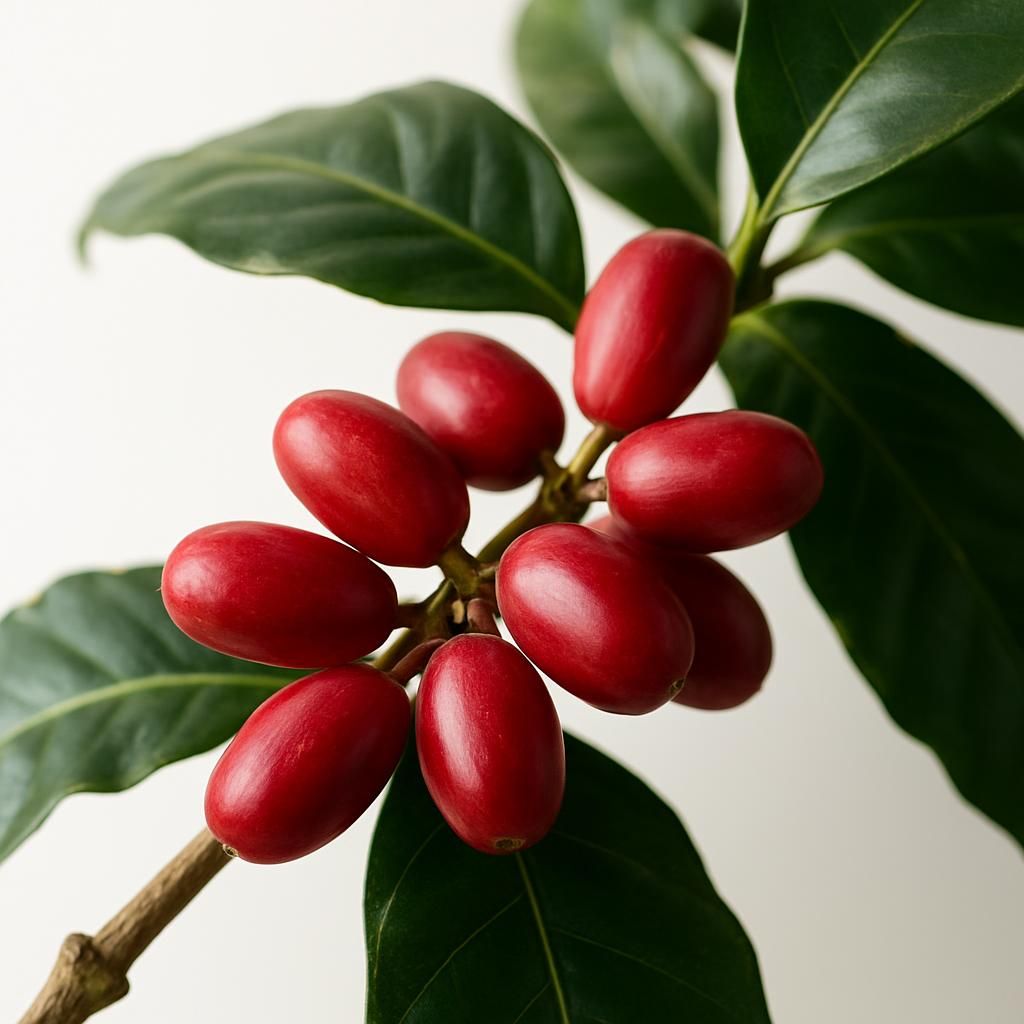
Coffea arabica 'Geisha' is an allotetraploid evergreen shrub in the Rubiaceae family. Mature plants reach 3–5 meters in height with an open, upright branching habit and glossy, dark-green elliptical leaves. The variety produces elongated cherries that ripen slowly, contributing to its concentrated flavor development.
Geisha exhibits a longer internode length and more slender growth compared with traditional Arabica Coffee (Typica). Flowers are white, fragrant, and self-fertile, typically appearing after dry periods followed by rainfall. The plant’s shallow root system makes it sensitive to both drought and waterlogging.
Soil, pH, and Climate Requirements for Coffee (Arabica - Geisha)
Geisha performs best in deep, well-drained, fertile soils with high organic matter. The variety is intolerant of compacted or saline conditions. Optimal elevation ranges from 1,400–2,000 meters above sea level in equatorial regions.
Ideal Growing Conditions
| Parameter | Optimal Range | Notes |
|---|---|---|
| Soil Type | Loamy to sandy loam | High organic matter, good structure |
| Soil pH | 5.5 – 6.5 | Slightly acidic; avoid alkaline soils |
| Temperature | 15–24 °C (day) | Night lows above 10 °C; frost sensitive |
| Annual Rainfall | 1,500–2,500 mm | Even distribution; supplemental irrigation needed in dry spells |
| Relative Humidity | 70–85 % | Promotes flowering but increases disease pressure |
| Elevation | 1,400–2,000 m | Higher altitudes enhance cup quality |
| Shade Requirement | 30–50 % canopy | Regulates temperature and reduces stress |
Step-by-Step Planting & Propagation
- Site Selection: Choose north- or east-facing slopes with good air drainage and protection from strong winds.
- Soil Preparation: Incorporate 20–30 t/ha well-rotted compost or manure plus rock phosphate and potassium sulfate based on soil test results.
- Propagation: Use fresh seed from selected mother trees or graft onto Robusta Coffee rootstock for nematode resistance. Sow seeds in shaded nurseries at 1–2 cm depth.
- Seedling Stage: Maintain 50 % shade and consistent moisture; transplant to polybags at the two-leaf-pair stage.
- Field Planting: Space plants 2.0 m × 2.5 m (2,000 plants/ha). Dig 60 cm × 60 cm holes; backfill with topsoil mixed with organic matter.
- Initial Mulching: Apply 10–15 cm organic mulch around each plant, keeping mulch 10 cm from the stem.
Care & Maintenance regimes for Coffee (Arabica - Geisha)
Geisha requires disciplined irrigation, nutrition, and pruning schedules to sustain both productivity and cup quality.
Water, Fertilizer, and Pruning Schedule
| Growth Stage | Irrigation Frequency | Fertilizer Program (per plant/year) | Pruning Actions |
|---|---|---|---|
| Establishment (Yr 1) | 2–3× weekly until roots establish | 100 g NPK 15-15-15 split into 4 applications + 5 kg compost | Formative pruning to single stem at 60 cm |
| Vegetative (Yr 2-3) | Weekly during dry season | 200 g NPK 20-10-20 + 50 g kieserite; apply in 3 splits | Remove suckers, maintain 4–6 primary branches |
| Production (Yr 4+) | 20–30 L/plant every 7–10 days | 300–400 g NPK 18-5-15 + micronutrients; split 4× annually | Annual stumping or selective pruning after harvest |
| Post-Harvest | Reduce to maintain field capacity | 150 g potassium sulfate + compost mulch renewal | Heavy pruning or rejuvenation cut every 5–7 years |
Pests, Diseases & Organic Management
Geisha is susceptible to coffee leaf rust (Hemileia vastatrix), coffee berry disease, and root-knot nematodes. Common insect pests include coffee berry borer and mealybugs.
Organic strategies focus on cultural practices: maintain 30–50 % shade, remove fallen cherries, and apply compost teas fortified with Trichoderma and Bacillus subtilis. Sticky traps and neem-based sprays provide additional control for mealybugs and scale. Regular monitoring and early sanitation remain the most effective tools.
Harvesting, Curing & Optimal Storage
Selective hand-picking of fully ripe cherries occurs every 10–14 days during the 4–6 month harvest window. Process within 6 hours using the washed method: depulp, ferment 24–48 hours, wash thoroughly, and dry on raised African beds to 10–12 % moisture.
Store parchment coffee in jute bags inside climate-controlled warehouses at 15–18 °C and 50–60 % RH. Maintain lot separation to preserve traceability and cup profile. Cupping scores above 85 points typically command specialty premiums.
Companion Planting for Coffee (Arabica - Geisha)
Strategic companions improve biodiversity, suppress weeds, and moderate microclimate. Leguminous shade trees such as Gliricidia and Inga fix nitrogen and provide dappled shade. Banana rows planted on contours reduce erosion and offer temporary shade during establishment.
Ground covers including clover and Desmodium suppress weeds and attract beneficial insects. Aromatic herbs such as rosemary and thyme can be interplanted in wider rows to repel pests while adding secondary income streams.