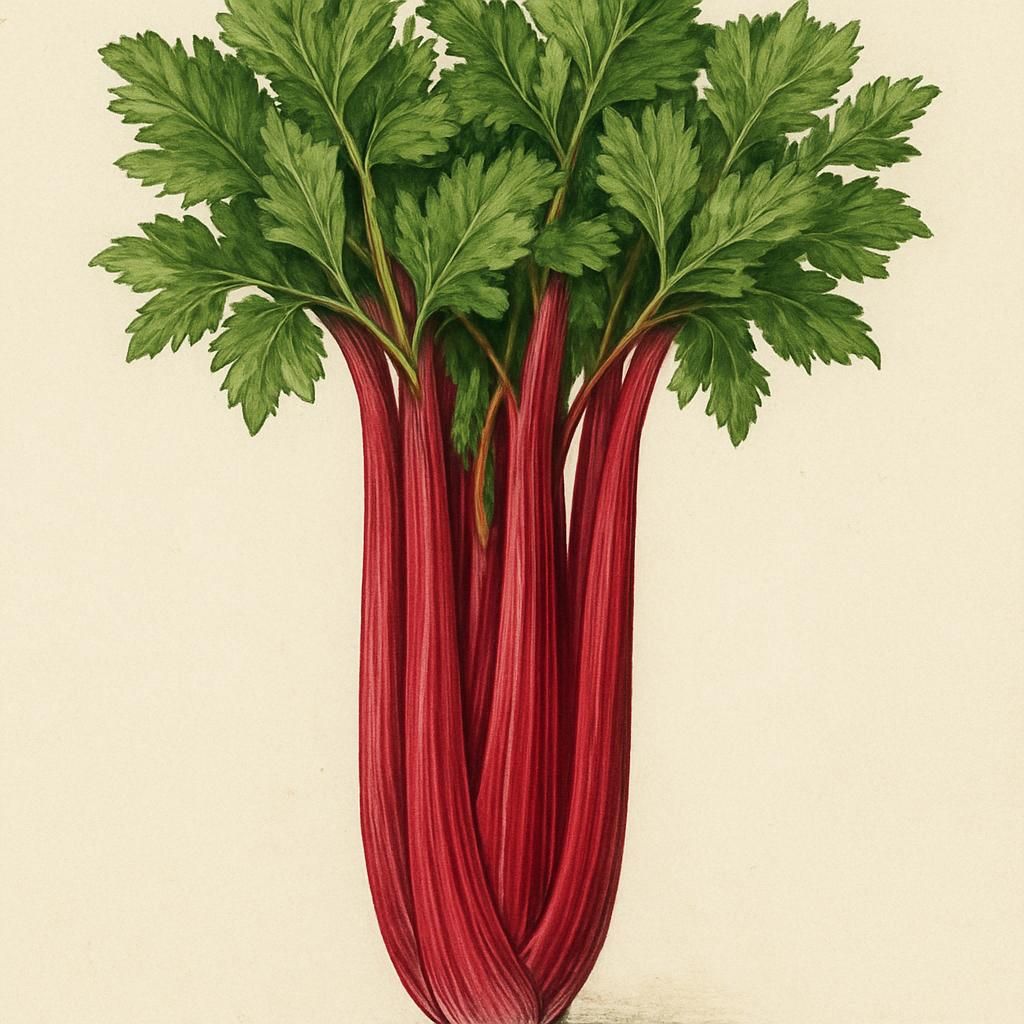
Introduction to Celery (Redventure)
Celery ('Redventure') offers a visually striking and nutritious addition to gardens and cuisine alike. Known for its vibrant red stalks and crisp texture, 'Redventure' celery stands out from its green counterparts. With a robust flavor profile, it enhances salads, soups, and a variety of dishes. Successful cultivation requires an understanding of its specific growing conditions and care practices.
Botanical Profile of Celery (Redventure)
'Celery (Redventure)', scientifically named Apium graveolens var. dulce, belongs to the Apiaceae family. It is a biennial plant mostly grown as an annual, particularly cultivated for its crisp and juicy petioles. The plant showcases a rich red hue in its stalks, which not only adds a vibrant splash of color to the garden but also contains beneficial phytochemicals.
Soil, pH, and Climate Requirements for Celery (Redventure)
'Celery (Redventure)' thrives in specific environmental conditions that ensure optimal growth and flavor.
| Parameter | Ideal Condition |
|---|---|
| Soil Type | Loamy, well-draining soil |
| pH Level | 6.0 to 7.0 |
| Temperature | 15°C to 21°C (59°F to 70°F) |
| Sunlight | Full sun to partial shade |
| Water Requirements | High, consistent moisture |
Step-by-Step Planting & Propagation
- Seed Selection: Choose high-quality 'Redventure' seeds from a reputable supplier for better yield.
- Sowing Seeds: Begin seeds indoors 10 to 12 weeks before the last expected frost date. Plant seeds about 1/4 inch deep in seed-starting mix.
- Transplanting: Transplant seedlings outdoors when temperatures stabilize and reach a consistent 15°C. Ensure rows are spaced at least 12 inches apart to accommodate growth.
- Direct Seeding (optional): For areas with long growing seasons, sow seeds directly in the garden after the last frost.
- Watering and Maintenance: Provide consistent moisture as celery requires regular watering to prevent drying out.
Care & Maintenance Regimes for Celery (Redventure)
Caring for 'Redventure' celery involves consistent care and preventive practices to ensure a healthy crop.
| Schedule | Water | Fertilizer | Pruning |
|---|---|---|---|
| Weekly | Water deeply 1-2 inches | Balanced 10-10-10 NPK | Remove outer leaves if yellowing |
| Monthly | Ensure constant moisture | Compost or seaweed | Cut back to encourage more growth |
Pests, Diseases & Organic Management
'Celery (Redventure)' can be affected by several pests and diseases:
- Aphids: Feed on plant sap; control with insecticidal soap.
- Spider Mites: Cause stippling and leaf fall; neem oil can help manage them.
- Powdery Mildew: Affects leaves; spray with a solution of water and baking soda.
For broader crop resilience, visit our blog on Crop Diseases Under the Microscope: 9 Organic Fixes for Small Farm Resilience.
Harvesting, Curing & Optimal Storage
- Harvesting: Ready to harvest in 110-130 days; look for stalks that are 6 inches long. Use a sharp knife to cut stalks or uproot the entire plant.
- Curing: Celery does not require curing but can benefit from an immediate rinse to remove soil before drying.
- Storage: Store in a humid, cool place. Wrap in paper towels and place in a sealed plastic bag in the refrigerator.
Companion Planting for Celery (Redventure)
Celery benefits from strategic companion planting. Good companions include:
- Onion: Helps repel pests.
- Marigold: Acts as a deterrent for nematodes.
- Avoid planting near Carrot due to similarity in pest attraction.
Additionally, for more insights into effective pairings, explore Summer Companion Planting: 10 Organic Pairings to Boost Small Farm Resilience.