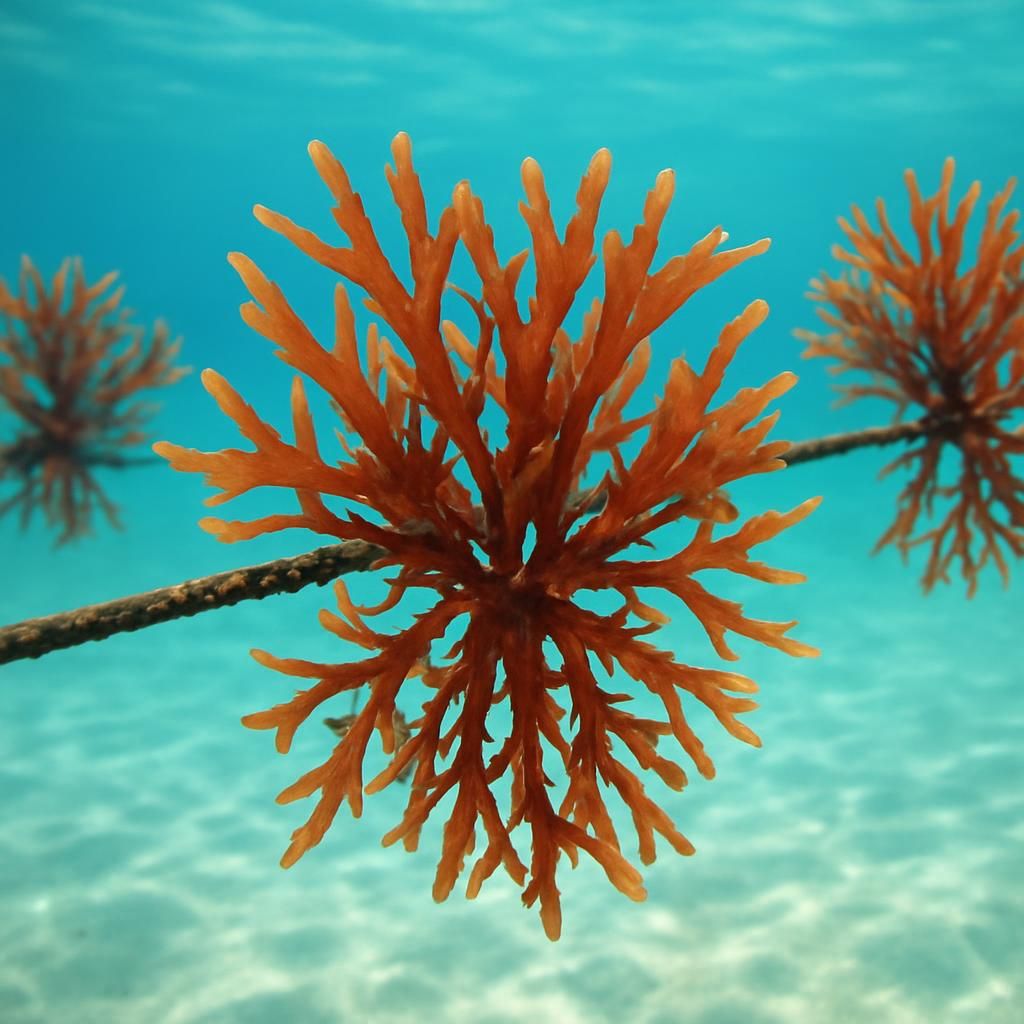
Introduction to Carrageenan
Carrageenan is a high-value hydrocolloid extracted from specific species of red macroalgae, primarily cultivated in tropical coastal waters. Global demand continues to rise due to its versatile applications in dairy, meat, plant-based foods, cosmetics, and biomedical products. Professional growers focus on consistent biomass production, disease resistance, and sustainable farming practices that protect both yield and marine ecosystems.
Commercial cultivation has shifted from wild harvesting to dedicated marine farms using vegetative propagation on lines or nets. With proper site selection and management, carrageenan-producing seaweeds can deliver multiple harvests per year, providing reliable income for coastal communities while supporting blue-economy initiatives.
Botanical Profile of Carrageenan
The primary species farmed for carrageenan include Kappaphycus alvarezii (kappa-carrageenan) and Eucheuma denticulatum (iota-carrageenan). These red algae feature fleshy, branched thalli with cylindrical to flattened segments and a distinctive cartilaginous texture. They belong to the Solieriaceae family and thrive attached to hard substrates in shallow, clear tropical waters.
Growth occurs through apical meristem activity, with new branches forming continuously under favorable light and nutrient conditions. The thallus contains high concentrations of carrageenan (up to 40-50% dry weight), stored in the cell walls. Understanding these morphological and biochemical traits helps growers select optimal strains and monitor crop health throughout the production cycle.
Soil, pH, and Climate Requirements for Carrageenan (MUST INCLUDE A MARKDOWN TABLE OF IDEAL CONDITIONS)
Successful cultivation depends on stable marine conditions rather than terrestrial soil. Key parameters include water temperature, salinity, pH, light penetration, and nutrient availability. Farms located in sheltered bays or lagoons with moderate water movement typically achieve the highest productivity.
| Parameter | Ideal Range | Notes |
|---|---|---|
| Water Temperature | 25–30 °C | Below 20 °C slows growth significantly |
| Salinity | 30–35 ppt | Avoid sudden drops from heavy rainfall |
| pH | 7.8–8.4 | Stable oceanic pH supports photosynthesis |
| Light (PAR) | 300–600 µmol photons m⁻² s⁻¹ | Clear water; avoid excessive turbidity |
| Water Depth | 0.5–2 m at low tide | Allows sufficient light while reducing wave damage |
| Current/Water Flow | Moderate (10–30 cm s⁻¹) | Prevents sedimentation and supplies nutrients |
| Nutrient Levels | Moderate N & P | Supplement with organic fertilizers if needed |
Step-by-Step Planting & Propagation
- Select healthy, disease-free mother plants from high-yielding local strains.
- Cut 50–100 g vegetative cuttings using sterilized scissors, ensuring each piece has several growing tips.
- Tie cuttings securely to monofilament lines, nets, or bamboo rafts at 20–30 cm spacing.
- Deploy structures in pre-selected farm sites during calm weather to minimize initial stress.
- Monitor daily for the first week to confirm attachment and remove any detached fragments.
- Allow 30–45 days of initial growth before the first partial harvest or thinning.
Care & Maintenance regimes for Carrageenan (MUST INCLUDE A MARKDOWN TABLE OF WATER, FERTILIZER, AND PRUNING SCHEDULES)
Regular maintenance prevents fouling, disease, and biomass loss. Weekly farm visits allow early detection of issues and timely interventions.
| Activity | Frequency | Details |
|---|---|---|
| Water Exchange | Continuous | Rely on natural tidal flow; supplement with pumps during stagnation |
| Fertilization | Every 14–21 days | Apply diluted organic seaweed extract or fish hydrolysate at 5–10 ppm |
| Pruning/Thinning | Every 30–45 days | Remove 20–30% of biomass to improve light penetration and reduce disease |
| Line Inspection | Weekly | Check knots, replace broken lines, and clear debris |
| Cleaning | Bi-weekly | Gently brush epiphytes and sediment from thalli |
Pests, Diseases & Organic Management
Common challenges include ice-ice disease (caused by bacterial and environmental stress), epiphytic algae, and herbivorous fish. Maintaining optimal water quality and avoiding overcrowding are the most effective preventive measures. When outbreaks occur, promptly remove and dispose of infected material far from the farm. Organic approaches such as introducing herbivorous fish species in controlled numbers and using physical barriers have shown success in reducing losses without chemical inputs.
Harvesting, Curing & Optimal Storage
Harvest when thalli reach 1–1.5 kg per plant or when growth rate declines. Cut mature portions while leaving sufficient meristematic tissue for regrowth. Rinse harvested biomass in clean seawater to remove sand and epiphytes. Dry under shade or controlled dryers at temperatures below 40 °C to preserve carrageenan quality. Store dried product in breathable sacks in cool, dry conditions with humidity below 12% to prevent mold and maintain gel strength.
Companion Planting for Carrageenan
Integrating compatible species can enhance farm resilience and biodiversity. Ginger and Turmeric grown in nearby coastal nurseries benefit from the same warm, humid microclimate. Seaweed lines can be alternated with Oyster Mushroom cultivation on land using spent substrate as organic fertilizer. These synergies improve nutrient cycling and provide additional revenue streams for small-scale operators.
For more insights on sustainable coastal farming practices, see the Wiki entry on Rice cultivation techniques that share similar water-management principles.
Learn practical strategies for improving farm resilience in the blog post The Truth About Weather Patterns and Small Farm Resilience.