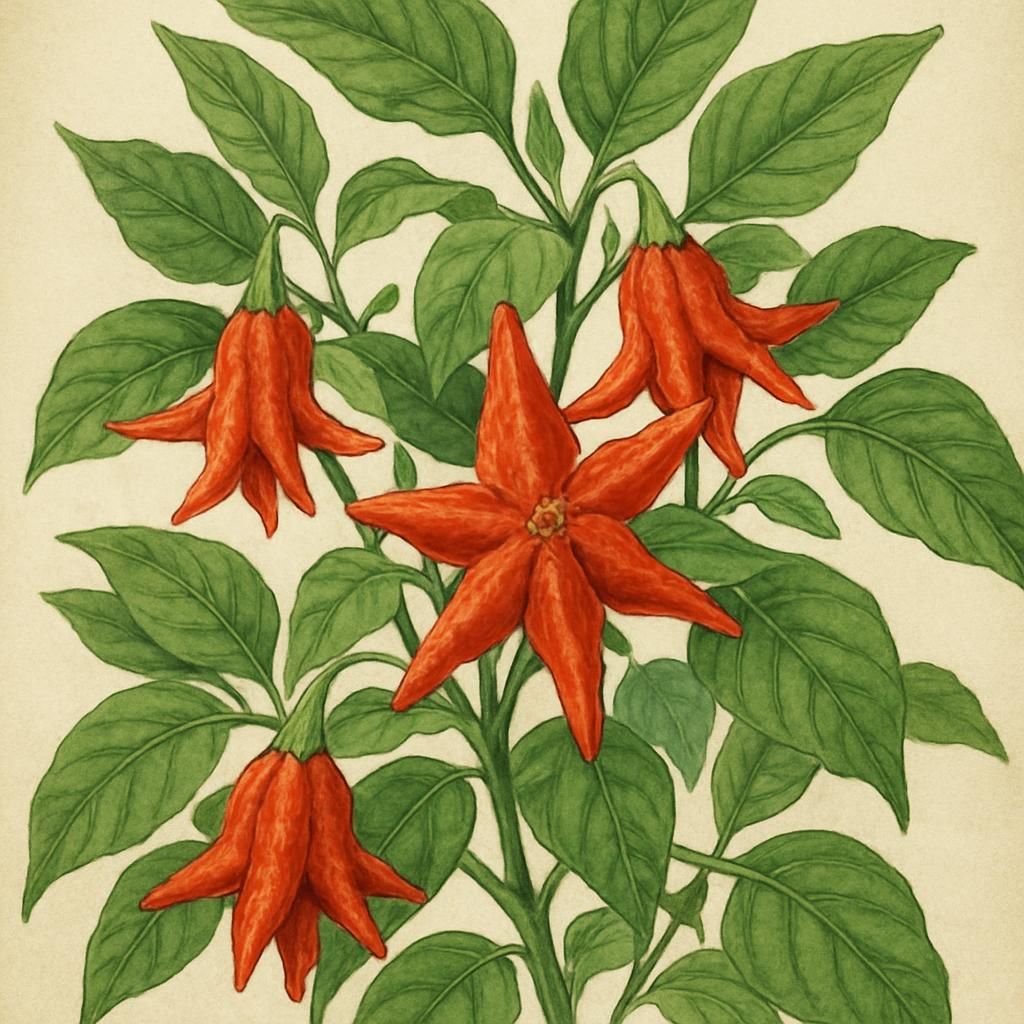
Introduction to Brazilian Starfish Pepper
The Brazilian Starfish Pepper, a member of the Capsicum baccatum species, is notable for its distinctive starfish shape and vibrant color. Originating from South America, this pepper is cherished for both its ornamental beauty and its culinary versatility. The peppers are typically mildly hot and have a fruity, citrusy flavor, making them an intriguing addition to various dishes.
Botanical Profile of Brazilian Starfish Pepper
Botanically classified as Capsicum baccatum var. pendulum, the Brazilian Starfish Pepper is part of the broader Capsicum family, which includes a wide array of pepper varieties. These plants typically grow as bushy perennials in their native habitat but are often grown as annuals in temperate climates. The peppers themselves are small to medium-sized, reaching about 3-4 cm in diameter, with a bright red hue when mature.
Soil, pH, and Climate Requirements for Brazilian Starfish Pepper
To optimize growth, understanding the ideal soil, pH, and climate conditions is crucial. Here are the recommended growing conditions:
| Condition | Ideal Range |
|---|---|
| Soil Type | Well-drained, sandy loam |
| Soil pH | 5.5 - 7.0 |
| Temperature | 20°C - 30°C (68°F - 86°F) |
| Sunlight | Full sun |
Step-by-Step Planting & Propagation
- Seed Selection and Preparation: Obtain high-quality seeds from a reliable source. Soak seeds in warm water overnight to enhance germination.
- Sowing Seeds: Sow seeds ¼ inch deep in seed-starting trays filled with seed-starting mix. Maintain a consistent moisture level.
- Transplanting: Once seedlings develop true leaves, transplant them into larger pots or directly into the garden, ensuring they are spaced 18-24 inches apart.
- Propagation: Brazilian Starfish Peppers can also be propagated through cuttings, which involves rooting a stem segment in a suitable growing medium.
Care & Maintenance regimes for Brazilian Starfish Pepper
Proper care and maintenance are vital for a healthy pepper crop. Below is a recommended schedule:
| Task | Frequency |
|---|---|
| Watering | 1-2 inches per week, more if the plant shows signs of stress |
| Fertilizing | Bi-weekly with balanced, organic fertilizer |
| Pruning | As needed to remove diseased or weak branches |
Pests, Diseases & Organic Management
Brazilian Starfish Peppers are vulnerable to common pepper pests such as Spider Mites and diseases like anthracnose fruit rot. Organic pest management techniques include:
- Introducing Beneficial Insects: Such as ladybugs to control aphid populations.
- Companion Planting: Grow with Marigold to naturally deter pests.
- Neem Oil Application: Use as a foliar spray to control Mealybugs and mites.
Harvesting, Curing & Optimal Storage
Harvesting: Peppers can be harvested once they fully ripen to a bright red color, typically within 70-80 days post-transplant. Curing: Allow peppers to dry in a well-ventilated area for 1-2 weeks to enhance flavor. Storage: Store in a cool, dry place or refrigerate to prolong freshness.
Companion Planting for Brazilian Starfish Pepper
Companion planting is an excellent strategy for enhancing plant health and yield. Consider planting Brazilian Starfish Pepper alongside crops like Basil, Tomatoes, and Carrot. Avoid planting near Lychee due to potential for cross-species pest issues.
For further guidance on companion planting, explore our blog post Summer Companion Planting: 10 Organic Pairings to Boost Small Farm Resilience.