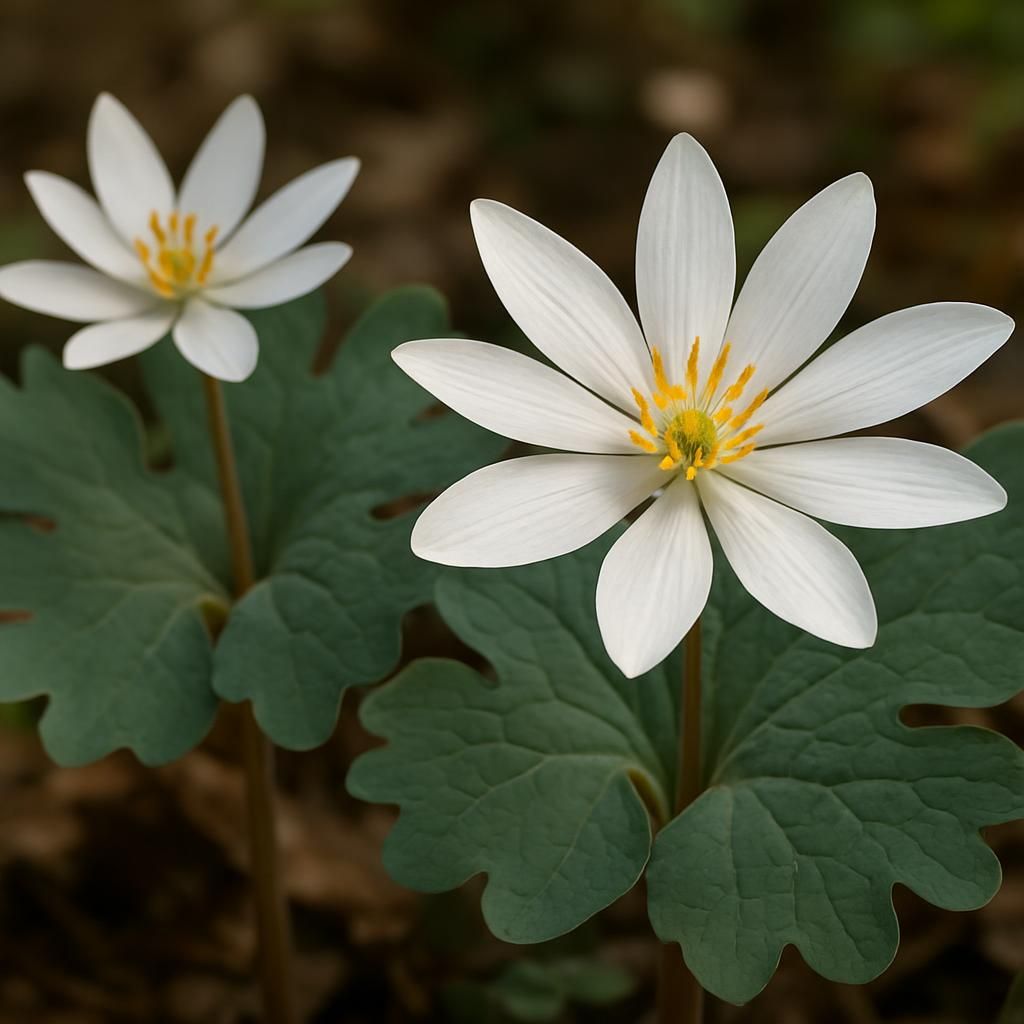
Introduction to Bloodroot (Sanguinaria canadensis)
Bloodroot (Sanguinaria canadensis) is a spring ephemeral native to the deciduous forests of eastern North America. The plant produces pure white, star-shaped flowers in early spring, followed by distinctive palmate leaves that persist through summer before going dormant in fall. The rhizomes contain the alkaloid sanguinarine, historically used in traditional medicine and natural dyes.
Commercial and home cultivation of bloodroot has increased due to rising demand in the herbal and natural products markets. As a shade-loving perennial, bloodroot thrives in forest understories and requires specific site conditions that mimic its native habitat. Successful cultivation yields both ornamental value and a harvestable medicinal crop with proper stewardship.
Botanical Profile of Bloodroot (Sanguinaria canadensis)
Bloodroot belongs to the Papaveraceae family. It grows from thick, horizontal rhizomes that exude a bright red-orange latex when cut. Each rhizome produces one or two basal leaves and a single flowering stalk in early spring. Flowers measure 3–5 cm across with 8–12 white petals surrounding a cluster of yellow stamens.
The plant reaches 15–30 cm in height. Leaves are deeply lobed, blue-green, and up to 15 cm wide. After flowering, seed pods form and split to release small black seeds with lipid-rich elaiosomes attractive to ants, facilitating natural dispersal. Bloodroot is a long-lived perennial capable of persisting for decades in suitable woodland sites.
Soil, pH, and Climate Requirements for Bloodroot (Sanguinaria canadensis)
Bloodroot demands well-drained yet moisture-retentive soil rich in organic matter. Native populations occur on slopes and rich bottomlands with deep leaf litter. Replicating these conditions is essential for commercial or home production.
| Parameter | Ideal Range | Notes |
|---|---|---|
| Soil Type | Loamy, humus-rich | High organic content critical |
| Soil pH | 5.5–7.0 | Slightly acidic to neutral preferred |
| Temperature Range | -30°C to 30°C (-22°F to 86°F) | Hardy to USDA Zone 3 |
| Moisture | Consistently moist, never waterlogged | Mulch essential for moisture retention |
| Light | Partial to full shade | 70–90% shade ideal |
| Elevation | 0–1,200 m | Performs well in cool temperate climates |
Step-by-Step Planting & Propagation
Bloodroot is most reliably propagated by rhizome division in early spring or late summer. Select healthy, plump rhizomes at least 5 cm long with visible buds. Divide using a sterile knife, ensuring each section contains at least one bud. Plant horizontally 5–8 cm deep and 15–20 cm apart in prepared beds.
Seed propagation is slower but useful for large-scale restoration. Collect ripe seed in early summer and sow immediately in shaded nursery beds or cold frames. Germination occurs the following spring after cold stratification. Seedlings require 3–5 years to reach flowering size. Protect young plants from slugs and excessive competition.
Site preparation includes removing competing vegetation and incorporating 5–10 cm of well-rotted leaf mold or compost. Raised beds or berms improve drainage on heavy soils. Plant in groups of 10–20 rhizomes to encourage natural colony formation.
Care & Maintenance regimes for Bloodroot (Sanguinaria canadensis)
Bloodroot requires minimal intervention once established. Focus on moisture management, organic mulch renewal, and periodic division to maintain vigor. Avoid chemical fertilizers; the plant responds best to slow-release organic amendments.
| Season | Watering Schedule | Fertilizer | Pruning/Maintenance |
|---|---|---|---|
| Spring | Keep evenly moist; water weekly if dry | Apply 2–3 cm compost tea | Remove spent flowers after seed set |
| Summer | Maintain mulch moisture; water during drought | Side-dress with leaf mold | Cut back yellowing foliage in fall |
| Autumn | Reduce watering as dormancy begins | Top-dress beds with 5 cm leaves | Divide crowded clumps every 4–5 years |
| Winter | Minimal; ensure mulch cover | None | Protect from heavy rodent pressure |
Mulch with shredded leaves or pine needles to 5–8 cm depth. Replenish annually. Monitor for weed encroachment and hand-pull as needed. Avoid tillage that damages shallow rhizomes.
Pests, Diseases & Organic Management
Bloodroot is relatively pest-resistant but can suffer from slugs, snails, and occasional fungal leaf spots in overly wet conditions. Slugs and snails are managed with beer traps, diatomaceous earth barriers, or iron phosphate baits. Maintain good air circulation and avoid overhead irrigation to reduce disease pressure.
Root rot can occur in poorly drained soils. Improve drainage and avoid overwatering. Deer and rodents may browse foliage or dig rhizomes; install fencing or use repellent sprays as needed. No major insect pests are reported in commercial plantings.
Harvesting, Curing & Optimal Storage
Harvest rhizomes in early autumn after foliage yellows or in early spring before flowering. Dig carefully with a garden fork to avoid damaging neighboring plants. Wash rhizomes gently in cool water, removing soil and debris. Dry in a shaded, well-ventilated area at 25–30°C for 7–10 days until brittle.
Store dried rhizomes in airtight glass containers away from light and moisture. Properly cured material retains potency for 2–3 years. For fresh market sales, pack rhizomes in damp sphagnum moss and ship immediately. Always label as toxic if sold for medicinal use.
Companion Planting for Bloodroot (Sanguinaria canadensis)
Bloodroot pairs well with other shade-loving woodland species. Recommended companions include Trillium, Wild Ginger, Mayapple, and ferns. These plants share similar moisture and light requirements while creating a diverse understory layer that supports pollinators and beneficial insects.
Avoid planting with aggressive spreaders such as English Ivy or pachysandra that can outcompete bloodroot. Interplanting with spring ephemerals extends seasonal interest and improves overall bed resilience. Mulched paths between plantings facilitate access without soil compaction.