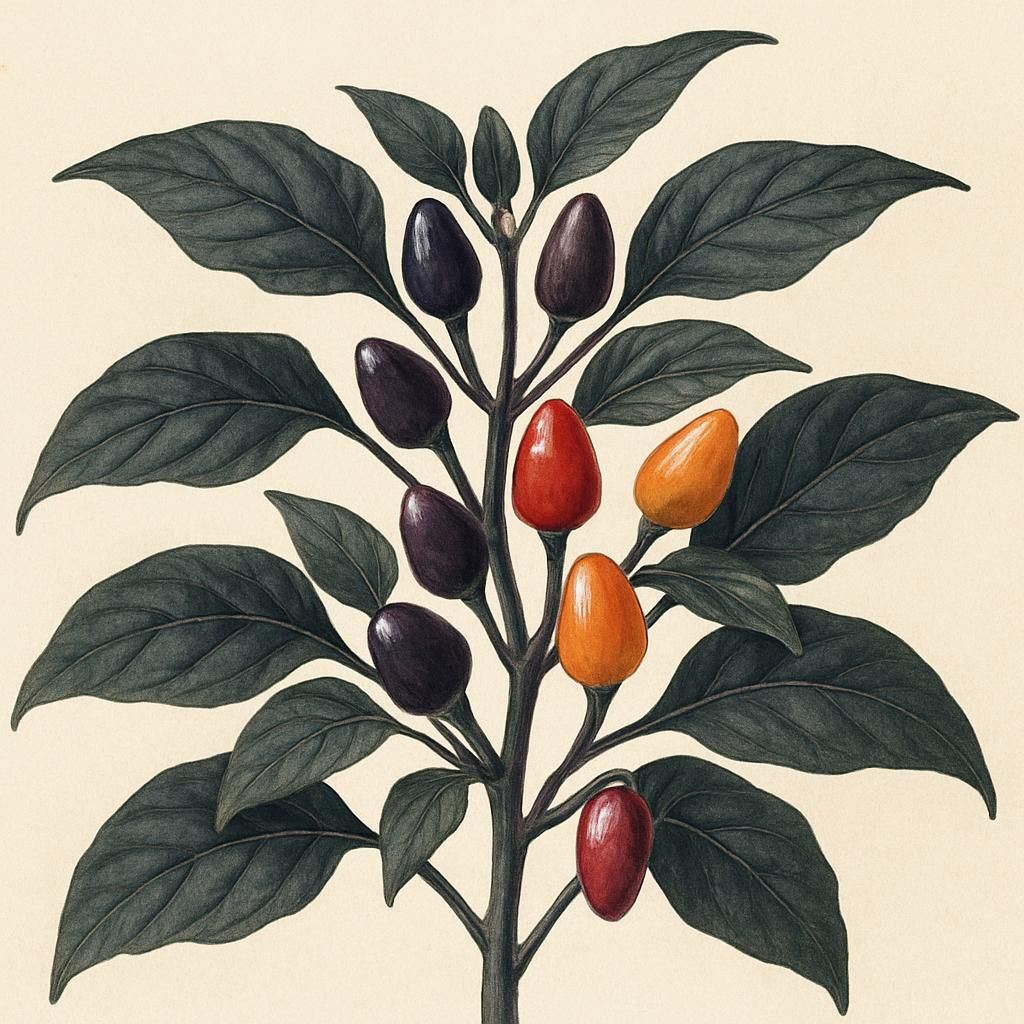
Introduction to Black Pearl Pepper
The Black Pearl Pepper is a distinctive cultivar of the chili pepper known for its ornamental beauty and culinary use. Its dark, almost black foliage makes it a striking addition to gardens, while the small, hot peppers offer a burst of heat for culinary dishes. Originally bred for its ornamental value, the Black Pearl Pepper has gained popularity among both gardeners and chefs for its unique appearance and versatile use.
Botanical Profile of Black Pearl Pepper
Botanically classified as Capsicum annuum, the Black Pearl Pepper is a member of the Solanaceae family. This plant is characterized by its small stature, with heights reaching up to 24 inches, and its bushy foliage that turns from green to a dramatic black. The peppers themselves mature from a glossy black to a vibrant red, providing an eye-catching contrast against the dark leaves.
Soil, pH, and Climate Requirements for Black Pearl Pepper
Black Pearl Peppers thrive in warm climates with plenty of sunlight. These plants prefer well-drained soil with a balance of nutrients to support growth. The following table outlines the ideal conditions for growing Black Pearl Peppers.
| Parameter | Ideal Range |
|---|---|
| Soil Type | Well-drained loam |
| Soil pH | 6.0 to 6.8 |
| Temperature | 70-85°F (21-29°C) |
| Sunlight | Full sun |
Step-by-Step Planting & Propagation
To successfully cultivate Black Pearl Peppers, begin by selecting quality seeds or seedlings from a reputable source. Propagation is typically done from seeds.
- Seed Starting: Begin indoors 8-10 weeks before the last expected frost date. Sow the seeds in seed-starting mix and lightly cover with soil.
- Germination: Maintain consistent moisture and a temperature around 75°F (24°C) to encourage germination, which generally takes 14-21 days.
- Transplanting: Once seedlings have at least 2-3 true leaves and outdoor temperatures consistently reach 70°F (21°C) or higher, transplant them into the garden, spacing them 18-24 inches apart.
- Direct Sowing (Optional): In warmer climates, seeds can be sown directly into the garden after the last frost date.
Care & Maintenance regimes for Black Pearl Pepper
Proper care and maintenance are essential for a healthy Black Pearl Pepper plant. Below is a table summarizing the care schedule.
| Activity | Schedule/Description |
|---|---|
| Watering | Moderate - Ensure soil is moist but not waterlogged |
| Fertilizer | Every 4-6 weeks with a balanced, slow-release type |
| Pruning | Late summer to remove any weakened stems |
Pests, Diseases & Organic Management
Black Pearl Peppers can be susceptible to pests like spider mites and diseases such as powdery mildew. Here are some effective organic management methods:
- Spider Mites: Use insecticidal soap or neem oil to manage infestations.
- Powdery Mildew: Maintain good air circulation and use sulfur-based fungicides if needed.
- Regularly inspect plants and remove any affected foliage to prevent the spread of diseases.
Harvesting, Curing & Optimal Storage
Harvest Black Pearl Peppers once they turn a deep red, approximately 70-80 days after transplanting.
- Harvesting: Use scissors or pruners to snip the peppers, leaving a small portion of the stem attached.
- Curing: Optional, but allows for enhanced flavor. Store in a dry, warm place for a few days.
- Storage: Fresh peppers can be stored in the refrigerator for up to two weeks or dried for long-term storage.
Companion Planting for Black Pearl Pepper
Utilizing companion planting can enhance growth and protect against pests. Pair Black Pearl Peppers with crops like basil, which can help deter insects, or marigold to attract beneficial insects. Avoid planting with members of the tomato family where soil-borne diseases might transfer.
Explore further about companion plantings in the blog article Summer Companion Planting: 10 Organic Pairings to Boost Small Farm Resilience.