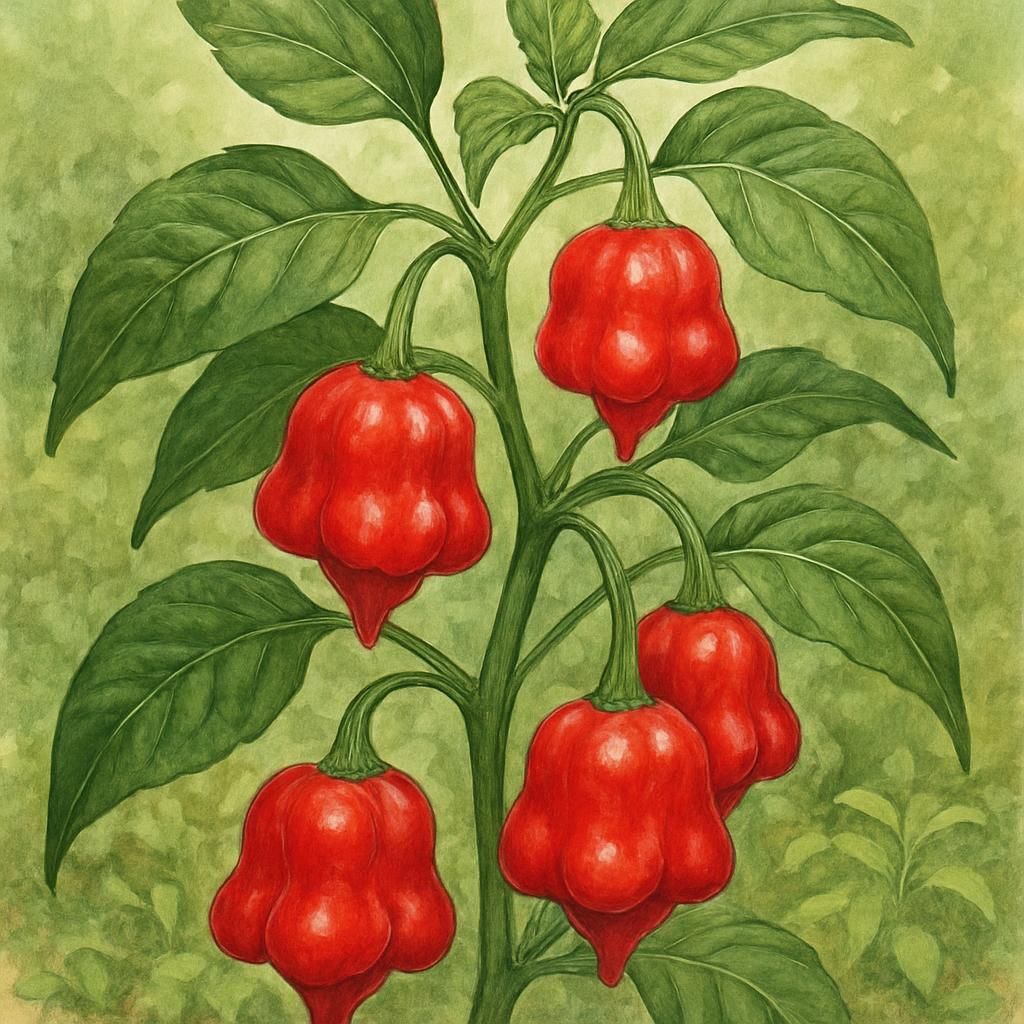
Introduction to Bishop's Crown Pepper
Bishop's Crown Pepper, with its distinctive shape reminiscent of a bishop’s hat, is a captivating addition to any garden. Native to South America, this pepper is part of the Capsicum baccatum species, known for its mild to moderate heat and rich, fruity flavor. The peppers mature from green to a vivid red, adding both aesthetic and culinary value to gardens and dishes alike.
Botanical Profile of Bishop's Crown Pepper
A member of the Solanaceae family, Bishop's Crown Pepper (Capsicum baccatum var. pendulum) is a perennial plant in its native environment but grown as an annual in temperate zones. The plant reaches about 1.5 meters in height and is distinguished by its drooping, winged fruit, which is typically 4 cm in diameter with three distinct lobes.
Soil, pH, and Climate Requirements for Bishop's Crown Pepper
To successfully grow Bishop's Crown Pepper, understanding and providing the ideal conditions is crucial. Below is a table outlining the optimal requirements for soil, pH, climate, and more:
| Condition | Requirement |
|---|---|
| Soil Type | Well-drained, loamy |
| pH Level | 6.0 - 7.0 |
| Climate | Temperate |
| Temperature Range | 20°C - 30°C |
| Sunlight | Full Sun |
| Humidity | Moderate |
Step-by-Step Planting & Propagation
- Seed Sowing: Start seeds indoors 8-10 weeks before the last frost. Sow seeds 1/4 inch deep in a seed-starting mix. Provide a warm, humid environment for germination, ideally a temperature around 25°C.
- Transplanting: Once the seedlings have two to three sets of leaves and the danger of frost has passed, harden them off for a week and then transplant them into the garden, ensuring a spacing of 18-24 inches apart.
- Soil Preparation: Prepare the planting site with rich, organic matter and ensure excellent drainage. Raised beds or containers can help in areas with heavy clay soils.
- Companion Planting: Consider planting Tomato nearby to enhance growth, as they share similar soil and care requirements.
Care & Maintenance Regimes for Bishop's Crown Pepper
Proper care and maintenance are essential for thriving pepper plants. Below is a guideline for water, fertilizer, and pruning schedules:
| Task | Frequency | Notes |
|---|---|---|
| Watering | 1-2 times per week | Ensure soil is moist, not waterlogged |
| Fertilizing | Every 4-6 weeks | Use a balanced fertilizer |
| Pruning | As needed after harvest | Remove dead or diseased branches |
Pests, Diseases & Organic Management
Bishop's Crown Pepper is susceptible to several pests and diseases. Common pests include Aphids and Spider Mites, while diseases like Mosaic viruses can affect plant health. Organic management practices include:
- Introducing beneficial insects such as ladybirds to control aphid populations.
- Using neem oil or insecticidal soap to manage mite infestations.
- Practicing crop rotation and maintaining plant health to reduce disease occurrence. Learn more about managing pests organically in 7 Summer Pest Traps That Sabotage Small Farm Harvests.
Harvesting, Curing & Optimal Storage
Harvest the peppers when they reach full color, typically red, to ensure maximum flavor and heat. Use a clean knife or scissors to cut the peppers off the plant, avoiding damage. If preservation is desired, peppers can be dried, pickled, or frozen. Store fresh peppers in a cool, dry place or the refrigerator for up to two weeks. For detailed storage tips, read about various post-harvest methods for maintaining produce quality.
Companion Planting for Bishop's Crown Pepper
Companion planting can naturally boost pepper yield and deter pests. Some ideal companions include Basil and Marigold, both of which repel harmful insects and enhance soil nutrients. Avoid planting near Fennel as it can hinder pepper growth.
Explore the benefits and strategies of companion planting in Summer Companion Planting: 10 Organic Pairings to Boost Small Farm Resilience.